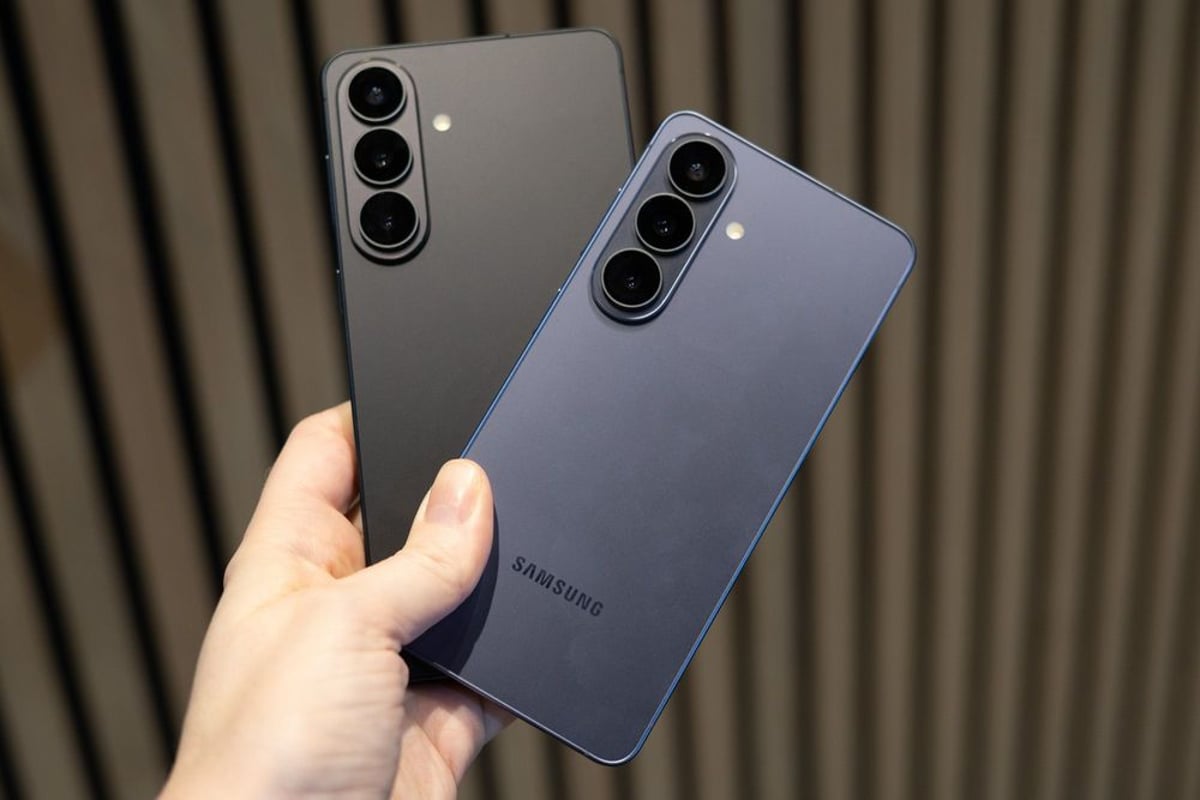
Samsung just put a price tag on the global memory shortage. The company's Galaxy S26 and S26 Plus cost $100 more than last year's models, and mobile chief Won-Joon Choi isn't being shy about why. In an exclusive interview with The Verge, Choi confirmed that RAM shortages made a "significant contribution" to the price hike, marking the first time a major phone maker has directly blamed the ongoing memory crisis for consumer pricing decisions. The admission validates what the industry's been whispering about for months - the so-called RAMageddon is hitting wallets hard.
Samsung is doing something unusual for a tech giant - it's being remarkably candid about why your next phone costs more. Won-Joon Choi, the COO of Samsung's mobile business, just confirmed what the industry's been dancing around for months. The memory shortage everyone's been calling RAMageddon made a "significant contribution" to the Galaxy S26 and S26 Plus costing $100 more than their predecessors.
"The memory shortage alone made a significant contribution to the price," Choi told The Verge in an interview. "All the increasing material costs factored into the Galaxy S26 and S26 Plus costing $100 more than their predecessors this year, as did tariffs, but the memory was significant."
It's a rare moment of transparency in an industry that typically buries supply chain issues behind vague statements about "market conditions." But Samsung's facing a different reality this year. The Galaxy S26 lineup launched to reviews describing it as "more of the same for more money," according to The Verge's Allison Johnson. When you're asking customers to pay more for what appears to be incremental upgrades, honesty might be the only play.
The memory crisis has been building for months. Industry analysts have tracked tightening supplies as AI data centers gobble up memory chips and manufacturers struggle to keep pace with demand. Apple, Google, and other phone makers have all felt the squeeze, but Samsung's the first to publicly draw a direct line from chip shortages to retail pricing.
To soften the blow, Samsung doubled the base storage to 256GB on the S26 models. It's a classic tech industry move - give consumers more of what they didn't necessarily ask for while explaining why they're paying more. The storage bump provides tangible value, but it also conveniently obscures the pure price increase driven by component costs.
The tariff mention is equally telling. While Choi emphasized that RAM was the "significant" factor, he didn't shy away from acknowledging that trade policy is also hitting Samsung's bottom line. The company's navigating a complex web of international manufacturing and import duties that's only gotten more complicated as global trade tensions simmer.
What makes this moment particularly interesting is the timing. Samsung's confirmation comes as the entire smartphone industry grapples with flattening sales and longer upgrade cycles. Consumers are holding onto phones for three, four, even five years now. Convincing them to spend more for a new device requires either revolutionary features or brutal honesty about costs. Samsung appears to be betting on the latter.
The move could set a precedent for how tech companies handle similar situations. If Samsung can successfully frame price increases as unavoidable responses to supply chain realities rather than profit-seeking, other manufacturers might follow suit. Transparency about component costs could become the new normal, especially if consumers respond with understanding rather than backlash.
But there's risk in this strategy too. By explicitly blaming RAM prices, Samsung's essentially admitting that the S26 isn't $100 better than the S25 - it's $100 more expensive to make. That's a tough sell in a market where Apple's iPhone and Google's Pixel phones are fighting for the same premium buyers.
The broader smartphone market is watching closely. Memory shortages aren't unique to Samsung, and every manufacturer using cutting-edge chips is facing similar cost pressures. How consumers react to Samsung's transparent pricing explanation could determine whether other companies follow with their own admissions or continue hiding behind marketing speak about value and innovation.
For now, Samsung's bet on honesty is a fascinating experiment in tech industry communications. Whether it helps or hurts S26 sales will become clear in the coming quarters.
Samsung's willingness to explicitly blame RAM shortages for the Galaxy S26's price increase represents a gamble on consumer understanding over marketing spin. As the memory crisis continues squeezing the entire tech industry, this candid approach could either set a new standard for honest pricing communications or serve as a cautionary tale about oversharing supply chain struggles. Either way, it confirms what analysts have been warning about for months - the component shortage isn't just an industry problem anymore, it's a consumer wallet problem. Watch how Apple and Google handle their next flagship launches to see if Samsung's transparency becomes contagious or remains an outlier.