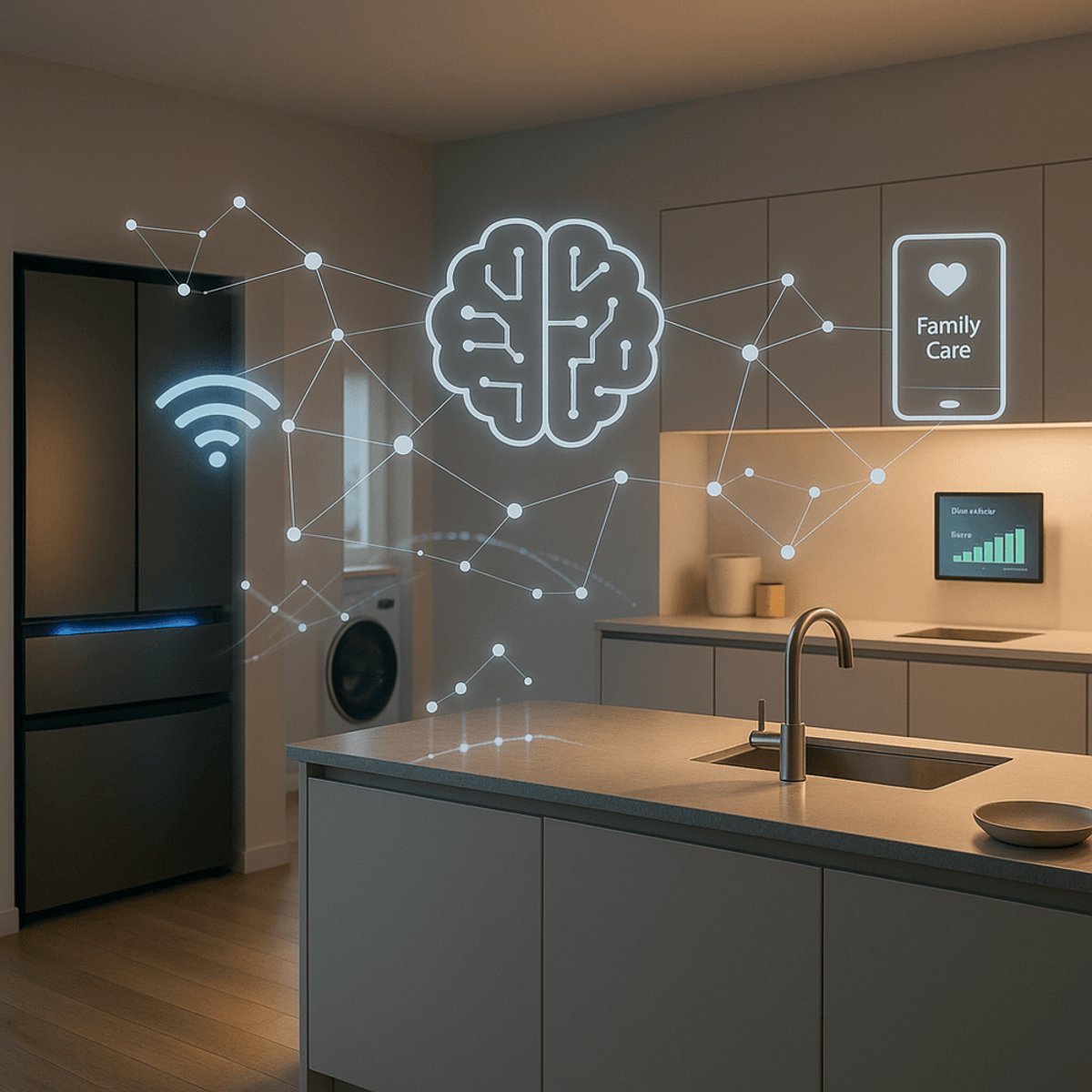
Samsung just lifted the curtain on its AI Home strategy. In an exclusive interview, EVP Hyesoon Yang revealed SmartThings now connects 33 million appliances - up 30% this year - while serving 410 million users globally. The platform integrates 4,500 device models from 380 partners, positioning Samsung to deliver the century-old dream of hands-free living through ambient intelligence.
Samsung is betting big that the smart home's future isn't about controlling devices - it's about devices that don't need controlling at all. EVP Hyesoon Yang just revealed how the company's SmartThings platform is evolving from a connectivity hub into what she calls "ambient intelligence" that anticipates needs before users even realize them.
The numbers tell Samsung's IoT story. SmartThings exploded from 100 million global users in 2019 to over 410 million as of July 2025, according to company data. Connected appliances hit 33 million worldwide - a 30% jump since the start of this year alone. In South Korea, Samsung's home market, 23 million users now rely on SmartThings daily.
"Home appliances were invented to reduce household chores and have continued to evolve for more than a century," Yang told Samsung Newsroom. "Technology has eliminated much of that labor, but one challenge remains - creating seamless connections across the household journey."
That's where Samsung's scale advantage kicks in. The platform now integrates 4,500 device models from over 380 partners, creating cross-device orchestration that competitors struggle to match. When your washing machine finishes a cycle, notifications appear on your Samsung TV. Cook in the kitchen and you can adjust your child's bedroom air conditioning from the SmartThings-connected refrigerator display.
But it's the energy intelligence that's driving real adoption. Samsung's AI Energy Mode analyzes usage patterns to cut consumption by up to 10% for refrigerators, 70% for washing machines, and 30% for air conditioners, based on internal testing. The company is expanding this globally through partnerships with British Gas in the UK and CoolBlue in the Netherlands.
Yang's team is also pushing beyond traditional appliance control into family care territory. Family Care features send alerts when elderly relatives' usage patterns seem abnormal or remind them about medications through connected water purifiers. Pet Care lets SmartThings play soothing music through robot vacuums when barking is detected, or stream calming videos to TVs.
The real vision, though, is ambient intelligence. At IFA 2025, Samsung introduced its Smart Modular Home concept - pre-configured living spaces where AI Home benefits work from move-in day. "By learning from and analyzing data across connected devices, the company aims to create a fully automated AI Home that understands users' behaviors, preferences and routines," Yang explained.
This positions Samsung directly against Google's Nest ecosystem and Amazon's Alexa-powered smart homes. But Samsung's advantage lies in manufacturing the actual appliances, not just connecting them. That hardware integration enables the kind of cross-device intelligence that pure software platforms can't replicate.
The timing couldn't be better for Samsung's IoT push. As AI capabilities mature and energy costs soar globally, smart home adoption is accelerating beyond early adopters into mainstream households. Samsung's betting that consumers will choose ecosystems that work seamlessly together over fragmented experiences from multiple vendors.
Samsung's SmartThings evolution from device connectivity platform to ambient intelligence system reflects the broader smart home market's maturation. With 410 million users and deep appliance integration, Samsung has the scale and hardware advantage to deliver on its vision of truly autonomous homes. The real test will be whether consumers embrace ambient intelligence over traditional smart home control, and whether Samsung can maintain its lead as tech giants like Google and Amazon double down on competing ecosystems.