Samsung just rolled out a major update to SmartThings Family Care that transforms how families monitor elderly relatives and children through connected appliances. The enhanced platform now integrates directly with Samsung Health to track sleep patterns, activity levels, and medication schedules across 200+ countries, positioning Samsung's IoT ecosystem as a serious player in the rapidly growing digital health market.
Samsung just made a bold play for the digital caregiving market with a comprehensive SmartThings Family Care update that turns everyday home appliances into health monitoring devices. The Korean tech giant's latest move integrates its SmartThings IoT platform directly with Samsung Health, creating what amounts to a comprehensive remote monitoring system for families caring for elderly relatives or tracking children's activities.
The timing couldn't be more strategic. As the global digital health market approaches $350 billion, Samsung is positioning its connected home ecosystem against Apple's Health platform and emerging competitors in the eldercare technology space. The company's approach leverages its existing appliance footprint – refrigerators, washing machines, TVs, and robot vacuums – to create ambient health monitoring without requiring family members to adopt new devices.
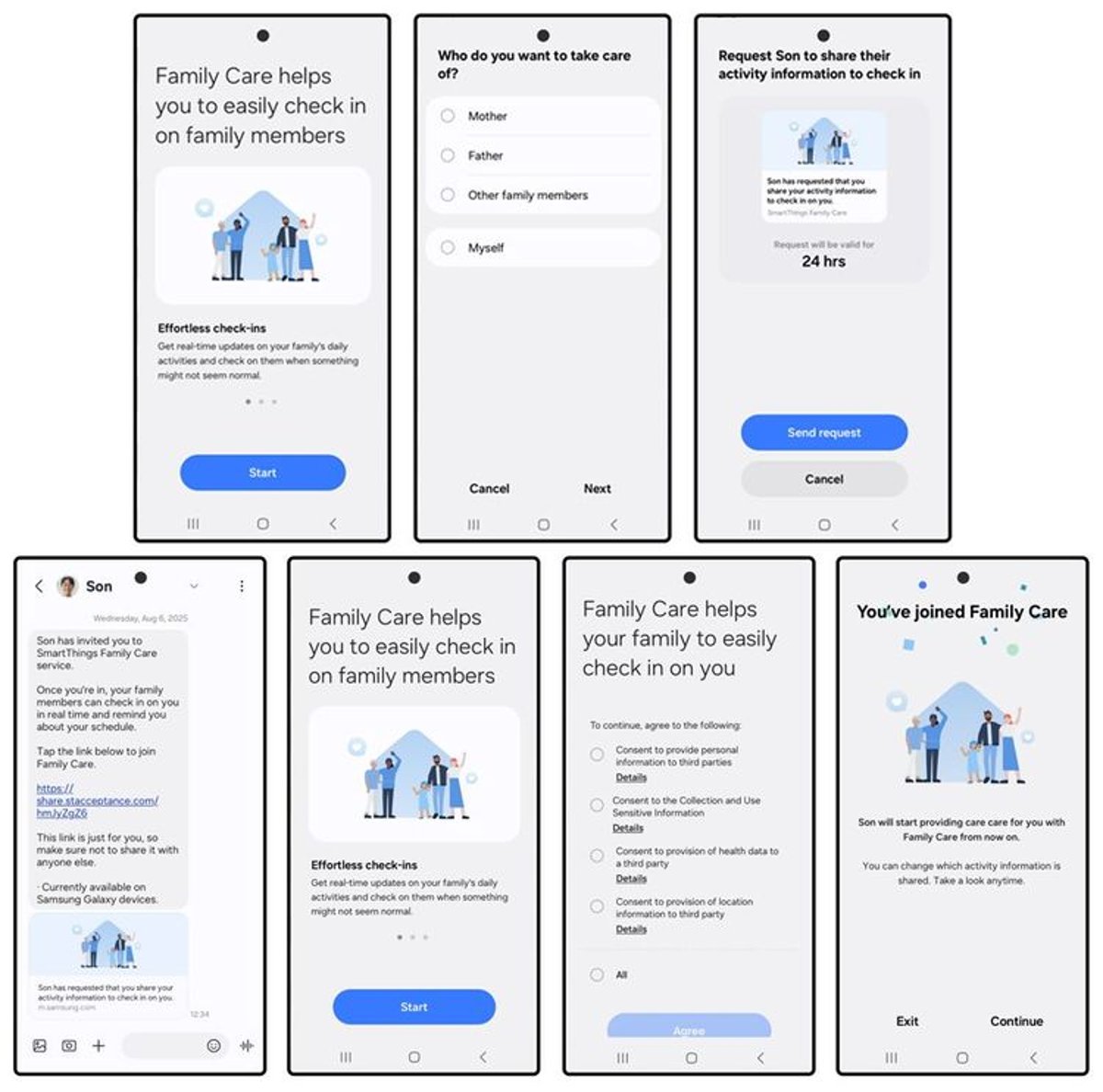
"Care recipients can choose what information to share, while caregivers can quickly and intuitively access the necessary details within those boundaries," according to Samsung's official announcement. This privacy-first approach addresses one of the biggest hurdles in eldercare technology adoption – the balance between safety monitoring and personal autonomy.
The technical implementation reveals Samsung's sophisticated approach to ambient computing. When connected appliances detect unusual patterns – like a refrigerator door remaining unopened for extended periods or a TV staying dark all day – the system automatically alerts designated caregivers. More impressively, caregivers can remotely activate robot vacuums with built-in cameras to check on situations, essentially creating an on-demand visual wellness check system.
Samsung Health integration adds another layer of sophistication. The platform now tracks sleep patterns, daily step counts, and wake-up times, feeding this biometric data to caregivers through a unified dashboard. For elderly adults living independently, this creates a comprehensive health picture without requiring constant check-in calls or intrusive monitoring devices.
The global rollout across 200+ countries signals Samsung's confidence in the platform's scalability. Unlike competing solutions that require specialized hardware installations, SmartThings Family Care leverages Samsung's existing appliance ecosystem, making adoption more seamless for families already invested in the company's connected home products.
Location-based features add another dimension to family safety. With consent, caregivers can register essential locations – hospitals, pharmacies, schools – and receive automatic notifications when family members visit these places. For parents, this creates an unobtrusive way to track children's school commutes. For adult children caring for aging parents, it provides peace of mind about medical appointments and errands.
The business implications extend beyond consumer adoption. Samsung's approach creates a sticky ecosystem that encourages loyalty across multiple product categories. Families using SmartThings Family Care have strong incentives to choose Samsung appliances, smartphones, and health devices, creating the kind of platform lock-in that drives long-term revenue growth.
Competitive pressure is mounting from multiple directions. Apple's Health ecosystem continues expanding its family sharing capabilities, while specialized eldercare companies like Papa and CareZone are building dedicated solutions. Samsung's advantage lies in its hardware integration – the company controls the entire stack from appliances to smartphones to health sensors.
The one-click setup process addresses a critical adoption barrier. Previous versions of SmartThings Family Care required technical setup that many elderly users found challenging. The new invitation link system allows tech-savvy family members to send setup instructions that guide recipients through the entire process, dramatically reducing friction for multi-generational adoption.
Market analysts see this as Samsung's bid to own the "ambient health" category – health monitoring that happens passively through everyday interactions rather than requiring active participation. As populations age globally and healthcare costs continue rising, ambient monitoring systems like SmartThings Family Care could become essential infrastructure for aging-in-place initiatives.
The platform's medication and appointment reminder system creates additional healthcare value. Rather than relying on smartphone notifications that elderly users might miss, the system can display reminders on Samsung TVs or send alerts through multiple connected devices, ensuring important health information reaches its intended recipient through familiar interfaces.
Samsung's SmartThings Family Care update represents more than a feature enhancement – it's a strategic play for the massive digital health market that leverages the company's unique position in both consumer appliances and mobile health. By turning everyday home interactions into health monitoring touchpoints, Samsung creates a compelling alternative to device-heavy eldercare solutions while building deeper ecosystem lock-in. The real test will be whether families adopt these monitoring capabilities at scale, but Samsung's privacy-first approach and seamless setup process address the biggest historical barriers to digital caregiving adoption.