SwitchBot just unveiled one of its most elegant smart home products at CES 2026 - a beautifully simple 7.5-inch E Ink weather display that's packed with enough features to appeal to weather enthusiasts and smart home devotees alike. The new Weather Station combines low-power E Ink technology with AI-powered weather insights, bringing a calm, always-on display aesthetic to the increasingly crowded smart home ecosystem. The device marks a subtle but meaningful shift toward devices that inform rather than demand your attention.
E Ink is having a moment, and SwitchBot's latest product announcement at CES 2026 is proof the smart home industry is finally embracing the tech's quiet elegance. The Weather Station isn't trying to steal your attention with bright screens or constant notifications. It's the opposite - a 7.5-inch framed display that sits on your desk or wall, calmly serving up weather information and smart home control without the battery drain or visual noise of a traditional LCD.
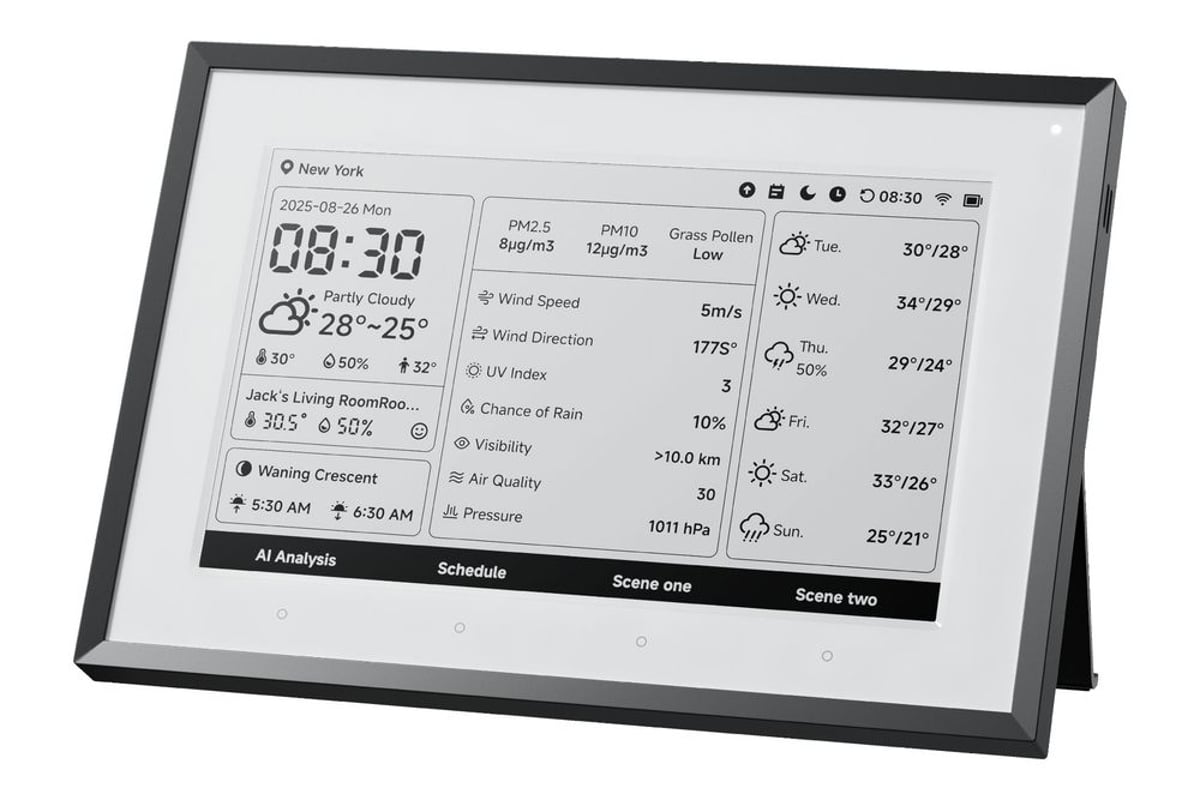
What makes this particularly smart is what the display actually shows. You get the obvious stuff: date, time, current weather, and a six-day forecast. But SwitchBot packed in more granular data from built-in sensors, including indoor temperature and humidity readings. That's the kind of detail that transforms a weather display from a novelty into something genuinely useful. Knowing your actual indoor conditions alongside outdoor forecasts starts to feel less like gadgetry and more like practical information.
The AI angle here is where things get interesting. There's a dedicated button on the bottom bezel that unlocks the Weather Station's AI-powered features. When you press it, the device generates weather-based insights and recommendations. That's straightforward enough, but SwitchBot also threw in the ability to generate 'weather-related aspirational quotes' - a charmingly absurd feature that suggests the company understands its audience wants their weather station to occasionally make them smile.
SwitchBot's positioning this as more than just a weather gadget. If you own a SwitchBot Hub, the Weather Station doubles as a scene controller. You can use it to trigger different device automations across your smart home ecosystem - switching lighting, adjusting thermostats, controlling other connected devices via Matter, Alexa, Google Assistant, or Apple Home. That integration potential is what elevates this from a standalone weather display to a genuine smart home hub companion.
The calendar syncing feature adds another dimension. The display can sync with multiple calendar platforms (SwitchBot was vague about which ones, frustratingly), turning the Weather Station into a combination weather and scheduling display. It's the kind of dual-purpose design that makes sense for a persistent bedside or desk display - you want to see what's happening outside and what's on your day at a glance.
What's notably absent from SwitchBot's announcement is pricing and availability. The company revealed the Weather Station at CES but hasn't committed to when you'll actually be able to buy one or how much it'll cost. That's typical CES timing, but it leaves you hanging on whether this is an impulse purchase or a premium smart home investment.
The E Ink approach is really the star here. These displays use minimal power compared to LCD alternatives, so the Weather Station should run for extended periods without constant charging. That's important for a device positioned as an always-on information display. The last thing you want is a weather gadget you have to remember to plug in every other day.
This announcement slots neatly into a broader trend at CES 2026 where companies are finally understanding that not every smart home device needs to be a bright, interactive touch screen. Sometimes calm, ambient information is exactly what you need. SwitchBot's Weather Station gets that philosophy right - it's beautiful, functional, and designed to fade into the background of your environment while still delivering value.
The SwitchBot Weather Station represents a quiet but important message from the smart home industry: not every device needs to be flashy or interactive to be useful. In a market saturated with screens demanding your attention, a low-power E Ink display that delivers practical information - weather forecasts, indoor conditions, calendar events, and AI-powered recommendations - feels genuinely refreshing. When pricing and availability details arrive, this could become a sleeper hit for anyone tired of cluttered smart home setups. It's the kind of device that works better the less you think about it.