SK Hynix just delivered a tale of two earnings reports. The South Korean memory chipmaker posted record second-quarter profits on Wednesday, riding a massive wave of AI-driven demand for its high-bandwidth memory chips. But Wall Street isn't celebrating - the company fell short of analyst estimates despite revenue more than tripling year-over-year. The miss reveals growing pains in the red-hot AI chip supply chain and raises questions about whether the memory boom can sustain its breakneck pace.
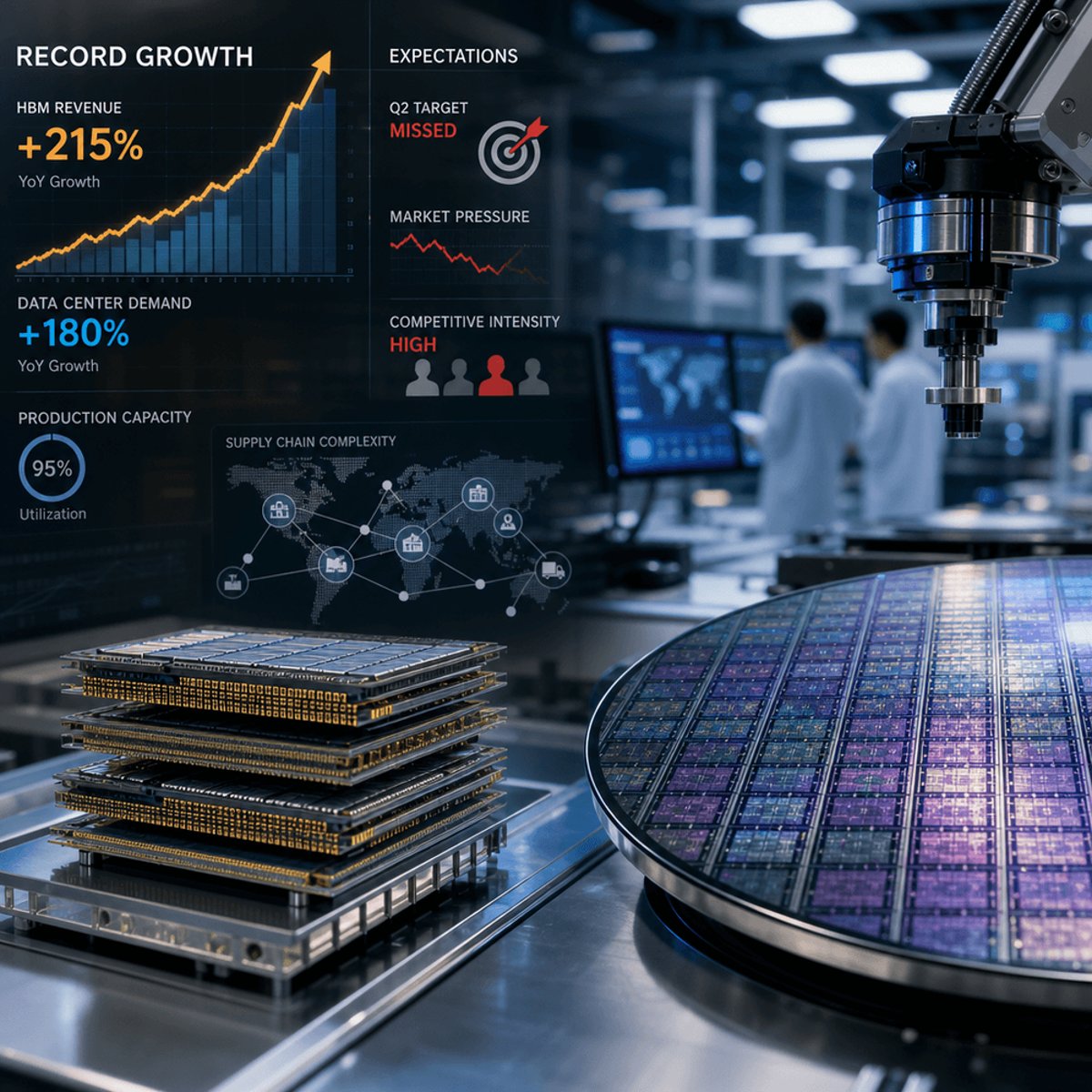
SK Hynix dropped its second-quarter earnings Wednesday morning, and the results tell a complicated story about the AI chip boom. The company posted its highest quarterly profit ever, driven almost entirely by insatiable demand for high-bandwidth memory (HBM) chips that power AI data centers. Revenue surged more than 300% compared to the same quarter last year, according to the company's earnings release.
But here's the twist - analysts were expecting even more. The profit miss sent SK Hynix shares down in early Seoul trading, highlighting how sky-high expectations have become for memory chipmakers caught in the AI infrastructure buildout. What would've been a blowout quarter two years ago now registers as a disappointment because Wall Street had priced in perfection.
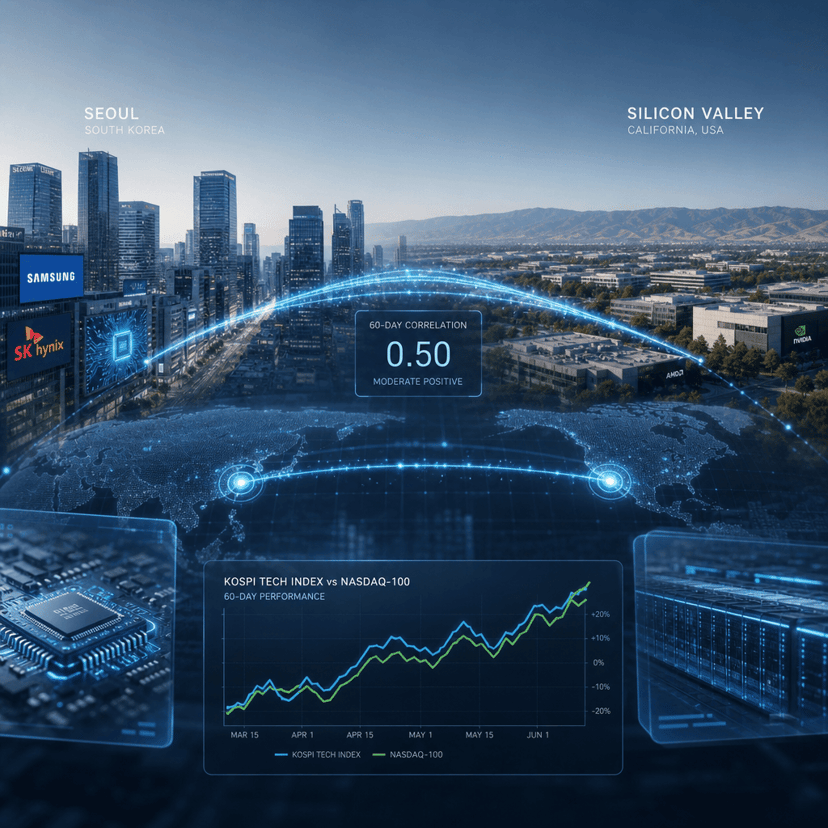
The earnings reveal the double-edged sword of being Nvidia's primary HBM supplier. SK Hynix has essentially become the picks-and-shovels play for the generative AI gold rush, selling the specialized memory that sits alongside GPU processors in everything from data center servers to AI training clusters. That positioning has transformed the company's financials - revenue that was languishing during the memory glut of 2023 has exploded as hyperscalers race to build AI infrastructure.
HBM chips represent the crown jewel of SK Hynix's business right now. These aren't your standard memory modules - they're vertically stacked chips that deliver dramatically higher bandwidth, essential for feeding data to power-hungry AI processors fast enough to keep them running efficiently. Samsung and Micron are fighting for market share, but SK Hynix has maintained its lead through early production of HBM3E, the latest generation that Nvidia's H200 and upcoming Blackwell chips demand.
The revenue tripling speaks to just how severe the HBM shortage has been. Customers are essentially buying everything SK Hynix can manufacture, with production slots booked out months in advance. But the profit miss suggests the company is pouring capital into expanding manufacturing capacity faster than it can generate margin expansion - a necessary investment if it wants to maintain its lead, but one that's eating into near-term profitability.
Industry watchers point to supply chain constraints as the likely culprit behind the estimate miss. Manufacturing HBM chips requires specialized equipment and processes that can't be ramped overnight. SK Hynix has been adding production lines at its facilities in South Korea, but the complexity of stacking memory dies and ensuring thermal management means yields remain challenging. Every chip that doesn't meet specifications represents lost revenue in a market where customers would buy double the current supply if it existed.
The competitive dynamics are shifting too. Samsung has been aggressively investing in HBM production after initially falling behind SK Hynix, and recent reports suggest it's finally qualified its HBM3E chips for use in Nvidia systems. That could pressure SK Hynix's pricing power in coming quarters, even as overall demand continues growing. Micron is also ramping HBM production, though it remains a distant third in market share.
What's notable is the timing. This earnings report arrives as some analysts question whether AI infrastructure spending can maintain its current trajectory. Microsoft, Amazon, and Google are all building massive AI data centers, but there are whispers about whether the revenue from AI services can justify the capital expenditure. If hyperscalers start pulling back on chip orders, memory suppliers like SK Hynix would feel it immediately.
The broader memory market context matters here too. While HBM is booming, conventional DRAM and NAND flash markets have been recovering more slowly from the 2023 downturn. SK Hynix generates significant revenue from standard memory chips used in smartphones, PCs, and traditional servers - segments that haven't seen the same explosive growth. The company's ability to shift production capacity toward HBM has been crucial, but it can't abandon those markets entirely.
Investors will be parsing the company's forward guidance carefully. The key questions: Can SK Hynix maintain its production lead as competitors ramp up? Will pricing hold as supply increases? And most critically, will demand from AI infrastructure continue at current levels or has the market gotten ahead of itself? The profit miss, even against record results, suggests the market is nervous about at least some of those answers.
The geopolitical dimension adds another layer of complexity. U.S. export restrictions on advanced chips to China have reshaped global semiconductor supply chains, and memory chips aren't exempt from those considerations. SK Hynix has manufacturing facilities in China that serve local customers, but the evolving regulatory environment creates uncertainty about future production allocation and market access.
SK Hynix's record-but-not-quite-record-enough quarter captures the AI chip market's current moment perfectly - explosive growth that somehow still falls short of stratospheric expectations. The company sits at the center of the infrastructure buildout powering generative AI, but the profit miss signals that converting that position into sustained margin expansion isn't guaranteed. As Samsung and Micron ramp competing HBM production and questions swirl about AI spending sustainability, SK Hynix's next few quarters will test whether the memory boom has room to run or if Wall Street's expectations have finally outpaced reality. For now, the company is sprinting to build capacity fast enough to meet demand - the question is whether that demand will still be there when the new factories come online.