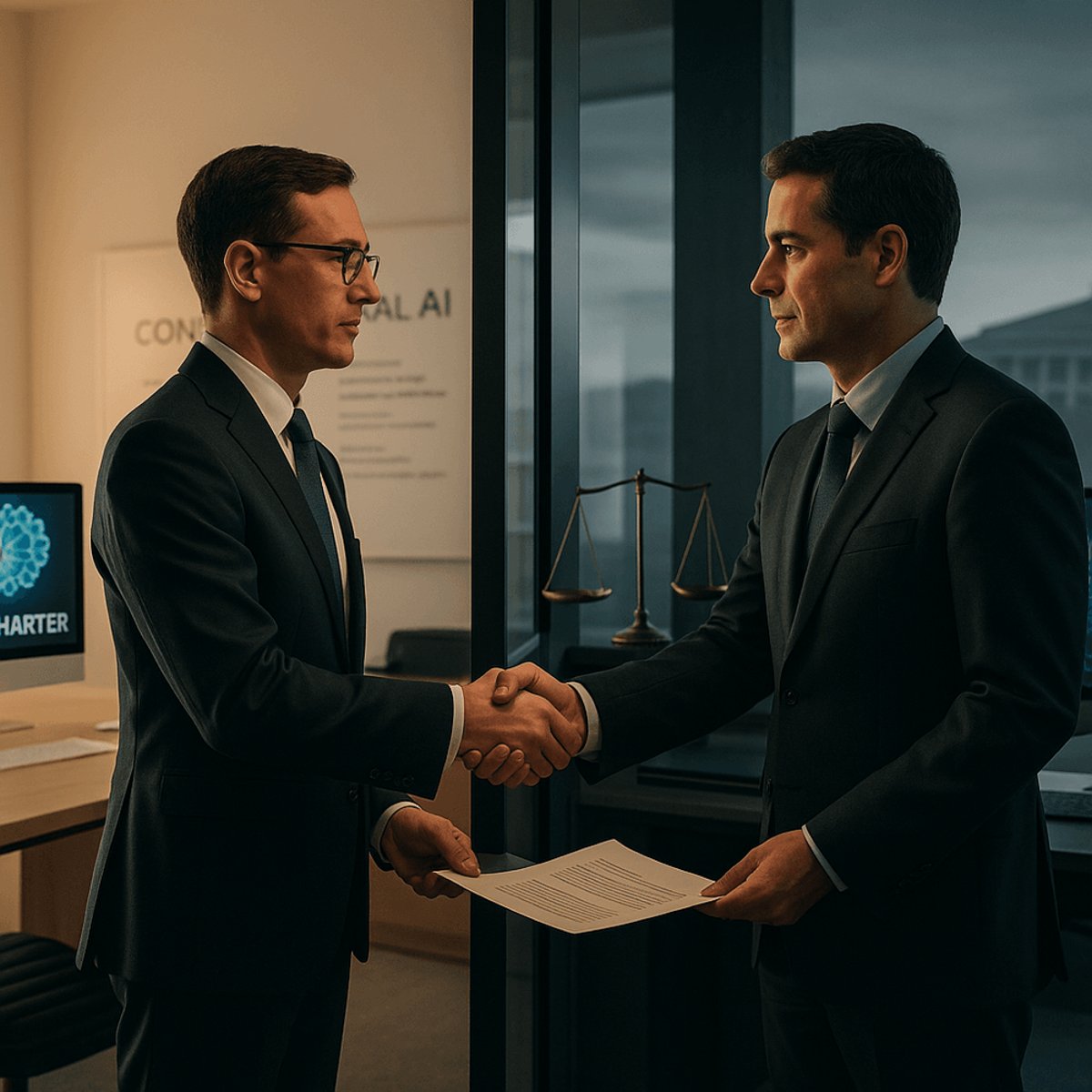
A powerful tech industry coalition just went to bat for Anthropic without saying its name. The Information Technology Industry Council fired off a letter to Defense Secretary Pete Hegseth expressing "concern" over recent supply chain risk designations—a carefully worded intervention that lands days after the Pentagon slapped Anthropic with the controversial label. The move signals the AI company's blacklisting isn't just an Anthropic problem anymore, it's becoming an industry-wide fight over how Washington regulates artificial intelligence.
The tech industry's most powerful trade group just made its quietest—and possibly most important—move yet in the escalating battle over AI regulation. The Information Technology Industry Council, whose members read like a who's who of Silicon Valley, sent a carefully crafted letter to Defense Secretary Pete Hegseth raising alarms about how the Pentagon designates companies as supply chain risks.
The letter doesn't mention Anthropic by name. It doesn't need to. Everyone knows exactly what this is about.
Just days earlier, the Department of Defense added the AI startup to its supply chain risk list—an unprecedented move that effectively bars Anthropic from federal contracts and sends a chilling message to the entire AI industry. Now ITI, which represents heavyweights like Amazon, Google, Microsoft, and Meta, is pushing back in the way Washington insiders do best: with polite, pointed concern.
"We're watching a proxy war play out in real time," says one tech policy analyst who requested anonymity to speak candidly about the sensitive matter. "ITI can't be seen as defending Anthropic directly, but they can raise process questions that happen to benefit Anthropic's case."
The timing reveals just how rattled the industry is by the Pentagon's move. Anthropic isn't some fringe player—it's backed by billions from Amazon and Google, built by former OpenAI executives, and sits at the cutting edge of AI safety research. If the federal government can blacklist a company this mainstream, the thinking goes, no one's safe.
That anxiety runs deeper than just defense contracts. The supply chain risk designation carries stigma that could poison Anthropic's relationships with enterprise customers, particularly those in regulated industries or government-adjacent sectors. For ITI's members—many of whom partner with or invest in AI startups—the precedent is dangerous.
"This isn't about Anthropic," insists another source familiar with ITI's thinking. "It's about whether the government can unilaterally decide which AI companies are legitimate and which aren't, without clear standards or appeal processes."
The Pentagon hasn't publicly explained its reasoning for designating Anthropic, citing national security concerns. That opacity is exactly what worries the industry. Without transparent criteria, companies fear politically motivated decisions could reshape the competitive landscape overnight.
Anthropic itself has remained largely quiet since the designation, though sources close to the company say legal options are being explored. The startup's unusual corporate structure—a public benefit corporation with a long-term safety mission—was supposed to differentiate it from competitors. Instead, it may have made Anthropic a target for regulators skeptical of Big Tech's AI ambitions.
For Hegseth, the ITI letter creates an uncomfortable dynamic. The Defense Secretary has positioned himself as tough on tech regulation, but he also needs Silicon Valley's cooperation on AI development for military applications. Alienating the entire industry over one company—no matter how symbolic—carries real costs.
The letter also exposes fissures in how different parts of the government approach AI. While the Pentagon slaps risk labels on companies, the Commerce Department courts those same firms for semiconductor partnerships. The mixed signals complicate everything from investment decisions to international competitiveness.
Washington veterans see ITI's intervention as classic trade group strategy: raise the issue early, frame it as procedural fairness, and build a coalition before the fight gets ugly. If Anthropic challenges the designation formally, ITI's letter establishes industry-wide concern that could influence any review process.
But there's another calculation at play. Several ITI members are Anthropic investors or partners. Amazon just committed $4 billion to the startup. Google's been a major backer since 2022. If Anthropic's value craters because of federal stigma, those companies take direct hits.
"You're seeing the AI gold rush collide with national security politics," notes a former Defense Department official now in the private sector. "The industry thought it could build whatever it wanted as long as China was the boogeyman. Turns out regulators care about American AI companies too."
The Anthropic situation also highlights tensions around AI safety itself. The company built its reputation on responsible development and constitutional AI principles. Yet those same safety-focused approaches—including partnerships with academic researchers and openness about limitations—may have drawn scrutiny from officials worried about IP protection and competitive advantage.
For now, Hegseth hasn't responded publicly to ITI's letter. But behind the scenes, defense officials are reportedly divided. Some view the Anthropic designation as necessary caution in an era of rapid AI advancement. Others worry it sends the wrong message at exactly the wrong time, when the U.S. needs private sector AI innovation to stay ahead of China.
The situation could force Congress to weigh in. Several lawmakers have already questioned whether existing supply chain risk frameworks make sense for AI companies, which don't fit neatly into traditional defense contractor categories. ITI's letter gives those members ammunition to demand hearings or policy reviews.
What happens next will likely shape AI regulation for years. If the Pentagon backs down or clarifies its standards, industry wins a major victory. If the designation sticks and expands to other AI firms, Washington just claimed veto power over which companies get to compete in the most important technology race of the century.
The tech industry's intervention on Anthropic's behalf—however veiled—marks a turning point in how Silicon Valley engages with AI regulation. By framing this as a process concern rather than defending one company, ITI is trying to establish ground rules before the government picks more winners and losers. But the real question isn't whether Anthropic gets off the Pentagon's list. It's whether Washington or the market gets final say over which AI companies survive the next decade. That fight is just getting started, and this letter is the opening salvo in what could become the defining regulatory battle of the AI era.