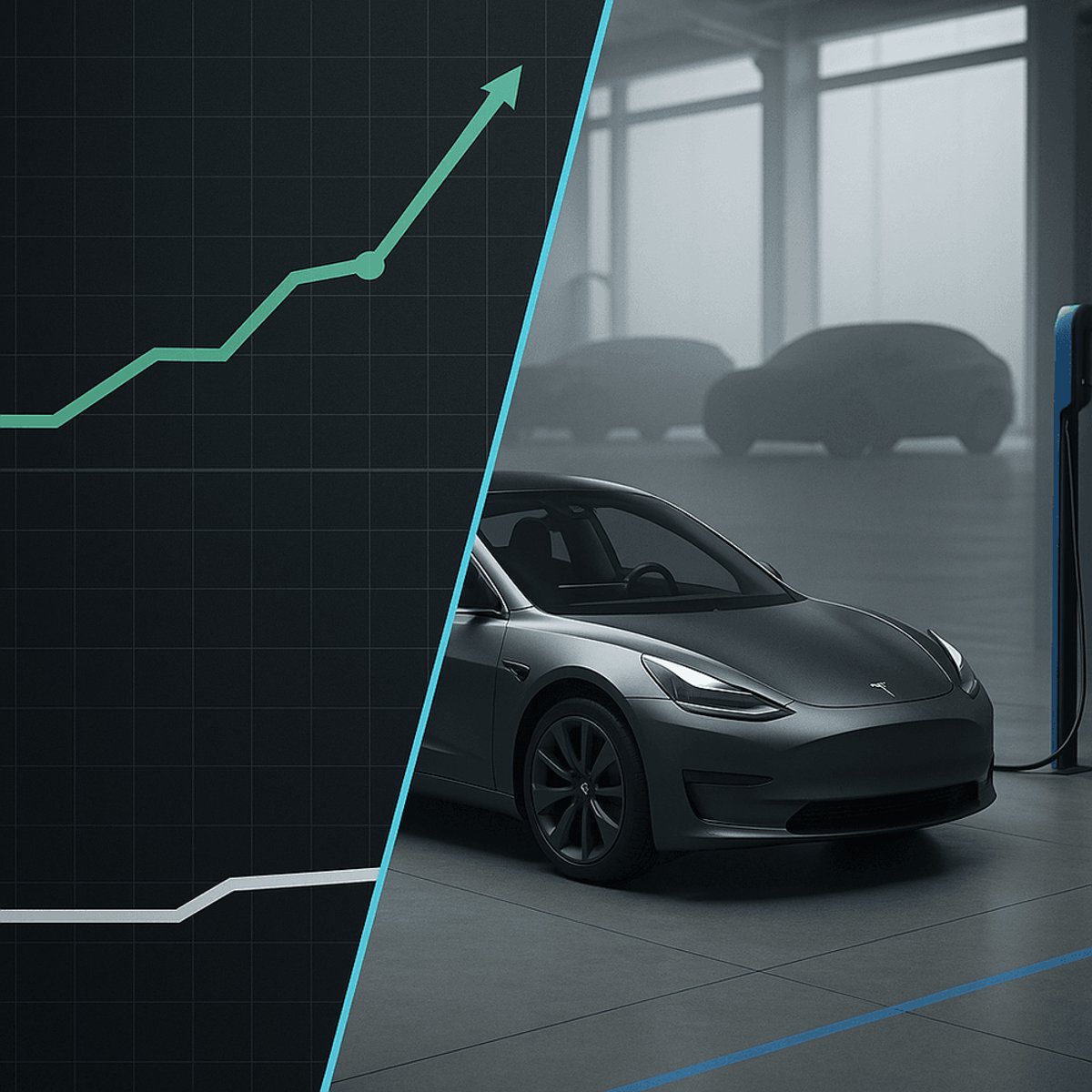
Tesla just delivered a mixed bag for investors. The electric vehicle maker beat Wall Street's profit expectations in Q1 2026 even as revenue came up short, with automotive margins jumping unexpectedly. The results come as the company's stock trails all megacap tech peers year-to-date, pressured by intensifying global competition in the EV market. The earnings reveal a company managing to protect profitability even while battling for market share.
Tesla posted a surprise profit beat Wednesday evening, even as revenue fell short of analyst expectations in what's becoming a defining tension for the world's most valuable automaker. The Q1 2026 results, released after markets closed, showed the company's ability to squeeze more profit from each vehicle sold, but underscored growing challenges in maintaining its breakneck revenue growth.
The standout metric was automotive margins, which jumped beyond Wall Street forecasts. That's a critical win for Tesla at a moment when investors have been fixated on whether the company can maintain profitability while cutting prices to compete with an onslaught of new EV models from legacy automakers and Chinese rivals like BYD. The margin expansion suggests the company's manufacturing efficiency gains and cost-cutting measures are paying off, even if they're not translating to top-line growth.
But the revenue miss tells another story. Tesla is facing its most competitive environment ever, with nearly every major automaker now flooding the market with electric models. Ford, GM, Volkswagen, and a wave of Chinese manufacturers have been aggressively pricing their EVs, forcing Tesla to respond with its own price cuts throughout 2025 and early 2026. Those discounts have helped maintain unit sales but crimped revenue growth.
The stock performance reflects investor anxiety about this dynamic. Tesla shares have underperformed every megacap tech peer so far in 2026, according to CNBC's reporting. While Apple, Microsoft, Nvidia, and Meta have all posted gains, Tesla has struggled to convince Wall Street it can grow both revenue and margins simultaneously in this new competitive landscape.
The quarterly results land at a pivotal moment for CEO Elon Musk, who's been promising investors that new models and the company's autonomous driving technology will reignite growth. The margin improvement could vindicate his strategy of sacrificing some revenue growth to protect profitability while investing heavily in next-generation products. But it also raises questions about whether Tesla can return to the explosive revenue growth that justified its premium valuation.
Analysts have been split on how to interpret Tesla's recent trajectory. Bulls argue the company's manufacturing scale, brand strength, and technology lead in batteries and self-driving will eventually overwhelm competitors. Bears counter that Tesla is becoming just another car company, vulnerable to the same cyclical pressures and margin compression that plague traditional automakers.
The automotive margin jump is particularly significant because it defies the pattern most analysts expected. With price cuts rippling through the industry and raw material costs remaining elevated, conventional wisdom suggested margins would compress. Instead, Tesla appears to have found efficiencies in its production process, potentially through its latest manufacturing innovations at facilities in Texas and Berlin.
What's unclear from the initial earnings release is how sustainable this margin expansion might be. If it's driven primarily by one-time cost reductions or favorable timing on raw materials, the gains could prove temporary. But if it reflects structural improvements in how Tesla builds cars, it could reshape the narrative around the company's long-term profitability.
The results set up what's likely to be a contentious earnings call, where Musk and CFO Vaibhav Taneja will face tough questions about the path forward. Investors want to know whether the revenue slowdown is temporary or signals a more fundamental challenge to Tesla's growth story. They'll also be looking for updates on the much-anticipated lower-cost vehicle platform and progress toward full self-driving capability.
For the broader EV industry, Tesla's mixed results underscore how quickly the sector is maturing. The days of unlimited growth and easy margins appear to be over, replaced by the hard work of competing on price, features, and efficiency. How Tesla navigates this transition will likely determine whether it can maintain its position as the industry leader or becomes just one player among many in an increasingly crowded field.
Tesla's Q1 results capture the company at a crossroads. The profit beat and margin expansion prove it can still execute operationally and find efficiencies that competitors haven't matched. But the revenue miss and year-to-date stock underperformance reveal investor skepticism about whether that's enough in an EV market that's shifted from a land grab to a grinding battle for every percentage point of market share. The question now isn't whether Tesla can make money, it's whether it can grow fast enough to justify a valuation that still prices in dominance. The answer will likely emerge over the next few quarters as new models hit the market and the competitive landscape continues to evolve.