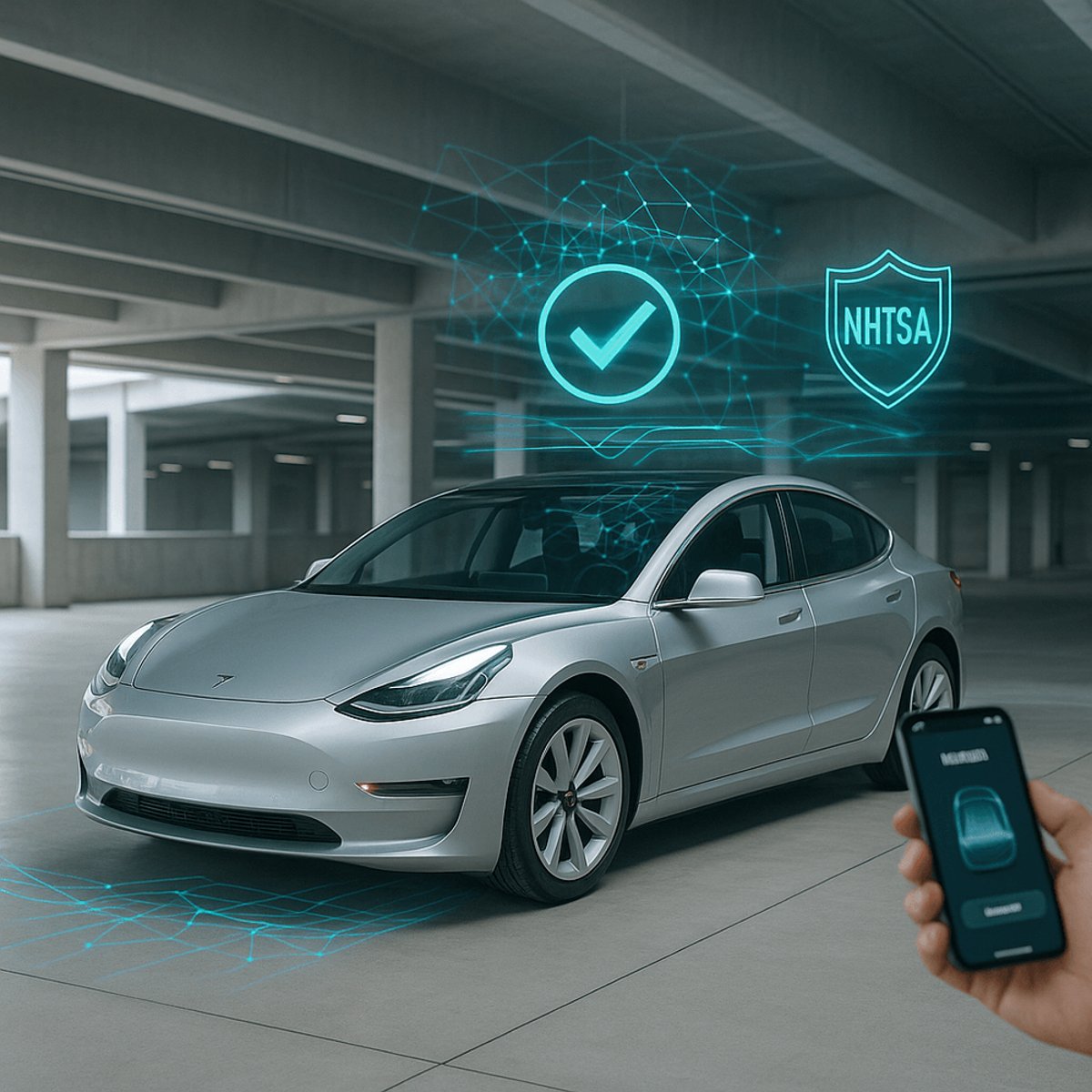
Federal safety regulators just gave Tesla a clean pass on its controversial "Actually Smart Summon" feature. The National Highway Traffic Safety Administration closed its investigation into the remote parking technology after finding that only a tiny fraction of deployments resulted in incidents, and critically, none caused injuries. The move marks a rare regulatory win for the EV maker as it pushes deeper into autonomous driving territory.
Tesla just caught a break from federal safety watchdogs. The National Highway Traffic Safety Administration wrapped up its investigation into the company's Actually Smart Summon feature, determining the remote parking technology doesn't pose the safety threat critics feared.
The regulatory clearance comes after NHTSA dug through usage data and incident reports tied to the feature, which lets Tesla owners summon their vehicles from parking spots using a smartphone app. According to the agency's findings reported by TechCrunch, only a small percentage of Smart Summon activations led to any kind of incident, and the critical detail: zero resulted in injuries.
That safety record apparently satisfied regulators enough to close the book on the probe. But the timing matters. Tesla didn't just sit idle while NHTSA investigators combed through the data. The company pushed out several software updates to the feature during the investigation window, likely tweaking the system's behavior and safety parameters in response to the scrutiny.
Actually Smart Summon represents Tesla's latest iteration of its remote parking tech, building on the original Smart Summon feature the company launched years ago. The "Actually" prefix isn't just marketing swagger. The updated version uses the same vision-based neural networks that power Tesla's Full Self-Driving system, theoretically making it smarter about navigating parking lots and avoiding obstacles.
But the feature's faced skepticism since launch. Videos of Teslas awkwardly navigating parking lots or getting confused by pedestrians went viral on social media, raising questions about whether the technology was ready for real-world deployment. Those concerns caught NHTSA's attention, prompting the investigation that's now concluded.
The closure marks a contrast to the ongoing regulatory pressure Tesla faces over its Full Self-Driving beta program. NHTSA continues to scrutinize FSD after multiple crashes involving the driver-assist system, some fatal. The agency's been particularly focused on how Tesla markets the feature and whether the "Full Self-Driving" name misleads drivers into over-trusting the technology.
For Tesla, the Smart Summon clearance removes one regulatory headache while bigger battles loom. The company's betting its future on autonomous driving technology, with CEO Elon Musk repeatedly promising that solving self-driving will unlock trillions in value. But delivering on that vision means navigating an increasingly skeptical regulatory environment.
The software updates Tesla deployed during the investigation hint at the company's strategy: iterate fast, fix problems in the field, and prove to regulators that over-the-air updates can address safety concerns without traditional recalls. It's a model that's worked before. Tesla's resolved previous NHTSA investigations by pushing software fixes rather than calling vehicles back to dealers.
Industry watchers see the Smart Summon closure as a small but meaningful signal. It suggests NHTSA's willing to credit Tesla's rapid software iteration when the safety data supports it. That could set a precedent for how regulators evaluate other AI-powered vehicle features as the industry races toward higher levels of automation.
But the investigation's closure doesn't mean Smart Summon is controversy-free. The feature still requires active user supervision, with Tesla's terms explicitly stating drivers remain responsible for their vehicle's movements. That liability shield matters as Tesla pushes the boundaries of what consumer vehicles can do autonomously.
The real test comes next: whether Tesla can apply the same approach to get regulatory blessing for more advanced autonomy features. Smart Summon operates at parking lot speeds in relatively controlled environments. Full Self-Driving tackles highway speeds, complex intersections, and unpredictable urban traffic. The safety bar climbs exponentially higher.
NHTSA's decision to close the Smart Summon investigation hands Tesla a regulatory win at a moment when the company needs it. The zero-injury track record and willingness to iterate through software updates proved enough to satisfy federal safety regulators, at least for this feature. But the bigger question remains unanswered: can Tesla replicate this success with Full Self-Driving, or will that more ambitious technology face the kind of regulatory resistance that could slow the company's autonomous driving timeline? For now, Tesla owners can keep summoning their cars from across parking lots without worrying about federal intervention.