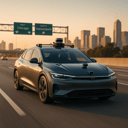
Tesla just released its most detailed safety report ever, claiming Full Self-Driving users crash every 5 million miles compared to the national average of 699,000 miles. The timing isn't coincidental - it comes weeks after Waymo's co-CEO challenged the industry to prove their safety claims with real data, pointedly asking why companies aren't being transparent about their autonomous vehicle performance.
Tesla just threw down the transparency gauntlet in the autonomous vehicle wars. The company dropped its most comprehensive safety report Friday, finally answering years of criticism about its "paltry" quarterly safety updates and directly responding to a challenge from Waymo leadership.
The numbers paint a striking picture. According to Tesla's new safety website, North American drivers using Full Self-Driving (Supervised) travel around 5 million miles before a major collision and 1.5 million miles before minor incidents. Compare that to the national average from NHTSA data: major crashes every 699,000 miles and minor ones every 229,000 miles.
This isn't just Tesla flexing its safety metrics - it's a direct response to industry pressure. At last month's TechCrunch Disrupt, Waymo co-CEO Tekedra Mawakana threw down a challenge that reverberated through Silicon Valley's autonomous vehicle community. When asked to name companies making roads safer, she didn't mince words: "I don't know who's on that list, because they're not telling us what's happening with their fleets."
Mawakana's comments, delivered without naming Tesla directly, cut to the heart of the industry's credibility problem. "If you're going to put vehicles on the road, and you're going to remove the driver from behind the wheel," she said, "it is incumbent upon you to be transparent about what's happening. And if you are not being transparent, then it is my view that you are not doing what is necessary in order to actually earn the right to make the road safer."
The timing of Tesla's response speaks volumes about how seriously the company took that criticism. For years, Tesla's quarterly safety reports have been repeatedly panned by analysts for focusing on Autopilot rather than the more advanced FSD system. Autopilot, designed primarily for highways where crash rates are naturally lower, painted an incomplete picture of Tesla's autonomous capabilities.
Now Tesla's finally broken out the data that matters. The new metrics show FSD users travel about 2.9 million miles between major collisions, while NHTSA data indicates all drivers average 505,000 miles per major collision. For minor incidents, FSD users see crashes every 986,000 miles compared to the national average of 178,000 miles.
But the real breakthrough isn't just the numbers - it's the methodology transparency. Tesla's now using Federal Motor Vehicle Safety Standards (49 C.F.R. § 563.5) to define "major collisions" as crashes triggering airbag deployment. More importantly, they're including any crash where FSD was active "at any point within five seconds leading up to a collision event."
"This calculation ensures that our reported collision rates for FSD (Supervised) capture not only collisions that occur while the system is actively controlling the vehicle, but also scenarios where a driver may disengage the system or where the system aborts on its own shortly before impact," Tesla explains on the new site.
This methodological clarity addresses another industry criticism - that companies cherry-pick data to make their systems look safer. By including crashes where drivers took over or the system disengaged, Tesla's casting a wider net that should capture more realistic performance metrics.
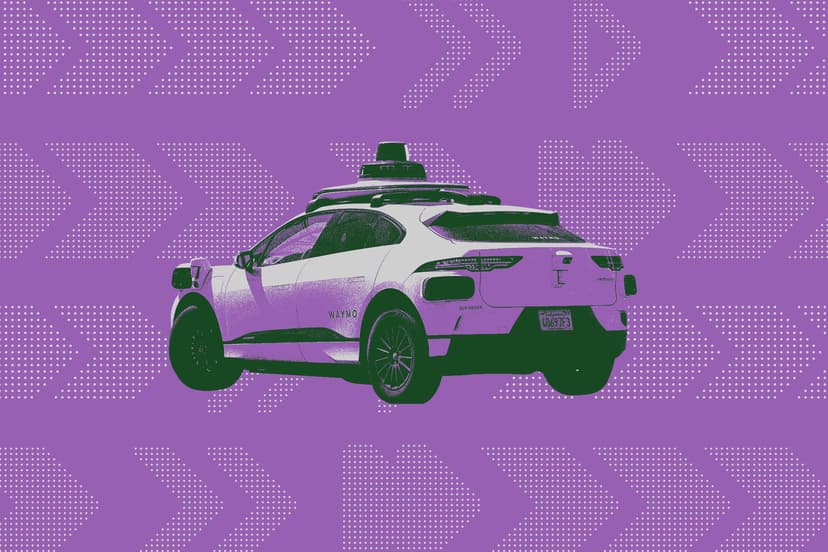
The competitive context makes this move even more significant. Waymo has published detailed research showing its vehicles are five times safer than human drivers overall and 12 times safer for pedestrian interactions. That data helped establish Waymo as the safety leader in robotaxi deployments across San Francisco, Phoenix, and Los Angeles.
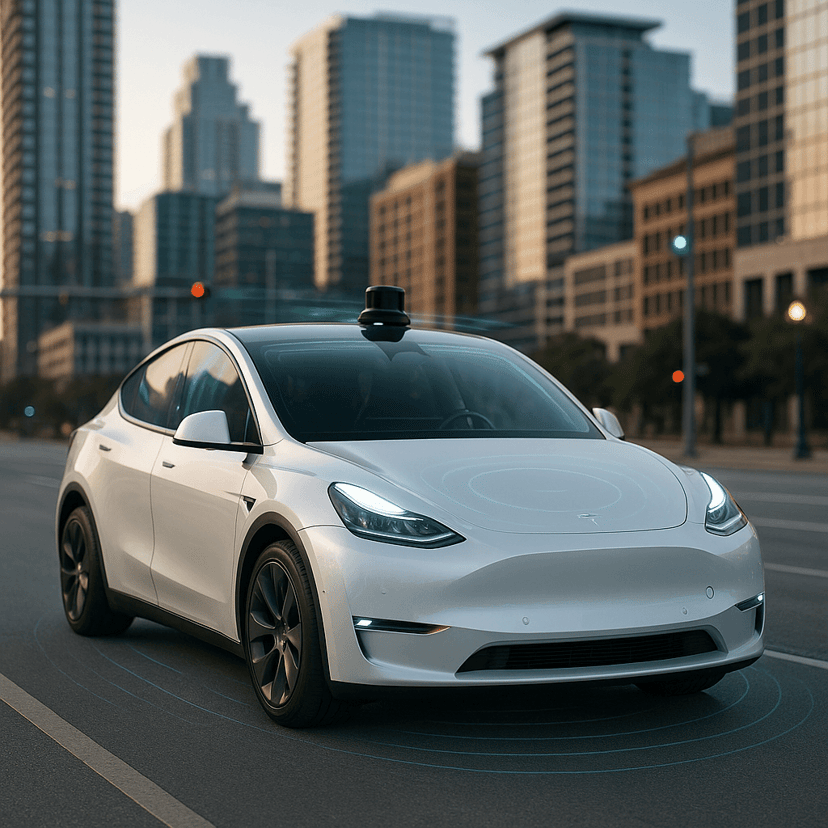
Tesla's transparency push comes as both companies race toward broader autonomous deployment. While Waymo operates truly driverless robotaxis in select cities, Tesla's been running a supervised robotaxi trial in Austin with safety drivers still behind the wheel. Yet Tesla has shared almost no public data about that program's performance - until now.
The quarterly update commitment signals Tesla's longer-term transparency strategy. The company says it'll use "rolling twelve-month aggregation of miles and collisions" to track recent trends and progress, though it won't release injury rate data since that requires manual collection rather than automated vehicle reporting.
Tesla's detailed safety data drop marks a pivotal moment in autonomous vehicle accountability. By responding directly to Waymo's transparency challenge with comprehensive metrics and clear methodology, Tesla's not just defending its technology - it's potentially setting a new industry standard. The real test will be whether quarterly updates show consistent improvement and whether competitors follow suit with equally detailed reporting. For an industry built on promises of safer roads, transparency might finally be catching up to the technology.