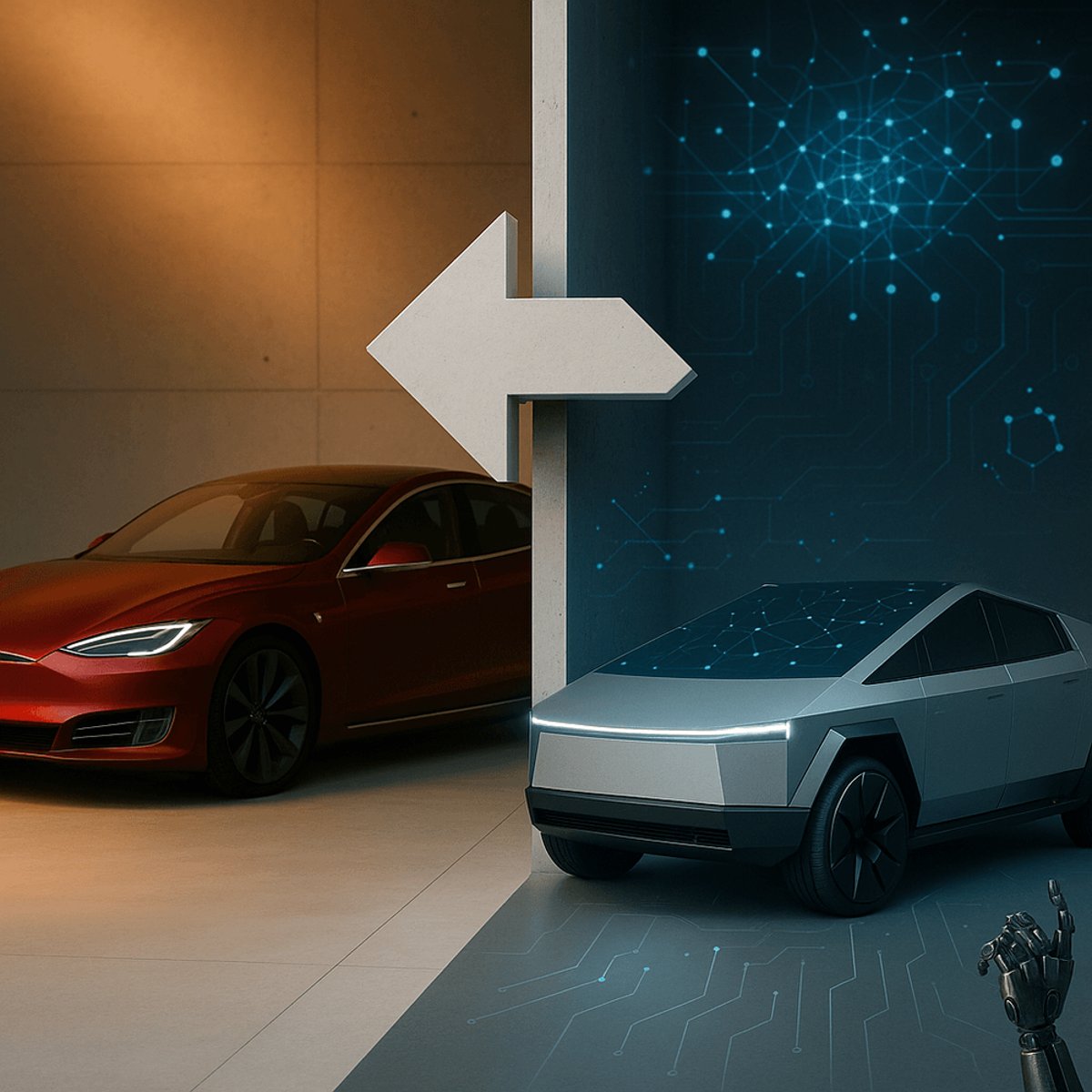
Tesla is closing the book on its luxury sedan era. The company is ending production of the Model S and Model X, its longest-running flagship vehicles, according to an exclusive TechCrunch report. The move signals a dramatic strategic pivot toward autonomous robotaxis and humanoid robots, placing the company's entire future on two unproven technologies: the Cybercab and the Optimus robot. For investors and EV buyers alike, it's the most radical transformation since Elon Musk first promised a mass-market electric car.
Tesla just made its boldest product decision in over a decade. The electric vehicle pioneer is pulling the plug on the Model S sedan and Model X SUV, the two vehicles that transformed it from a Silicon Valley curiosity into a luxury automaker, according to sources familiar with the matter speaking to TechCrunch.
The decision marks the end of an era that began in 2012 when the Model S first rolled off the line in Fremont, California. Back then, Tesla was fighting for survival, burning cash, and trying to prove electric cars could be desirable. The Model S changed everything - it was fast, had actual range, and made traditional luxury sedans feel ancient. The Model X followed in 2015 with those dramatic falcon-wing doors that became Instagram cathedrals.
But that chapter is over. Tesla is now going all-in on a future that doesn't include human drivers at all. The company is redirecting its manufacturing capacity and engineering resources entirely toward the Cybercab, its long-promised autonomous robotaxi, and mass production of the Optimus humanoid robot. It's a strategy that would make even the most risk-tolerant Silicon Valley founder nervous.
The Cybercab has been in development since Elon Musk first started promising a robotaxi network back in 2019. The vehicle is designed without a steering wheel or pedals, relying entirely on Tesla's Full Self-Driving technology to navigate. That same FSD system has been stuck in beta testing for years, accumulating regulatory scrutiny and raising questions about whether Tesla can actually deliver on the autonomous driving promises that underpin this entire strategy.
Musk has repeatedly claimed that robotaxis would be safer than human drivers and generate passive income for Tesla owners. But turning that vision into reality requires solving perhaps the hardest technical challenge in transportation: full autonomy in unpredictable urban environments. Waymo, owned by Google parent Alphabet, has spent over a decade and billions of dollars on the problem and still operates in limited geofenced areas.
The Optimus robot adds another layer of uncertainty. Tesla first showed off the humanoid robot concept in 2021, with Musk predicting it would eventually be worth more than the car business. Recent demonstrations have shown Optimus walking, manipulating objects, and performing basic tasks, but it's nowhere near the level of dexterity and intelligence needed for the factory work and household assistance Tesla has promised.
For context, Boston Dynamics has been perfecting robotic movement for decades and still hasn't found a mass-market application. Tesla is betting it can leapfrog that expertise through AI and neural networks, then manufacture millions of units at a price point that makes economic sense. It's an audacious gamble.
The financial implications are massive. Model S and Model X represented Tesla's highest-margin vehicles, even as their sales volumes declined in recent years compared to the mass-market Model 3 and Model Y. Eliminating them removes a crucial revenue stream before the Cybercab has delivered a single paying passenger or Optimus has shipped to a single customer.
Wall Street has given Tesla enormous latitude based on Musk's track record of delivering on seemingly impossible promises - from making EVs mainstream to landing rockets vertically. But this pivot is different. It's not iterating on proven technology; it's abandoning a profitable business to chase two moonshots simultaneously.
Competitors are watching closely. Traditional automakers like Ford and GM have pulled back from autonomous vehicle investments after burning billions. Meanwhile, Chinese EV makers like BYD continue to eat into Tesla's market share with cheaper, conventional electric vehicles. Tesla is zigging toward robotics while the rest of the industry zags toward affordable EVs.
The move also raises questions about production capacity. Tesla's factories in Fremont, Shanghai, Berlin, and Texas were designed to build conventional vehicles with steering wheels, seats, and all the components robotaxis won't need. Retooling for both Cybercab production and robot assembly will require significant capital investment and time - resources Tesla will need as it phases out its cash-generating models.
There's precedent for this kind of radical transformation. Apple killed the iPod at its peak to go all-in on the iPhone. Netflix abandoned its DVD business to bet on streaming. But those companies had their new products already proving traction. Tesla is discontinuing proven sellers for products that exist mostly in prototype form.
What happens to the premium Tesla buyer now? The Model 3 and Model Y serve the mass market well, but they don't offer the performance, range, or luxury features that Model S and X customers expected. Tesla is essentially ceding the high-end electric vehicle segment to rivals like Lucid, Mercedes-Benz, and BMW right as those automakers finally get serious about electric luxury vehicles.
Tesla is making a bet that would terrify most CEOs - killing profitable products to chase a radically different future. If the Cybercab and Optimus succeed at scale, Musk will have pulled off another impossible transformation and redefined what Tesla actually is. If they stumble, the company will have voluntarily given up its luxury vehicle business and margin cushion for nothing. The next 18 months will determine whether this was visionary strategy or reckless abandonment of a working business model. Either way, the Tesla that emerges from this transition won't look anything like the company that disrupted the auto industry a decade ago.