Tesla is about to report what could be its most challenging quarter yet. Wall Street expects the electric vehicle maker to post a 3.6% revenue decline to $24.79 billion when it announces fourth-quarter results after the bell today, marking the third drop in four quarters. If full-year projections hold at $95 billion, it'll be the company's first annual revenue decline since going public - a stark reversal for an automaker that built its reputation on relentless growth.
Tesla is running out of road on its growth story. The company reports fourth-quarter earnings this afternoon, and the numbers tell a tale of an automotive giant hitting the brakes. Analysts polled by LSEG expect revenue of $24.79 billion, down from $25.7 billion a year ago - the third quarterly decline in the past four quarters.
But it's the full-year picture that's really turning heads. Tesla's projected 2025 revenue of roughly $95 billion would represent a 2.8% slide from 2024, marking the first annual revenue drop in the company's history as a public entity. For a company that's spent over a decade defying automotive industry gravity, it's a jarring reversal.
The culprit? Competition is finally catching up. BYD and other Chinese automakers have been eating Tesla's lunch in the world's largest EV market, forcing price cuts and squeezing margins. Earlier this month, Tesla reported a 16% nosedive in vehicle deliveries for Q4, with the full year down 8.6%. The company calls these "deliveries" rather than sales in its shareholder communications, but they're the closest proxy investors get for actual demand.
CEO Elon Musk has been working overtime to redirect the narrative. While core auto sales stumble, he's been hyping Tesla's Robotaxi ambitions and pitching Optimus humanoid robots that have yet to reach customers. Last week, Tesla executives announced they'd pulled human safety supervisors from a handful of vehicles in their Austin pilot program, allowing genuine driverless passenger rides.
It's a bold pivot, but the timing's awkward. While Tesla experiments in Texas, Alphabet's Waymo keeps expanding its commercial robotaxi footprint across multiple U.S. cities, and Baidu's Apollo Go dominates in Asia. Tesla's also running a traditional ride-hail service with human drivers in San Francisco, where regulators haven't greenlit driverless operations yet.
Investors are getting restless about the mixed signals. On Tesla's Say Technologies forum, where shareholders submit earnings call questions, top-voted entries focus heavily on Full Self-Driving progress and robotaxi timelines. But there's also growing curiosity about Musk's other ventures - particularly whether Tesla plans to invest in his xAI startup, and if shareholders might get preferential access when SpaceX goes public later this year.
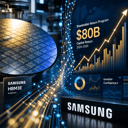
The capital expenditure story will be crucial tonight. During November's annual shareholder meeting, Musk revealed plans to manufacture new chips with Samsung and Taiwan Semiconductor Manufacturing Co. to power Tesla's self-driving and robotics push. FactSet analysts project capex will jump to $11 billion in 2026 from an estimated $9.5 billion in 2025 - a massive bet on technologies that haven't yet proven they can offset declining vehicle sales.
Tesla stock managed to claw back losses and finish 2025 up 11% after a brutal start to the year, but that modest gain masks deeper concerns. Revenue growth has been sluggish for quarters now, and the company's core automotive business faces headwinds that aren't letting up. Earnings per share estimates sit at 45 cents for the quarter, reflecting compressed margins from the price wars Musk launched to defend market share.
The earnings call, scheduled for 5:30 p.m. ET, will test Musk's ability to sell the future while the present disappoints. Robotaxis and robots make for compelling headlines, but investors are increasingly asking when - or if - these moonshots will generate the kind of revenue that once came effortlessly from selling electric cars.
What's clear is that Tesla's in transition, whether by choice or necessity. The question facing Musk tonight is whether he can convince Wall Street that the company's next act will be as transformative as its first.
Tesla's about to deliver a historical first - and not the kind it wants. The company's first-ever annual revenue decline signals that the growth-at-all-costs era is over, replaced by a messier reality of Chinese competition, margin pressure, and unproven bets on autonomous vehicles and robotics. Musk's challenge tonight isn't just explaining disappointing numbers - it's convincing investors that Tesla's transformation from car company to AI robotics powerhouse is more than just a distraction from sliding auto sales. With Waymo already operating commercial robotaxis at scale and BYD dominating EV sales in China, the window for Tesla to prove its next act is closing fast.