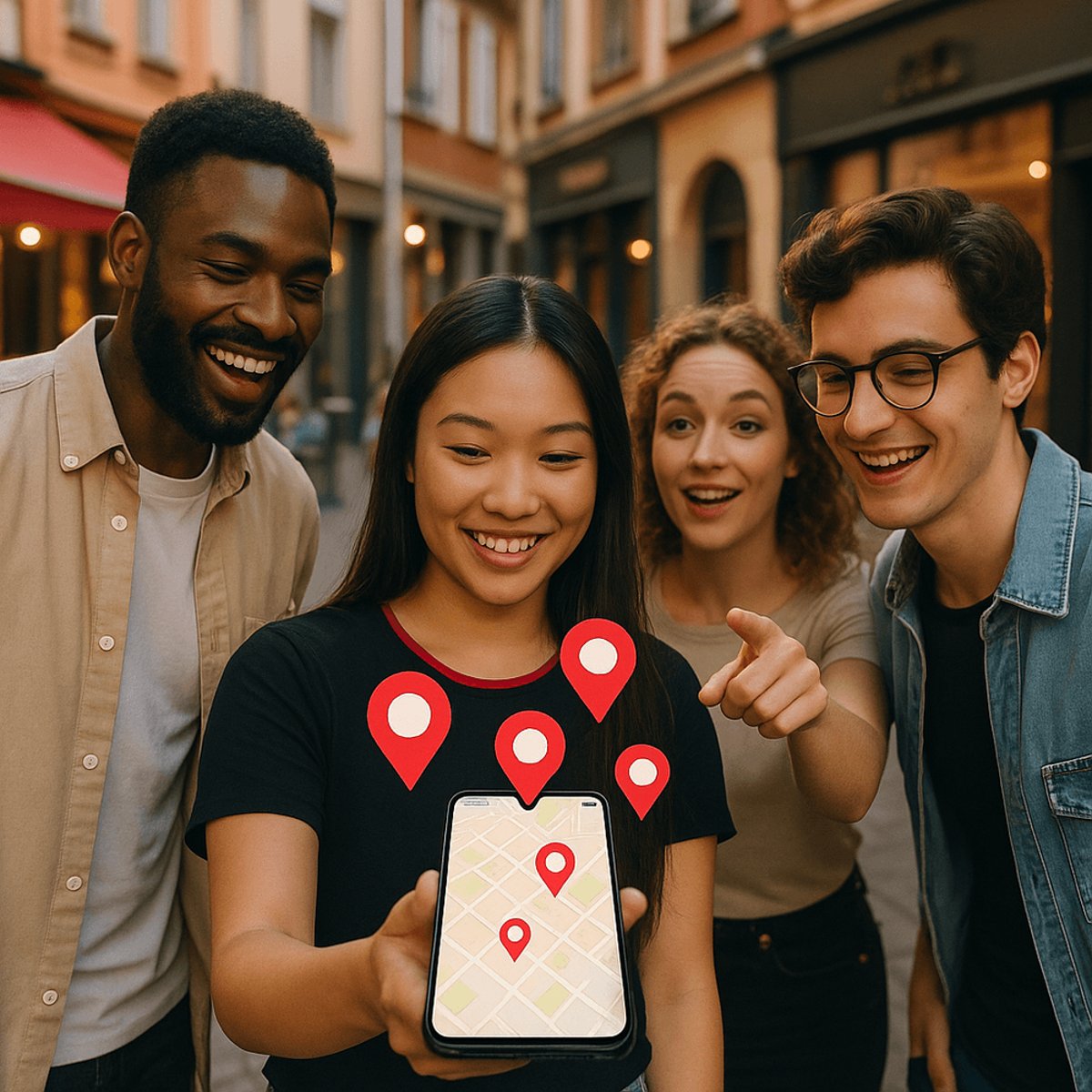
TikTok just flipped the local discovery switch in Europe. The social media giant is rolling out its 'Nearby Feed' feature across the U.K., France, Italy, and Germany, letting users explore restaurants, events, and attractions happening right around them. This isn't just another algorithm tweak - it's a direct play for local business dollars and hyperlocal engagement that could reshape how people discover their neighborhoods through social media.
TikTok is making its biggest push yet into local discovery. The company's new 'Nearby Feed' launches today across the U.K., France, Italy, and Germany, marking the feature's first major expansion since initial testing began in Southeast Asia back in 2022. The move signals TikTok's growing ambition to challenge Google Maps and Yelp on their home turf - local business discovery.
The timing couldn't be more strategic. According to TikTok's own data, 46% of UK users have already visited local shops, restaurants, or attractions they found on the platform. That's conversion data that would make any local advertising executive take notice.
'Posts in the Nearby Feed are shown to people based on location, the topic of the content, and when the content was posted,' the company explained in its official announcement. The algorithm weighs travel content, events, food recommendations, and local services against user interests and engagement patterns - essentially creating a personalized neighborhood guide that updates in real-time.
But TikTok's approach differs significantly from traditional local discovery apps. Instead of business listings and star ratings, users get authentic video content from real people experiencing these places. It's user-generated discovery at scale, powered by the same recommendation engine that's kept billions scrolling through dance videos and cooking hacks.
The feature comes with built-in privacy controls that reflect growing regulatory scrutiny around location data. Only users 18 and older can opt into location sharing, and the company promises to handle location information 'in line with local laws' - a careful nod to Europe's strict GDPR requirements. iOS users will see clear indicators when their location is being accessed.
For creators, this opens entirely new monetization possibilities. Local influencers and small business owners can now reach neighborhood audiences without competing against global viral content. Someone reviewing a corner cafe in Manchester won't get lost in an algorithm dominated by million-follower accounts from Los Angeles.
'The Nearby Feed also supports local economies by increasing visibility for small businesses, cultural institutions, and local creators,' TikTok noted. That's not just marketing speak - it's a direct challenge to Google's local advertising dominance and Meta's struggling local business tools.
The technical implementation is cleverly designed for discovery. Users won't see a generic 'Nearby' tab - instead, the feed displays their actual location name, making it feel more like exploring 'Downtown Paris' or 'Camden Market' rather than using a corporate feature. Users can also manually change locations for travel research, turning the tool into a trip planning resource.
What's particularly interesting is what TikTok chose to restrict. Content from users under 18, private accounts, or posts set to friends-only won't appear in local feeds. This content filtering suggests TikTok is positioning Nearby Feed as a public discovery tool rather than a social networking feature.
The European launch comes as TikTok faces mounting pressure over data practices and algorithm transparency. By starting with location-based features in privacy-conscious Europe, the company is essentially beta-testing its compliance approach for global expansion. If Nearby Feed succeeds under GDPR scrutiny, it could roll out worldwide with regulatory confidence.
TikTok hasn't announced expansion plans beyond these four markets, likely wanting to measure user adoption and creator engagement before committing resources to additional regions. The success metrics will be telling - are users actually visiting local businesses, and are creators producing enough quality local content to keep the feeds interesting?
TikTok's Nearby Feed represents more than just another social feature - it's a calculated move into the lucrative local discovery market. With nearly half of UK users already acting on local recommendations from the platform, TikTok has real conversion data backing this expansion. The European launch will test whether location-based social discovery can thrive under strict privacy regulations, potentially setting the stage for a global rollout that could challenge Google's local search dominance. For local businesses and neighborhood creators, this could be the breakthrough that turns social media engagement into actual foot traffic and revenue.