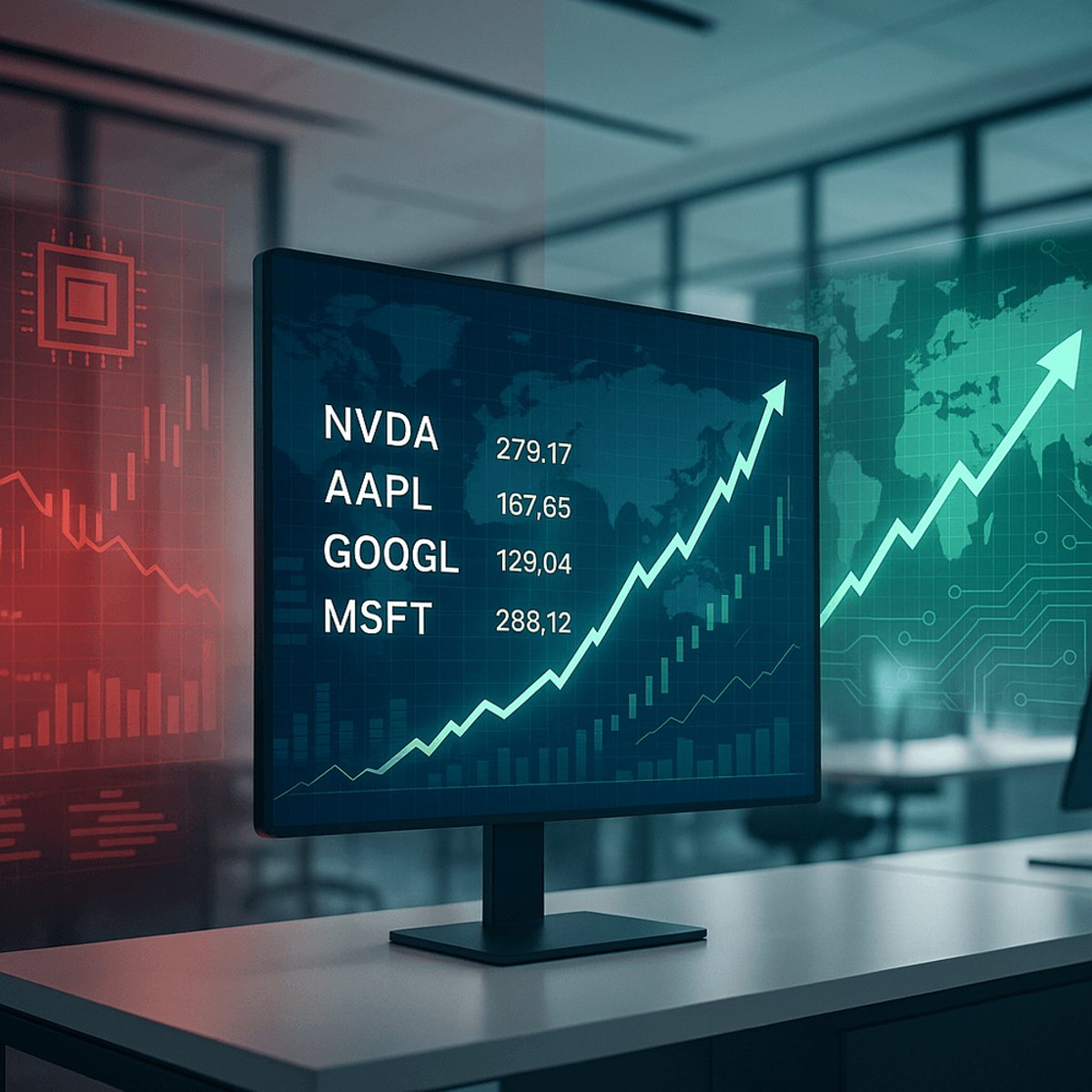
President Trump declared the Middle East war definitively over while simultaneously walking back his China tariff threats, sending tech stocks soaring as markets embraced the dual dose of geopolitical optimism. The dramatic pivot from Friday's sell-off highlights how quickly Trump's messaging can reshape investor sentiment.
The tech sector got an unexpected gift this Monday as President Trump delivered a one-two punch of geopolitical optimism that sent investors scrambling back into growth stocks. Standing in Israel's Knesset, Trump declared the "long and painful nightmare" was finally over for both Israelis and Palestinians, giving reporters an unequivocal "yes" when asked if the Middle East war had ended, according to Reuters.
But it wasn't just Middle East peace driving the rally - Trump also appeared to walk back his aggressive China stance just days after hitting China with 100% additional tariffs that triggered Friday's tech sell-off. His Truth Social post declaring "it will all be fine" with China was all markets needed to hear.
The reversal was swift and decisive. Technology stocks led the charge higher as traders embraced what some are calling "TACO" - Trump's apparent willingness to cool tensions rather than escalate them. The whipsaw from Friday's tariff-induced panic to Monday's relief rally underscores just how sensitive tech valuations have become to Trump's messaging.
Broadcom emerged as the day's biggest winner, surging almost 10% after announcing a partnership with OpenAI to build and deploy custom chips. The deal represents a significant shift in the AI infrastructure landscape, potentially challenging Nvidia's dominant position as OpenAI's primary chip supplier. "This changes the competitive dynamics completely," said one semiconductor analyst who requested anonymity.
The OpenAI-Broadcom alliance also highlights the ChatGPT maker's growing influence across the tech ecosystem. Oracle CEO Larry Ellison recently suggested OpenAI has deep enough pockets to pay $60 billion annually for computing resources, positioning the company as what some analysts are calling "the tech sector's Santa Claus."
Meanwhile, quantum computing stocks got their own boost after JPMorgan Chase announced a $10 billion investment in sectors crucial to national interests. The bank's quantum computing push reflects growing Wall Street interest in next-generation technologies that could reshape financial services.
The market's violent swings between Trump's tariff threats and peace overtures reveal how much uncertainty still hangs over tech's growth trajectory. Friday's sell-off demonstrated that even brief escalations in trade tensions can trigger significant capital flight from growth stocks. But Monday's recovery suggests investors remain eager to buy any diplomatic olive branches.
For Nvidia, the Broadcom-OpenAI partnership poses strategic questions about its AI chip monopoly. While Nvidia remains OpenAI's primary supplier for training large language models, custom chip partnerships could gradually erode that dominance. The stock's muted response to Monday's rally reflects these competitive concerns.
Trump's declaration of Middle East peace, while politically significant, carries immediate implications for defense contractors and energy markets. But the tech sector's reaction suggests investors are more focused on trade policy stability than geopolitical developments. The China trade war's impact on semiconductor supply chains remains the primary concern.
The dramatic reversal also highlights how Trump's social media presence continues to move markets. His Truth Social post about China relations being "fine" was enough to trigger algorithmic buying across tech names, demonstrating the outsized influence of presidential communications in today's markets.
Trump's twin announcements on Middle East peace and China trade relations showcase his continued ability to whipsaw markets with messaging alone. While the sustainability of both diplomatic breakthroughs remains uncertain, tech investors are clearly betting that reduced geopolitical tensions benefit growth stocks. The Broadcom-OpenAI partnership adds another layer of complexity to the AI infrastructure race, potentially reshaping competitive dynamics that have favored Nvidia. Markets will now watch whether Trump's optimistic rhetoric translates into lasting policy stability.