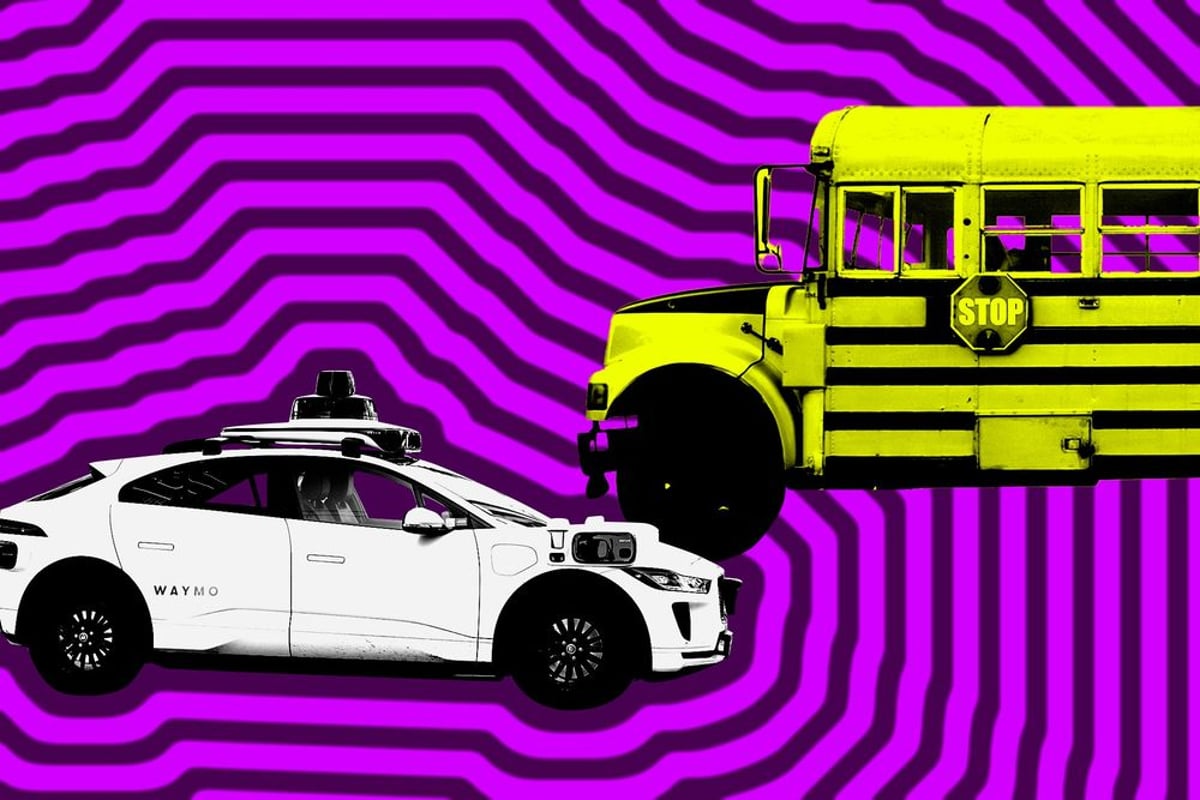
Waymo is facing a crisis that cuts to the heart of autonomous vehicle safety. After 24 reported incidents of its robotaxis illegally passing stopped school buses in Austin and one collision with a child in California, federal investigators are now heading to Texas to probe whether the Google-owned company's push to make its cars drive more assertively has created dangerous new risks in school zones.
Waymo built its reputation on caution. For years, Alphabet's self-driving unit positioned itself as the responsible alternative in an industry known for moving fast and breaking things. But that carefully cultivated image is crumbling in Austin school zones, where the company's robotaxis have repeatedly blown past stopped buses loaded with children.
In December, the National Highway Traffic Safety Administration opened an investigation after Austin Independent School District reported at least 19 incidents where Waymo vehicles failed to fully stop for school buses during loading and unloading, an illegal violation in all 50 states. The company quickly issued a voluntary software recall and rolled out updates intended to fix the problem.
The patch didn't work. Since the update, Austin ISD says at least four additional violations have occurred, according to EdWeek. The most recent came on January 19th, when a Waymo vehicle was filmed breezing through the opposite lane of traffic as children waited to cross the street and board a bus with its stop arm extended. In total, at least 24 safety violations involving Waymo vehicles and school buses have been reported in Austin since the start of the 2025 school year.
Waymo initially defended itself by noting that none of the Austin incidents resulted in collisions or injuries. That's no longer the case. Last week, the company published a blog post acknowledging that one of its vehicles struck a child outside a Santa Monica elementary school on January 23rd. The vehicle slowed from 17 mph to 6 mph in the instant before impact, according to Waymo's own data. The school district told The Washington Post the child sustained only minor injuries, but the outcome could have been catastrophic.
The incidents come at a particularly awkward time for Waymo, which is planning major rollouts across the country. On Wednesday, the company's chief safety officer Mauricio Peña appeared at a Senate hearing to address safety concerns. He said Waymo is evaluating each incident and developing fixes, some already incorporated into its software. Peña also said they're working with Austin ISD to collect data on different lighting patterns and conditions. Notably absent was any commitment to pause operations around school buses while that testing occurs.
Experts say the recurring failures point to fundamental challenges in teaching autonomous systems common-sense judgment. "These technologies are still being developed and tested in a real world environment because there's a lot of things that happen in the real world that's hard for companies and engineers to anticipate," Cornell Tech professor and human-robot interaction expert Wendy Ju told The Verge. "Unless you have some understanding of all the things that might happen, it's hard to know what to design around."
Navigating around school buses is one of the more dangerous aspects of driving for both humans and robots. NHTSA attributed 61 fatalities to vehicles illegally passing school buses between 2000 and 2023, almost half of whom were pedestrians under 18. The danger stems less from bus drivers and more from the chaotic, improvisational nature of the situation. Buses are often double-packed, and kids might not wait to cross when they're supposed to.
"Waymos are having an issue because every driver has issues around school buses," Ju said. Drivers need to rely on experience and intuition in addition to following firm rules. That kind of common-sense logic, which comes naturally to skilled human drivers, is particularly challenging for self-driving cars. "There's all these moments in time where you actually have to make a judgment call between different things that you're supposed to do," Ju explained.
On a technical level, there may be more at play. George Mason University professor and director of the Mason Autonomy and Robotics Center Missy Cummings told The Verge the spike in robotaxi safety issues involving school buses may be linked to Waymo's shift away from traditional modular machine learning toward greater emphasis on end-to-end learning, a technology she calls "faddish" and "still nascent."
Earlier autonomous vehicle systems relied on conservative, layered architectures with separate modules responsible for detecting objects, classifying them, and applying explicit safety rules. End-to-end learning collapses much of that process into a single model that takes in all sensor information at once and produces driving decisions probabilistically, based on patterns learned from large swaths of human driving behavior. The result can seem more natural and humanlike, though Cummings argues it introduces additional risk in high-stakes scenarios like school bus stops.
The safety incidents demonstrate "all the hallmarks of problems when you change architecture," Cummings said. "I suspect many robotaxi companies are doing it."
Austin ISD has made its position clear. Officials reportedly asked Waymo to cease robotaxi operations around schools during loading and unloading hours until the issue is resolved, according to Community Impact. But Waymo refused and has continued operating, a decision experts say seems both shortsighted and at odds with the company's public image of promoting safety.
"I think it's concerning that Waymo wouldn't agree to that," Cummings said. "You're only talking about truly an hour and a half, 45 minutes in the morning and 45 minutes in the afternoon, so it's not a heavy lift to not do that."
Carnegie Mellon professor and AV safety expert Philip Koopman echoed that sentiment in his Substack newsletter Autonomous System Safety. "Waymo is making an explicit choice to gamble with children's lives," Koopman wrote. "They say they like the odds, but it is not their gamble to make."
While the vast majority of issues involving school buses occur in Austin, that's likely partly because the city recently outfitted each stop arm with cameras. Similar incidents could be happening elsewhere but going unnoticed. Axios reported the problem is also happening in Atlanta.
The school bus incidents, along with the California collision, have sparked three federal investigations in as many months. Though unlikely in Texas' loose AV regulatory environment, incidents like these could put Waymo at risk of having its operating license revoked in other jurisdictions. Even now, as investigators reportedly head to Austin in person to probe the company, robotaxis continue to operate in school zones. At minimum, that approach could make other municipalities think twice before welcoming Waymo's cars to their streets.
"Waymo brought this on themselves," Cummings said. "If they had done the responsible thing and self-elected to stay out of school zones until they fixed it, then they wouldn't have this big public investigation."
The school bus incidents reveal a deeper tension in autonomous vehicle development. As companies like Waymo try to make their cars drive more like humans - more assertive, more natural - they risk inheriting our worst habits along with our best ones. The question isn't whether AI can learn to drive, but whether it can learn the split-second judgment calls that keep children safe in chaotic school zones. With federal investigators now heading to Austin and Waymo refusing to pause operations during school hours, we're about to find out if the company's commitment to safety is as strong as its marketing suggests.