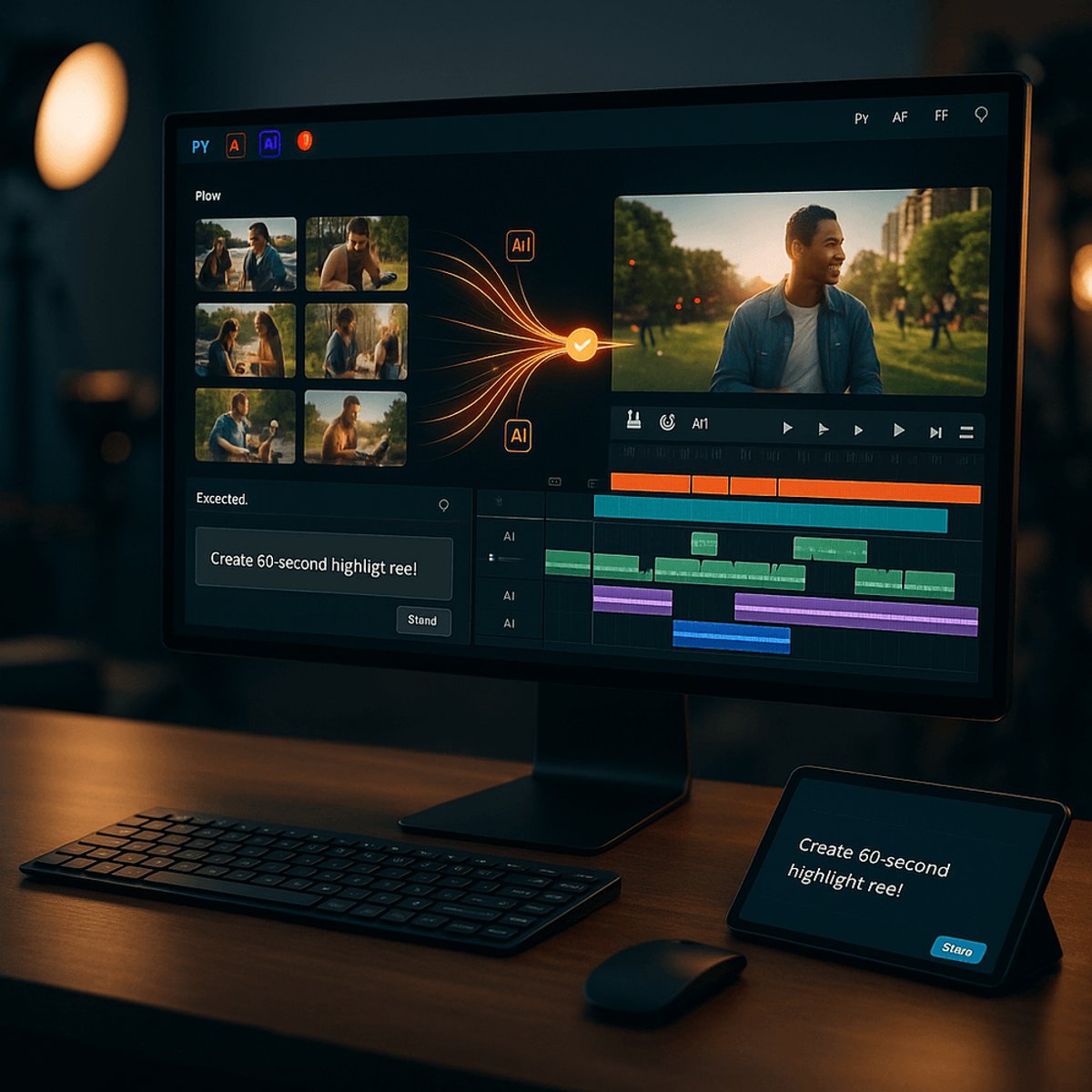
Adobe just fired a shot across the bow of traditional video editing. The company's Firefly AI platform is rolling out Quick Cut, a feature that automatically transforms raw footage into edited video drafts based on simple text instructions. It's the latest salvo in the AI-powered creative tools arms race, putting automated editing capabilities directly into the hands of enterprise creators and potentially reshaping how video content gets produced at scale.
Adobe is making its biggest play yet to automate the video editing workflow. The company's announcing Quick Cut today, a new feature within Adobe Firefly that uses AI to analyze raw footage and assemble edited video drafts based on user instructions.
The timing couldn't be more pointed. As AI video tools explode from experimental novelties to production-ready software, Adobe's betting that creators want automation that fits into their existing workflows rather than standalone miracle tools. Quick Cut doesn't generate video from scratch like OpenAI's Sora or Runway's Gen-3. Instead, it tackles the grunt work editors actually face: cutting hours of footage down to something watchable.
Here's how it works. Users upload their raw clips to Firefly, then describe what they want in natural language. "Create a 60-second highlight reel focusing on outdoor shots" or "Edit this into a product demo emphasizing the unboxing moment." The AI analyzes the footage, identifies relevant sections, makes cuts, and assembles a first draft. From there, creators can refine in Adobe Premiere Pro or other tools.
The feature arrives as Adobe faces mounting pressure from nimbler AI-native competitors. Descript pioneered text-based video editing years ago. Runway and Pika captured mindshare with generative video. Even Meta is testing AI editing tools within Instagram. Adobe's response has been to fortify its enterprise moat, embedding AI across its Creative Cloud suite where 30 million subscribers already live.
Quick Cut specifically targets the pain point of iteration speed. For marketing teams churning out social content, agencies managing multiple clients, or corporate communications departments producing internal videos, the first draft is often the biggest bottleneck. If AI can deliver something 70% of the way there in minutes instead of hours, that's a compelling value proposition even if humans still need to polish the final 30%.
Adobe's advantage here is integration. Unlike standalone tools, Quick Cut lives inside the Firefly ecosystem, which connects to Premiere Pro, After Effects, and the rest of Creative Cloud. Edits can flow seamlessly between AI-assisted drafting and professional finishing. That workflow continuity matters more to enterprise buyers than raw feature wizardry.
But the company's also playing catch-up. Adobe first unveiled Firefly's video capabilities last year, focusing initially on generative features like text-to-video and style transfer. Quick Cut represents a pivot toward practical automation over creative generation, a tacit admission that enterprises care more about efficiency than novelty.
The competitive landscape is brutal. OpenAI is reportedly preparing a Sora release for creative professionals. Google is integrating Veo into YouTube workflows. Microsoft is embedding Copilot into video tools. Adobe's response is to leverage its distribution advantage, getting Quick Cut into the hands of millions of existing users rather than asking them to adopt something new.
Pricing and availability details remain murky. Adobe hasn't disclosed whether Quick Cut will be included in standard Creative Cloud subscriptions or require a separate Firefly tier. The company's been experimenting with consumption-based pricing for AI features, charging per generation or analysis. That model could prove expensive for high-volume video workflows.
What's clear is Adobe's betting big on AI as a retention and upsell strategy. The company's stock has climbed on the promise of AI-driven revenue growth, but it needs to prove that generative tools translate to paying customers. Quick Cut is a test case for whether enterprises will pay for AI that makes existing jobs faster versus AI that creates entirely new capabilities.
For video editors, the message is mixed. Quick Cut won't replace skilled professionals cutting feature films or complex commercials. But it might very well automate the lower end of the market where speed trumps artistry. The same dynamic that's played out in photo editing, graphic design, and copywriting is now coming for video production.
Adobe's Quick Cut represents a pragmatic bet on AI augmentation over replacement. Rather than chasing the generative video hype cycle, the company's focusing on automation that solves real workflow bottlenecks for its enterprise base. Whether that's enough to fend off AI-native competitors remains to be seen, but it's a reminder that in the enterprise market, distribution and integration often matter more than cutting-edge capabilities. The real question isn't whether AI can edit video—it's whether Adobe can monetize that capability before someone else eats their lunch.