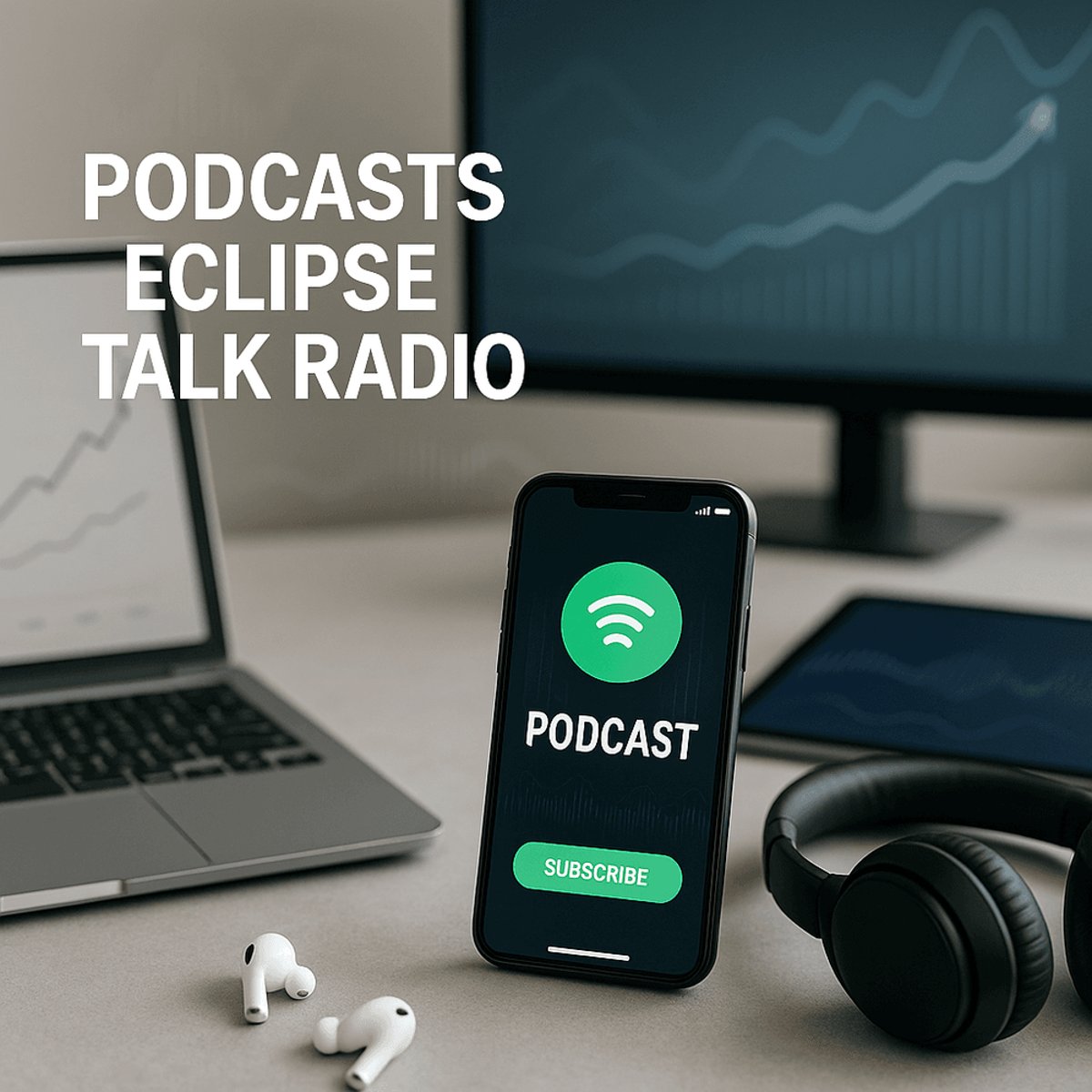
Podcasts have officially overtaken talk radio in American listening habits, marking a watershed moment for digital audio platforms. The shift, revealed in a new study by Edison Research and Triton Digital, signals the acceleration of streaming's dominance over traditional broadcast - a trend that's reshaping how companies like Spotify, Apple, and Amazon approach audio content. But here's the twist: video podcasts aren't killing audio shows, despite the format's explosive growth on YouTube and other platforms.
The numbers tell a story that's been building for years but has now reached a tipping point. Edison Research and Triton Digital's latest findings show podcasts have surpassed talk radio in weekly listening frequency among Americans, a milestone that seemed inevitable but still carries massive implications for the media landscape.
This isn't just about content preference - it's about infrastructure. Traditional AM/FM talk radio operates on a broadcast model that's been largely unchanged for decades. Podcasts, by contrast, represent the on-demand, algorithm-driven future that tech platforms have been building toward. Spotify has invested over $1 billion in podcast content and technology since 2019, including high-profile acquisitions like Gimlet Media and Anchor. Apple continues to dominate podcast distribution through Apple Podcasts, while Amazon has been quietly building out its podcast ecosystem through Audible and Music Unlimited.
The study's findings on video podcasting add another layer of complexity. Despite YouTube's aggressive push into podcast territory - the platform has become the go-to destination for video podcast consumption - audio-only listening remains robust. This suggests consumers are treating podcasts as a multi-format medium rather than migrating wholesale to video. Joe Rogan's show on Spotify, for instance, is consumed predominantly in audio format despite video availability, according to industry observers.
What's driving this shift? Convenience and personalization. Podcast apps offer features that traditional radio simply can't match: pause and resume across devices, personalized recommendations, variable playback speeds, and the ability to listen to exactly what you want, when you want it. These are table stakes in the streaming era, but they represent a fundamental reimagining of how audio content reaches audiences.
The competitive landscape is heating up as a result. Spotify has been layering AI-powered discovery features into its podcast experience, while Apple recently enhanced its podcast analytics for creators. Google is integrating podcast content more deeply into search results and YouTube recommendations. Even Meta has been experimenting with podcast distribution through Facebook and Instagram.
For traditional broadcasters, the writing's on the wall. iHeartRadio and SiriusXM have been scrambling to build podcast networks and on-demand capabilities, essentially trying to become the thing that's disrupting them. But they're competing against platforms with superior technology stacks, massive user bases, and years of head start in the on-demand audio space.
The advertising implications are equally significant. Podcast advertising has grown into a multi-billion dollar market, with programmatic ad insertion and host-read sponsorships offering targeting capabilities that broadcast radio can't match. This is attracting ad dollars away from traditional radio at an accelerating pace, further tilting the economics in podcasting's favor.
What the study doesn't capture is where this goes next. AI-generated podcasts are already emerging, with tools that can create personalized audio content on the fly. OpenAI and other AI companies are developing text-to-speech capabilities sophisticated enough to create podcast-quality audio. That could represent the next phase shift - from curated podcasts to AI-personalized audio experiences.
The coexistence of video and audio podcast formats also points to a future where content is increasingly format-agnostic. Creators produce once and distribute everywhere, with platforms handling the format conversion and optimization. That's a world where the platform with the best distribution and discovery wins, not necessarily the one with exclusive content.
The podcast industry's victory over talk radio isn't just a content story - it's a platform story. Streaming technology has fundamentally changed how audio content is created, distributed, and consumed, and we're now seeing that shift reflected in listener behavior at scale. For tech companies that bet big on podcasting, this validates years of investment and product development. For traditional broadcasters, it's a stark reminder that on-demand, personalized experiences have become the default expectation. The question now isn't whether podcasts will continue growing, but how AI and new technologies will transform podcasting itself into something we might not even recognize as podcasts anymore.