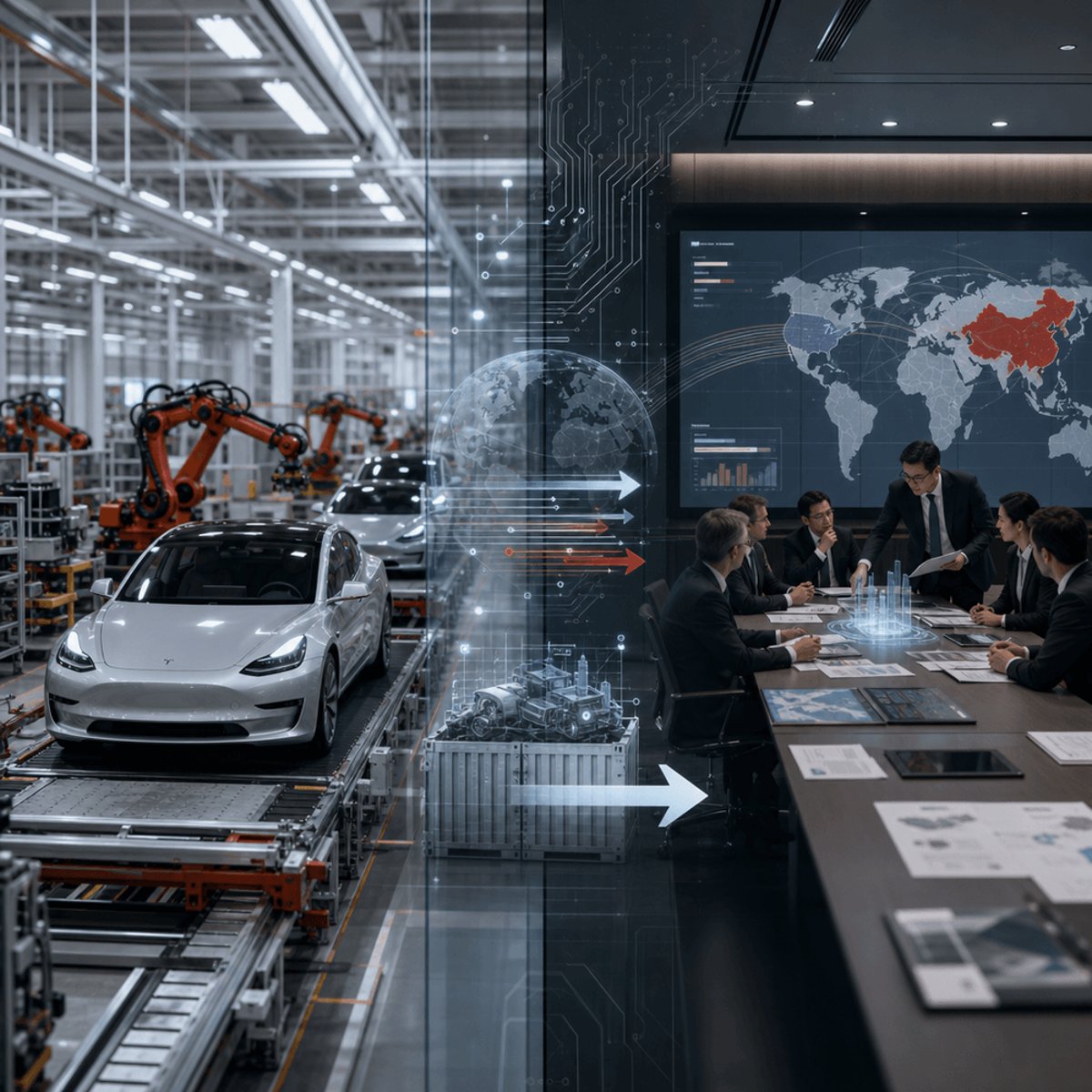
Tesla is reportedly exploring the sale of its massive China operations as part of preparations for a potential merger with SpaceX, according to sources familiar with the matter. The move comes as Elon Musk's electric vehicle giant has quietly developed contingency plans for a Beijing invasion of Taiwan - a scenario that could upend the company's largest overseas manufacturing hub and second-biggest market after the United States.
Tesla is preparing for one of the most dramatic corporate restructurings in tech history. Multiple sources tell TechCrunch the electric vehicle maker is exploring options to divest its China operations - including the crucial Shanghai Gigafactory - as Elon Musk advances plans to merge his automotive and aerospace empires.
The timing isn't coincidental. Tesla has quietly maintained contingency plans for exiting China since at least 2024, specifically designed to activate if geopolitical tensions escalate into military conflict over Taiwan. Now those plans are getting dusted off for an entirely different reason: clearing regulatory hurdles for a SpaceX combination.
China represents Tesla's second-largest market and houses roughly half its global production capacity. The Shanghai Gigafactory, which began operations in 2019, cranks out Model 3 and Model Y vehicles for both domestic consumption and export to Europe and Asia. Last year alone, the facility produced an estimated 950,000 vehicles, contributing significantly to Tesla's 1.8 million unit global deliveries.
But a Tesla-SpaceX merger creates a national security Rubik's cube that U.S. regulators won't easily solve. SpaceX holds billions in classified government contracts, launches military satellites, and operates critical infrastructure for the Department of Defense. The idea of that same corporate entity maintaining deep manufacturing ties to China - where the Communist Party can theoretically access any company's data or operations - is a non-starter for the Pentagon and intelligence community.
According to sources familiar with the internal discussions, Tesla has explored multiple divestiture structures. The most likely scenario involves selling the Shanghai operations to a Chinese automotive consortium, potentially including state-backed entities like SAIC Motor or private players like Geely. Another option under consideration is a management-led buyout that would create an independent Chinese EV manufacturer licensed to use Tesla technology.
The geopolitical backdrop makes this more than a routine corporate carve-out. U.S.-China tensions have intensified over semiconductor exports, technology transfer, and military posturing around Taiwan. For Tesla, the calculus has shifted from "if" to "when" it might need to operate independently of Chinese manufacturing - whether because of merger requirements, sanctions, or actual conflict.
Wall Street analysts are already gaming out the financial implications. Tesla's China business contributes an estimated $15-18 billion in annual revenue, with operating margins slightly higher than its U.S. operations due to lower labor costs and supply chain efficiencies. Losing that cash flow would pressure Tesla's valuation, though a SpaceX combination would presumably create enough synergies and growth potential to offset the hit.
The merger itself remains unofficial, but multiple reports over the past six months have detailed discussions between Musk's inner circle and investment banks about structuring options. A combined Tesla-SpaceX entity would create a vertically integrated transportation and space technology conglomerate unlike anything in corporate history - spanning electric vehicles, autonomous driving, battery storage, rocket manufacturing, satellite internet, and human spaceflight.
Regulatory approval would be Byzantine. Beyond the China question, antitrust regulators would scrutinize overlapping technologies like battery development and AI computing. The Federal Aviation Administration, NASA, the FCC, and multiple defense agencies would all have jurisdiction over different pieces of the combined entity.
For China, losing Tesla would sting but wouldn't devastate its EV ambitions. Domestic manufacturers like BYD, NIO, and XPeng have rapidly closed the technology gap, and Tesla's departure would eliminate a major competitor while potentially transferring valuable manufacturing assets to local control. Beijing might even welcome the opportunity to assert economic sovereignty over a strategic industry.
The unanswered question is timing. Does Tesla sell before a merger announcement to smooth regulatory approval? Or does Musk wait until the combination is official, using the divestiture as a bargaining chip with regulators? Sources suggest the former - getting China off the books first creates a cleaner story for Washington.
Industry observers note the bitter irony: Tesla's Shanghai Gigafactory was supposed to be Musk's masterpiece of U.S.-China cooperation, proof that an American company could thrive in China's tightly controlled market. Instead, it may become the most expensive bargaining chip ever sacrificed to geopolitics and corporate consolidation.
The potential sale of Tesla's China operations ahead of a SpaceX merger represents more than corporate restructuring - it's a referendum on whether American tech giants can maintain deep ties to China while serving U.S. national security interests. If Musk pulls the trigger, it sets a precedent that could reshape how other dual-use technology companies approach their Chinese partnerships. For now, the Shanghai Gigafactory keeps churning out vehicles, but its days under the Tesla banner may be numbered. What happens next will signal whether the U.S.-China tech decoupling has moved from policy theory to boardroom reality.