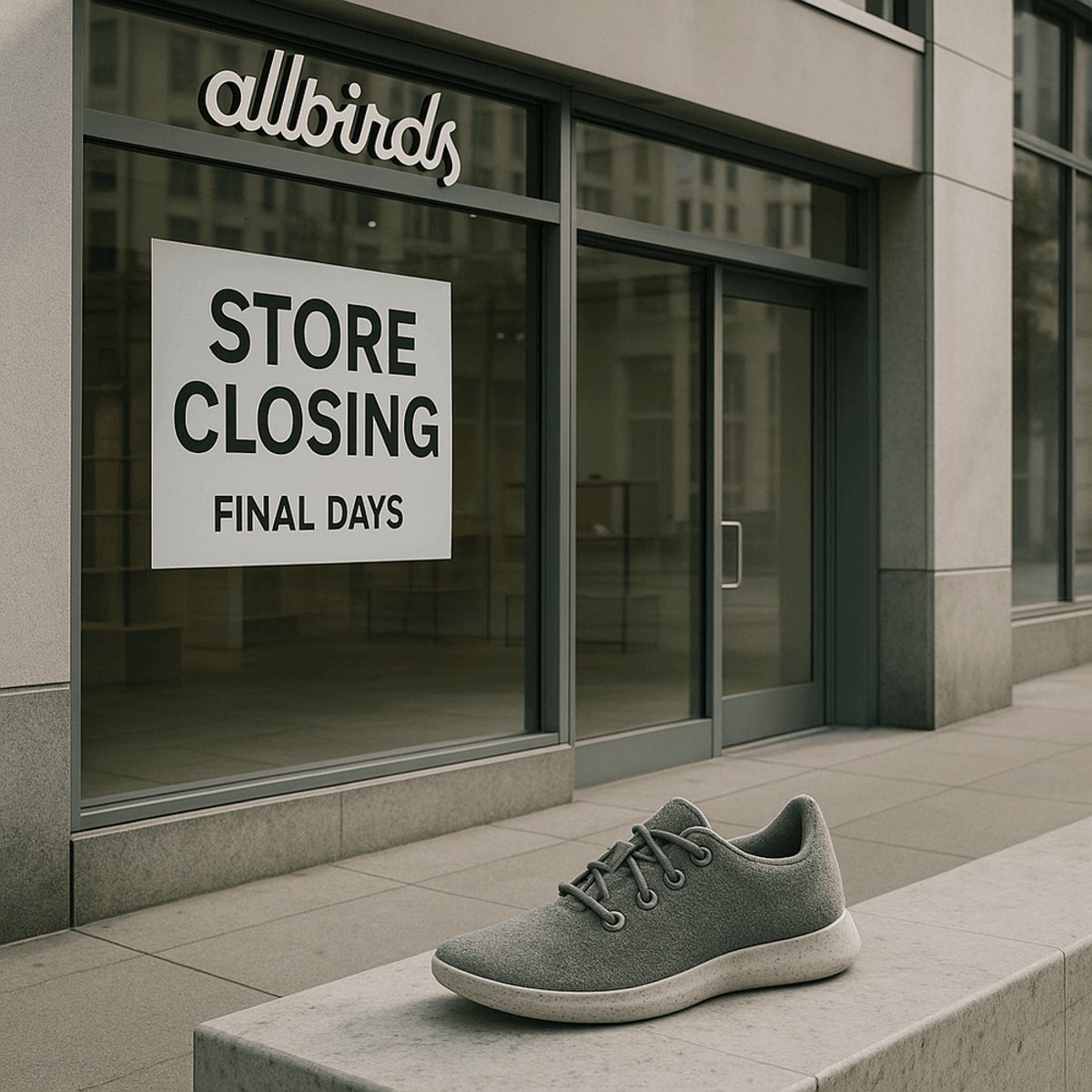
Allbirds, the once-ubiquitous footwear of Silicon Valley's tech elite, is shuttering nearly all its physical stores by the end of February in a dramatic cost-cutting move. The company that once symbolized startup culture's mid-2010s heyday is closing its final San Francisco location along with most of its brick-and-mortar portfolio, leaving just two outlet stores in the US and two London locations open. It's a stark reversal for a brand that became synonymous with tech worker style and raised enough venture capital to hit unicorn status before going public in 2021.
Allbirds is pulling the plug on its retail footprint, and with it goes a defining symbol of mid-2010s tech culture. The wool-shoe darling that once graced the feet of every self-respecting startup employee is closing nearly all its stores by February's end, including its last San Francisco outpost—the city where it all began back in 2015.
"This is an important step for Allbirds, as we drive toward profitable growth under our turnaround strategy," CEO Joe Vernachio said in a company statement. "We have been opportunistically reducing our brick-and-mortar portfolio over the past two years. By exiting these remaining unprofitable doors, we are taking actions to reduce costs and support the long-term health of the business."
The translation? The financial picture isn't pretty. Just two US outlet stores and two full-price London locations will survive the cull, marking a stunning reversal for a brand that once seemed unstoppable.
Allbirds became the unofficial uniform of San Francisco's tech scene for good reason—the shoes are legitimately comfortable, if admittedly lacking in conventional style appeal. But that didn't matter when venture capital was flowing freely and every startup was handing out branded Allbirds as company swag. The minimalist wool runners became as much a signal of tech employment as a Patagonia vest or a standing desk.
The company rode that wave straight to unicorn status, securing an inflated $1.4 billion valuation in 2018 backed by venture capital. It went public in 2021 with high expectations, trading under the enviable ticker symbol $BIRD. But the post-IPO reality has been brutal. The company's market capitalization now sits at roughly $32 million, with shares trading at just a few dollars—a 97% collapse from its peak valuation.
The retail contraction has been underway for two years as Allbirds quietly shuttered unprofitable locations, but this latest move represents the near-total abandonment of physical retail. It's a retreat that mirrors broader struggles across the direct-to-consumer space, where brands that once seemed poised to revolutionize retail have struggled with unit economics and profitability.
For those who lived through San Francisco's last tech boom, the Allbirds closure feels symbolic of something larger. The brand's rise coincided with an era when working in tech felt like a golden ticket to stability and success. Free snacks, ping-pong tables, and yes, branded footwear—it all seemed sustainable. Now that illusion has shattered across much of the industry, replaced by layoff anxiety and questions about which sectors will survive the current correction.
The shoes themselves aren't going anywhere—Allbirds will continue selling online, and the product remains solid despite its aesthetic quirks. But the closure of that last San Francisco store feels like the final page turning on a particular chapter of tech culture. These days, Silicon Valley's style has shifted toward hyper-optimization: Oura rings tracking biometrics, macro-counting apps, Sweetgreen protein bowls engineered for maximum efficiency.
Even the safe harbor of AI—currently the only sector where companies can still afford branded Patagonia—feels precarious. There's an undercurrent of anxiety about whether this bubble might pop too, leaving another generation of startups scrambling to cut costs and "support the long-term health of the business."
Allbirds joins a growing list of once-hot DTC brands struggling to make the economics work. The direct-to-consumer model that promised to cut out middlemen and build lasting customer relationships has proven far more challenging than early success stories suggested. Rent for physical stores, customer acquisition costs, and the difficulty of building true brand loyalty in a crowded market have all taken their toll.
For Vernachio and his team, the bet now is that focusing on e-commerce and a handful of strategic locations can return the company to profitability. Whether that's enough to revive investor confidence remains to be seen. The $32 million market cap suggests Wall Street isn't holding its breath.
The closure of Allbirds' San Francisco stores won't just leave empty storefronts—it closes a chapter on an era when tech seemed invincible and the perks felt endless. Whether the brand can engineer a comeback through online sales remains uncertain, but the symbolic weight is clear. For anyone who remembers when those wool shoes represented arrival in the tech world, watching the last store close feels like witnessing the end of a particular kind of optimism about where the industry was headed.