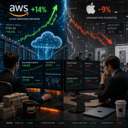
While tech stocks face mounting pressure and bubble warnings echo across Wall Street, Altimeter Capital's Brad Gerstner is taking a contrarian stance. The prominent investor told CNBC that recent market pullbacks are actually healthy corrections, not signs of an impending bubble burst. His timing couldn't be more provocative - coming as AI valuations face fresh scrutiny.
Brad Gerstner isn't buying the bubble narrative. The Altimeter Capital founder and CEO went on record Thursday pushing back against mounting concerns that tech markets have entered dangerous territory.
"This pullback is exactly what we need," Gerstner told CNBC during an afternoon interview. His comments come as tech stocks have shed billions in value over recent weeks, with AI companies bearing the brunt of selling pressure.
Gerstner's contrarian stance carries significant weight in Silicon Valley circles. Altimeter Capital manages over $15 billion in assets, with major positions in Meta, Uber, and other tech giants. The firm's investment thesis has largely centered on identifying undervalued growth opportunities in the technology sector.
The timing of his comments is particularly interesting. Just last month, several high-profile investors and analysts warned that AI valuations had reached unsustainable levels. Goldman Sachs researchers questioned whether current AI investments could justify their massive price tags, while JPMorgan analysts flagged potential overheating in semiconductor stocks.
But Gerstner sees something different in the data. "When you look at the fundamentals - revenue growth, margin expansion, market penetration - these companies are delivering," he explained during the interview. His argument hinges on the actual performance metrics of major tech players rather than sentiment-driven market moves.
Altimeter Capital has been particularly bullish on AI infrastructure plays. The firm increased its positions in cloud computing and chip companies throughout 2024, betting that current valuations don't reflect long-term revenue potential. Gerstner's track record includes early investments in Facebook and Snowflake, both of which faced similar bubble accusations during their growth phases.
The broader market context adds complexity to Gerstner's assessment. Tech stocks have experienced wild swings this year, with AI-related companies seeing both spectacular gains and sharp corrections. Nvidia alone has fluctuated over 40% from its peaks, while smaller AI startups have seen even more dramatic volatility.
Institutional investors appear split on the bubble question. While some pension funds and sovereign wealth funds have pulled back from tech allocations, others continue pouring money into the sector. CalPERS recently announced plans to increase its technology exposure, citing long-term transformation trends.
Gerstner's "healthy correction" theory suggests that recent selling pressure is actually reducing speculative excess rather than signaling fundamental problems. This aligns with historical patterns where temporary pullbacks in growth sectors often preceded sustained rallies. The dot-com era provides a cautionary tale, but Gerstner argues that today's tech companies have fundamentally stronger business models and revenue streams.
What makes his perspective especially noteworthy is Altimeter's activist investor approach. The firm doesn't just buy and hold - it actively engages with portfolio companies on strategic decisions. This gives Gerstner insider visibility into operational metrics that pure financial investors might miss.
Looking ahead, Gerstner's optimism will face several tests. Earnings season approaches, regulatory scrutiny intensifies, and geopolitical tensions continue affecting tech supply chains. Whether his "no bubble" call proves prescient or premature may depend on how these factors play out over the coming months.
Gerstner's bold dismissal of bubble fears puts him at odds with growing skepticism about tech valuations. His track record and firm's deep portfolio exposure to the sector make this more than typical investor cheerleading. Whether he's offering valuable contrarian insight or dangerous optimism will likely become clearer as earnings reports and regulatory decisions unfold. For now, his "healthy correction" narrative provides a compelling counterpoint to the doom-and-gloom headlines dominating financial media.