Amazon just rolled out a major software update for its Echo Hub smart home controller, bringing natural language video search and a completely redesigned interface to the device. The free update integrates Ring AI's Video Search feature and Alexa Plus AI summaries directly into the Echo Hub experience, while a new customizable home screen layout addresses long-standing complaints about the cluttered interface the device launched with back in 2024. The move signals Amazon's push to weave AI capabilities deeper into its smart home ecosystem as competition heats up in the connected home space.
Amazon is pushing a significant free software update to Echo Hub devices that fundamentally changes how users interact with their smart home setup. The update arrives 18 months after the Echo Hub's somewhat rocky debut, when reviewers criticized the device's cramped interface that struggled to display multiple smart home controls simultaneously.
The centerpiece of the update is integration with Ring AI's Video Search feature, which Amazon introduced last October for its security camera lineup. Users can now ask questions like "show me when the delivery driver arrived yesterday" or "did the dog go outside this morning" and the system will surface relevant footage. It's the kind of natural language processing that makes smart home tech actually feel smart rather than just connected.
Alongside video search, the Echo Hub now generates Alexa Plus AI summaries of detected camera events. Instead of scrolling through hours of motion detection clips, users get condensed briefings of what happened while they were away. The AI identifies key moments - package deliveries, people arriving, vehicles in the driveway - and presents them in digestible summaries.
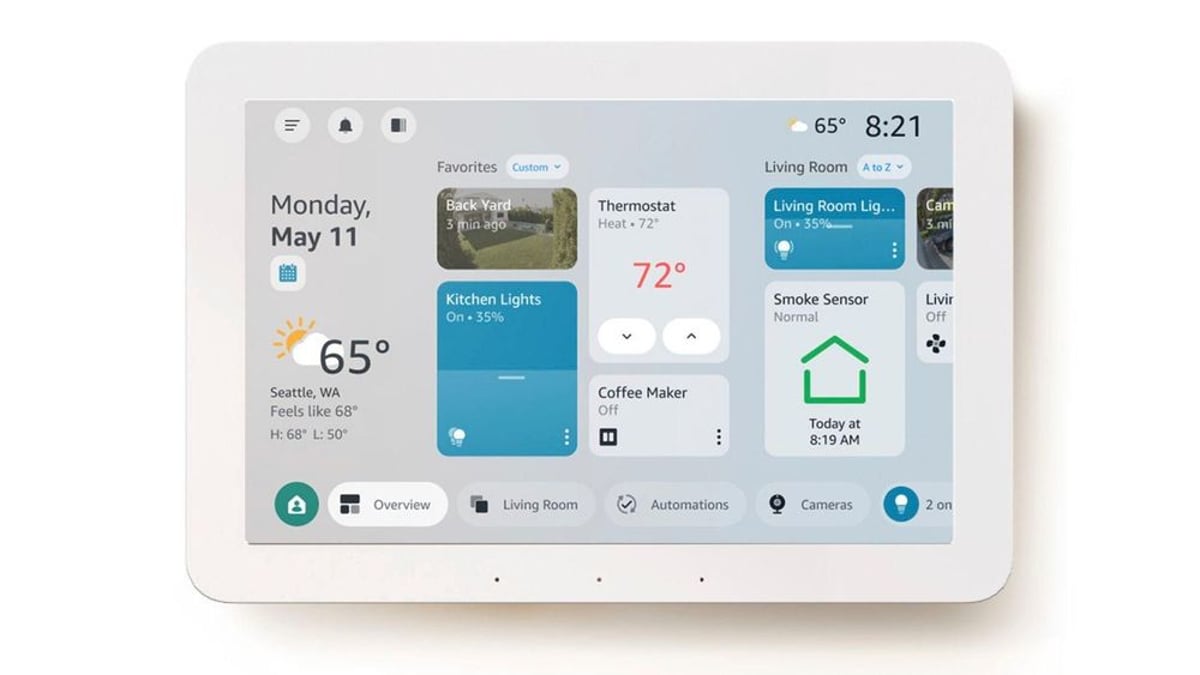
But the bigger story here is the interface overhaul. Amazon completely redesigned the Echo Hub's home screen to address what was arguably the device's biggest weakness when it launched in early 2024. The new layout is fully customizable and manages to pack considerably more smart home information and controls onto the screen than the previous version. Users can now organize their most-used devices and scenes in ways that actually make sense for their daily routines.
The timing of this update isn't coincidental. Google has been steadily improving its Nest Hub lineup with more sophisticated AI features, while Apple continues to refine HomeKit's control interfaces. Amazon needed to show that Echo Hub wasn't just a static product but a platform that could evolve with software updates.
What Amazon highlighted includes five new organizational features: room-based grouping, customizable widget sizes, priority device placement, scene shortcuts, and what the company calls "smart suggestions" that surface relevant controls based on time of day and usage patterns. The smart suggestions feature, for instance, might automatically display bedroom light controls in the evening or garage door status when you typically leave for work.
The Ring AI integration is particularly significant because it represents Amazon's broader strategy of tying its various smart home acquisitions together. Ring, which Amazon acquired in 2018 for over $1 billion, has become a crucial piece of the company's home security play. By bringing Ring's AI capabilities directly into the Echo Hub interface, Amazon creates a more seamless experience that doesn't require jumping between different apps.
From a competitive standpoint, this update helps Amazon keep pace with the rapid AI advancement happening across consumer tech. Natural language video search is becoming table stakes as computer vision models improve. Companies that can't offer these features risk looking dated, especially as younger, AI-native startups enter the smart home space.
The software update rolls out automatically to all Echo Hub devices over the coming weeks. There's no new hardware required, which is exactly how Amazon needs to operate if it wants to maintain customer loyalty in a product category where people expect their purchases to improve over time through software updates rather than forced upgrades.
What remains to be seen is whether these improvements are enough to drive new Echo Hub sales or if they primarily benefit existing owners. The device hasn't exactly set the market on fire since launch, and Amazon hasn't released official sales figures. Industry analysts estimate smart home controller sales remain relatively niche compared to smart speakers and displays, though the category is growing as more households adopt multiple connected devices.
Amazon's Echo Hub update shows the company understands that smart home success depends on continuous software improvement, not just hardware launches. The Ring AI integration and interface redesign address real user pain points while positioning Amazon to compete as AI becomes the expected baseline for connected home devices. The real test will be whether these enhancements drive adoption beyond early adopters and into mainstream households still deciding whether dedicated smart home controllers are worth the investment. For existing Echo Hub owners, it's a welcome evolution that makes the device considerably more useful than what they bought 18 months ago.