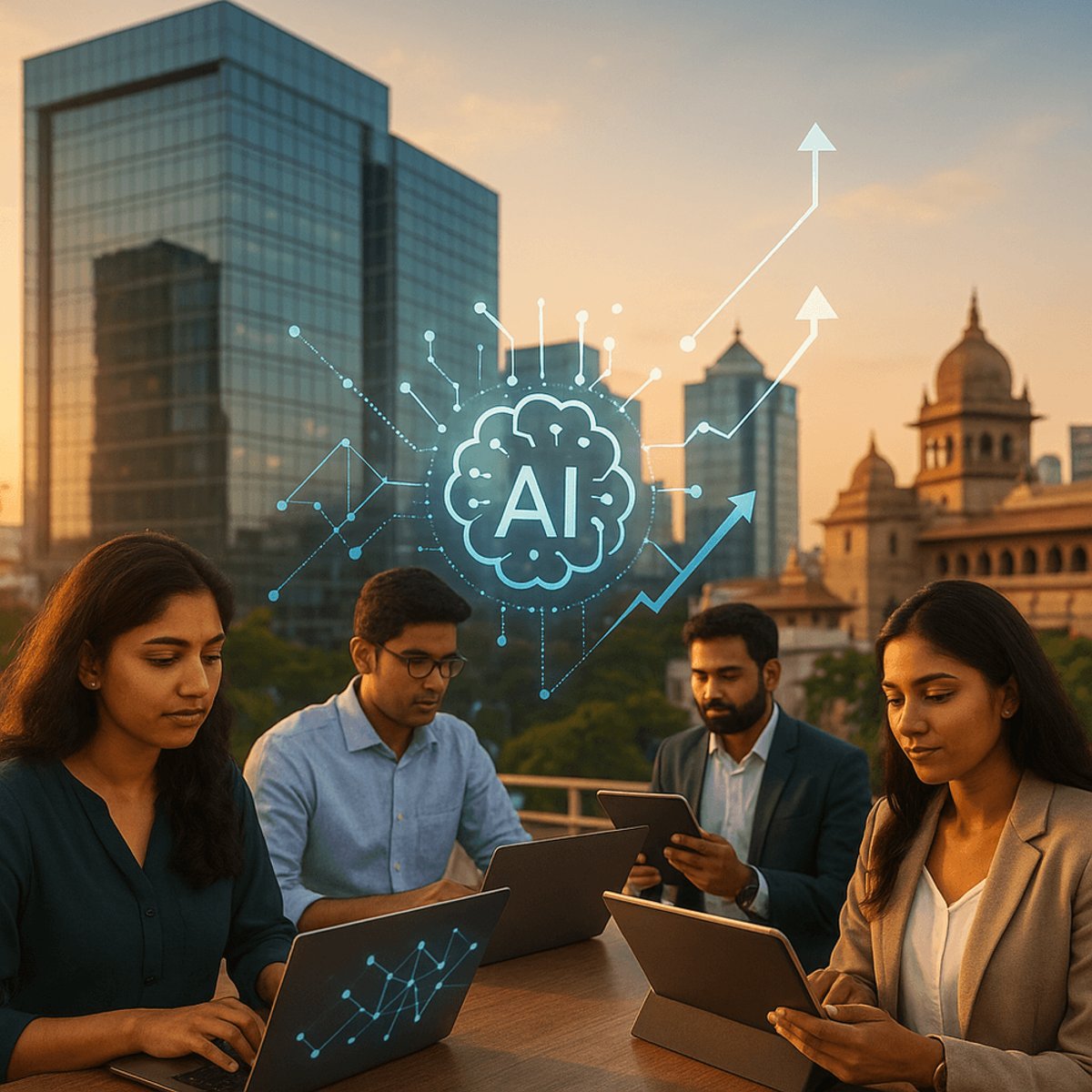
The AI race just landed in India's tech capital. Anthropic announced plans to open its first office in Bengaluru by early 2026, marking a direct challenge to OpenAI's growing presence in the world's largest AI adoption market. With over 90% of Indian workers already using AI tools, the stakes couldn't be higher for Claude's maker to catch up.
Anthropic is making its boldest international play yet. The Amazon-backed AI company just announced it's setting up shop in India's Silicon Valley, opening its first office in Bengaluru by early 2026. It's a calculated strike at OpenAI, which has been quietly building its own Indian fortress throughout 2025.
The timing isn't coincidental. India has become the world's AI adoption leader, with more than 90% of workers already using artificial intelligence tools according to Boston Consulting Group. That's higher than Silicon Valley, higher than China, higher than anywhere else on the planet. For AI companies, India isn't just another market - it's the market.
CEO Dario Amodei is in India this week, personally meeting with government officials and enterprise partners to lay the groundwork. "India is compelling because of the scale of its technical talent and the commitment from the Indian government to ensure the benefits of artificial intelligence reach all areas of society," Amodei said in a company statement. The $18.3 billion startup clearly sees this as more than a regional expansion - it's a strategic necessity.
But Anthropic isn't entering virgin territory. OpenAI has been steadily building its Indian presence throughout 2025, launching a low-cost ChatGPT subscription specifically for the Indian market and reportedly scouting office locations of its own. The battle lines are drawn between Claude and ChatGPT, with India as the prize.
The numbers tell a stark story about the challenge ahead. Claude was downloaded just 118,000 times in India during August, while ChatGPT racked up 10.3 million downloads and Perplexity grabbed 6.4 million, according to analytics firm Appfigures. Despite India ranking as Claude's second-largest market behind the U.S., the gap is massive.
Anthropic's response is characteristically ambitious. The company plans to launch "enhanced performance" in Hindi for Claude, along with support for nearly a dozen other Indian languages. It's betting that localization, combined with a focus on "social impact" applications in education and healthcare, can differentiate Claude from the competition.
The Bengaluru office will be Anthropic's second Asian outpost after Tokyo, signaling the company's broader international push as it races to build a global enterprise customer base. The timing aligns with Anthropic's recent hiring spree, as the company expands its international workforce to support enterprise growth.
What makes India particularly attractive isn't just adoption rates - it's the technical talent pool. Bengaluru alone houses more than 4 million IT professionals, many already working on AI projects for global companies. For Anthropic, tapping into this ecosystem could provide both customers and potential team members.
The government angle matters too. India's leadership has been vocal about democratizing AI benefits beyond major urban centers, exactly the kind of "social impact" messaging that Anthropic is emphasizing. Prime Minister Modi's administration has been courting major tech companies with regulatory flexibility and infrastructure investments.
This isn't just about market share - it's about the future of AI development. Whichever company wins India's developers and enterprises today will likely shape how AI evolves across emerging markets. The race between Anthropic and OpenAI in India could determine which AI assistant becomes the global standard outside the West.
The AI wars have officially gone global, with India emerging as the most critical battleground outside the U.S. Anthropic's Bengaluru office represents more than expansion - it's an acknowledgment that winning the future of AI means winning the world's most AI-hungry workforce. With OpenAI already building its presence and local adoption rates hitting 90%, the next year will determine whether Claude can close the gap or if ChatGPT will cement its dominance in the world's largest democracy. For Indian enterprises and developers, the competition means better tools, more investment, and a front-row seat to the defining tech rivalry of the decade.