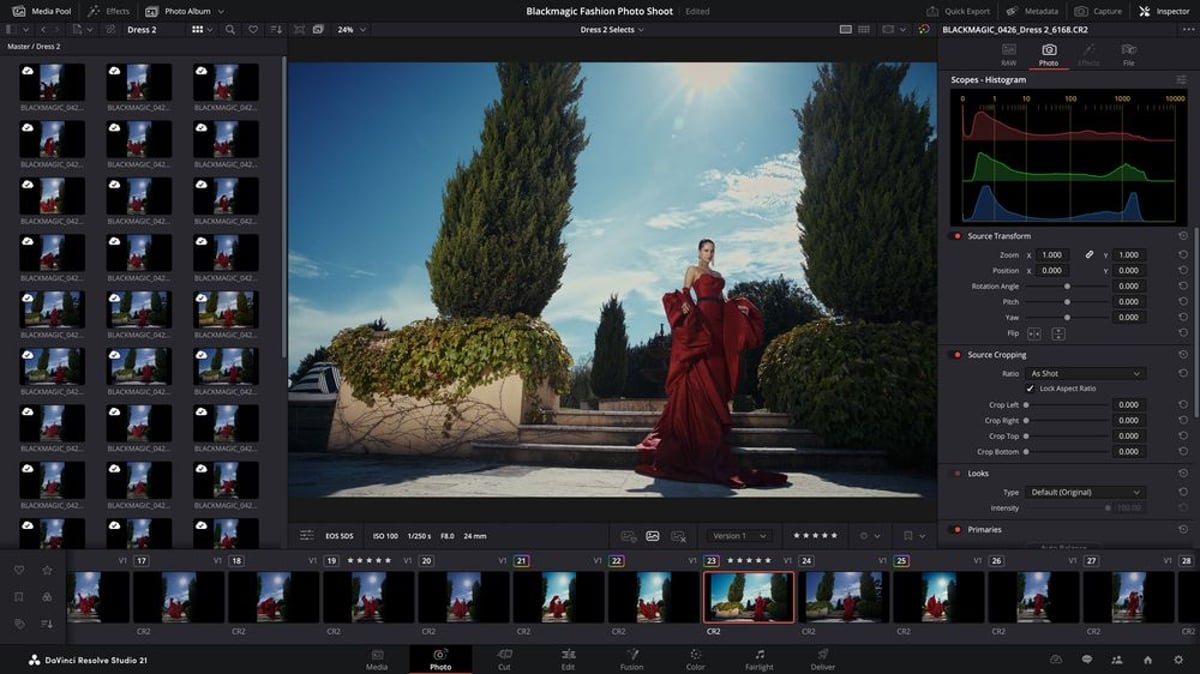
Blackmagic Design just threw down the gauntlet in Adobe's backyard. The company's latest DaVinci Resolve 21 update adds dedicated photo editing capabilities with RAW support from major camera manufacturers, directly challenging Adobe's Lightroom and Photoshop dominance. But the real surprise? AI-powered face manipulation tools that let video editors age actors up or down, a clear shot at Premiere Pro's creative toolkit.
Blackmagic Design is making a serious play for Adobe's creative software throne. The Australian manufacturer announced today that DaVinci Resolve 21 now includes a comprehensive photo editing suite, complete with RAW file support from major camera brands and AI-powered organizational tools that put it in direct competition with Adobe Lightroom and Photoshop.
The timing couldn't be more strategic. While Adobe continues to face creator backlash over its subscription pricing model and recent AI licensing controversies, Blackmagic is offering DaVinci Resolve as a perpetual license - pay once, own forever. The new photo mode sweetens that deal considerably for photographers who've been stuck in Adobe's ecosystem.
According to Blackmagic's release, the photo editing suite handles the full workflow photographers expect: import, organize, rate, and label large image collections with an interface that'll feel familiar to anyone who's spent time in Lightroom's library module. The AI-powered search feature lets users find specific subjects, locations, or visual elements without manual tagging - table stakes in 2026, but essential for competing with Adobe's Sensei-powered search.
The RAW file support is where things get interesting. DaVinci Resolve 21 now natively handles files from Sony, Canon, Nikon, and Fujifilm cameras, covering the vast majority of professional and enthusiast shooters. That's a direct assault on one of Lightroom's core strengths - Adobe's historically maintained the most comprehensive RAW decoder in the business.
But Blackmagic isn't just chasing photographers. The update also introduces AI tools that video editors have been requesting for years. The new face manipulation capabilities can artificially age actors or make them look younger by adjusting wrinkles and facial structure. It's the kind of feature that used to require expensive plug-ins or dedicated VFX software, now baked directly into the timeline.
This matters because it reinforces DaVinci Resolve's positioning as an all-in-one post-production suite. Editors can now move seamlessly between color grading (the software's original claim to fame), video editing, audio post-production, visual effects, and now still photo work without leaving the application. Adobe Premiere Pro users typically need to jump between multiple apps in the Creative Cloud to accomplish the same tasks.
The competitive landscape for creative software has been shifting for years. Apple's Final Cut Pro maintains a loyal following, while newcomers like Runway are pushing AI-first video tools. But DaVinci Resolve has quietly built massive momentum by offering professional-grade capabilities in a free version, with the paid Studio edition unlocking advanced features for $295 - a fraction of Adobe's annual subscription cost.
For photographers specifically, this update creates a genuine decision point. Adobe's photography plan runs $9.99 monthly ($120 annually) for Lightroom and Photoshop. DaVinci Resolve Studio's one-time $295 payment includes not just photo editing, but the entire video production suite. The math gets compelling fast, especially for hybrid shooters who work in both stills and motion.
The face aging AI tools also hint at where creative software is heading. As generative AI becomes standard across the industry, the companies that can integrate these capabilities most seamlessly into existing workflows will have the advantage. Blackmagic's approach - adding AI as enhancement rather than replacement - mirrors what professional users actually want: tools that speed up tedious tasks without taking creative control away.
What remains to be seen is whether Blackmagic can match Adobe's ecosystem depth. Lightroom's mobile apps, cloud sync, and integration with stock photography services create lock-in that goes beyond just features. Third-party plug-in developers have spent decades building for Adobe's platforms. DaVinci Resolve will need to convince those partners it's worth the investment.
Blackmagic Design's aggressive expansion into photo editing marks a legitimate challenge to Adobe's creative software dominance, especially as subscription fatigue grows among professionals. The combination of perpetual licensing, comprehensive RAW support, and AI-powered workflow tools gives photographers and hybrid creators a credible alternative. Whether that's enough to break Adobe's ecosystem lock-in remains the billion-dollar question, but the competitive pressure should benefit users regardless. Watch for Adobe's response - they won't cede this territory without a fight.