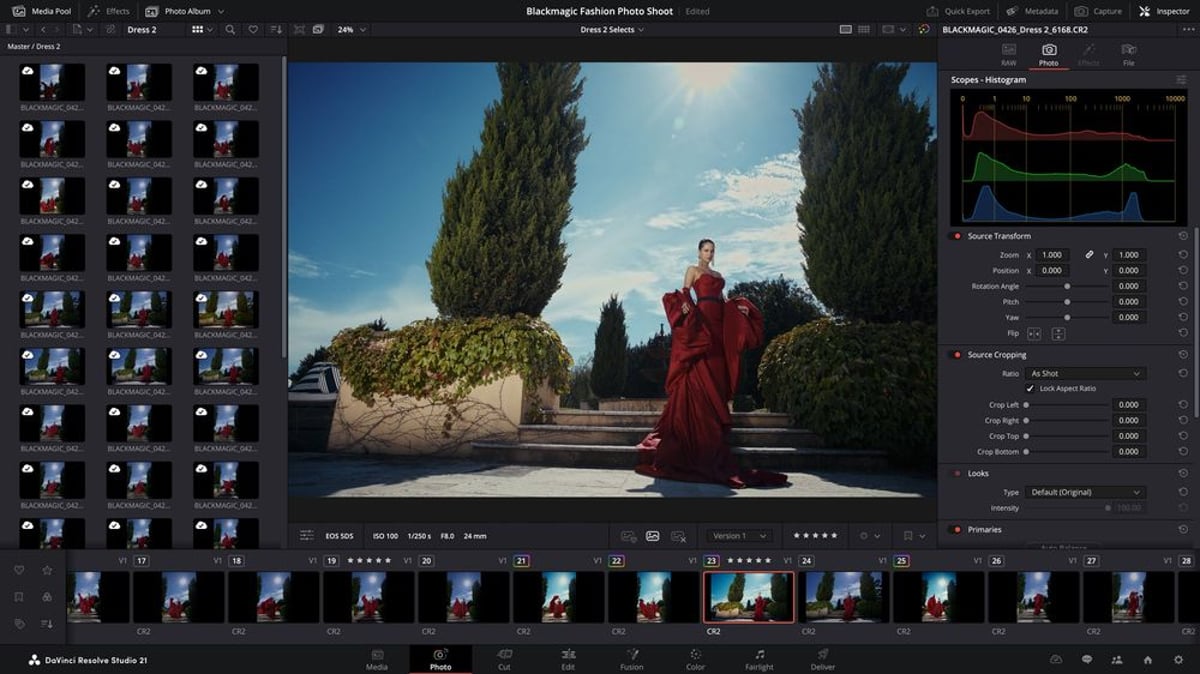
Blackmagic Design just fired a shot across Adobe's bow. The company dropped DaVinci Resolve 21 today with a full-fledged photo editing mode and AI-powered facial aging tools, positioning the formerly video-centric app as a serious alternative to Adobe's Lightroom, Photoshop, and Premiere trifecta. It's the latest salvo in the battle for creative professionals' workflows, and it comes at a time when Adobe's subscription fatigue has creators hunting for alternatives.
Blackmagic Design isn't content being just a video editor anymore. The Australian company announced today that DaVinci Resolve 21 now includes a dedicated photo editing mode designed to pull photographers away from Adobe's ecosystem. And it's bringing some serious firepower to the fight.
The new photo mode handles everything you'd expect from a modern photography workflow. Photographers can organize, rate, and label massive image libraries while using AI-powered search to surface specific subjects or scenes. More importantly, DaVinci Resolve 21 adds native RAW file support for cameras from Sony, Canon, Nikon, and Fujifilm. That's table stakes for any app trying to replace Lightroom, but it shows Blackmagic is serious about competing in this space.
What makes this launch particularly interesting is the timing. Creative professionals have been increasingly vocal about Adobe's subscription pricing, with some photographers paying upwards of $60 monthly for the full Creative Cloud suite. Blackmagic offers DaVinci Resolve in both free and $295 one-time-purchase versions, a pricing model that looks increasingly attractive as subscription costs pile up.
But Blackmagic isn't just going after photographers. The company's also targeting video editors with new AI tools that can digitally age or de-age actors. The facial manipulation features can add wrinkles, adjust face shapes, and create younger or older versions of performers without the expensive visual effects pipelines that traditionally required dedicated software and specialists. It's the kind of feature that could make DaVinci Resolve more appealing to indie filmmakers and YouTube creators who can't afford Hollywood-level post-production budgets.
The AI aging tools put Blackmagic in direct competition with Adobe Premiere Pro and After Effects, which have been steadily adding their own AI features through Adobe Sensei. The difference is that Blackmagic is bundling all these capabilities into a single app rather than forcing users to jump between multiple programs.
This consolidation strategy makes sense when you look at how creative workflows have evolved. Modern content creators often need to handle both photos and videos, switching between still and motion work multiple times per project. Having everything in one interface eliminates the context-switching that slows down Adobe users who bounce between Lightroom, Photoshop, and Premiere.
The question is whether Blackmagic can actually pull users away from Adobe's entrenched ecosystem. Adobe has decades of muscle memory working in its favor, plus integration between apps that many professionals rely on daily. But Blackmagic has been chipping away at Adobe's video dominance for years, particularly among colorists and finishing artists who've made DaVinci Resolve the industry standard for color grading.
Adding photo editing creates a potential path for those video editors to bring their photography work into the same environment. And for photographers who occasionally shoot video - which is basically all of them now - DaVinci Resolve offers professional-grade video tools that far exceed what Lightroom or Photoshop can manage.
The AI features also hint at where Blackmagic sees the market heading. While Adobe has been aggressive about adding AI to its apps, the company's subscription model means those features get parceled out across multiple products. Blackmagic can bundle everything into DaVinci Resolve's single price point, making advanced AI tools accessible to creators who can't justify ongoing subscription costs.
What's less clear is how Blackmagic plans to keep up with Adobe's development pace. Adobe has vastly more resources and a larger engineering team to build and refine AI models. But Blackmagic has shown it can punch above its weight by focusing on specific user needs rather than trying to be everything to everyone.
Blackmagic Design's expansion into photo editing represents more than just feature creep. It's a calculated bet that creative professionals are ready to abandon Adobe's subscription treadmill for a unified, pay-once alternative. Whether DaVinci Resolve 21 can actually dethrone Lightroom and Photoshop remains to be seen, but the combination of photo editing, video production, and AI tools in a single package creates a compelling value proposition. For Adobe, this is a wake-up call that the creative software market isn't as locked down as it once seemed. The real test will come in the next few months as photographers and videographers decide whether Blackmagic's all-in-one approach can replace the Adobe ecosystem they've spent years mastering.