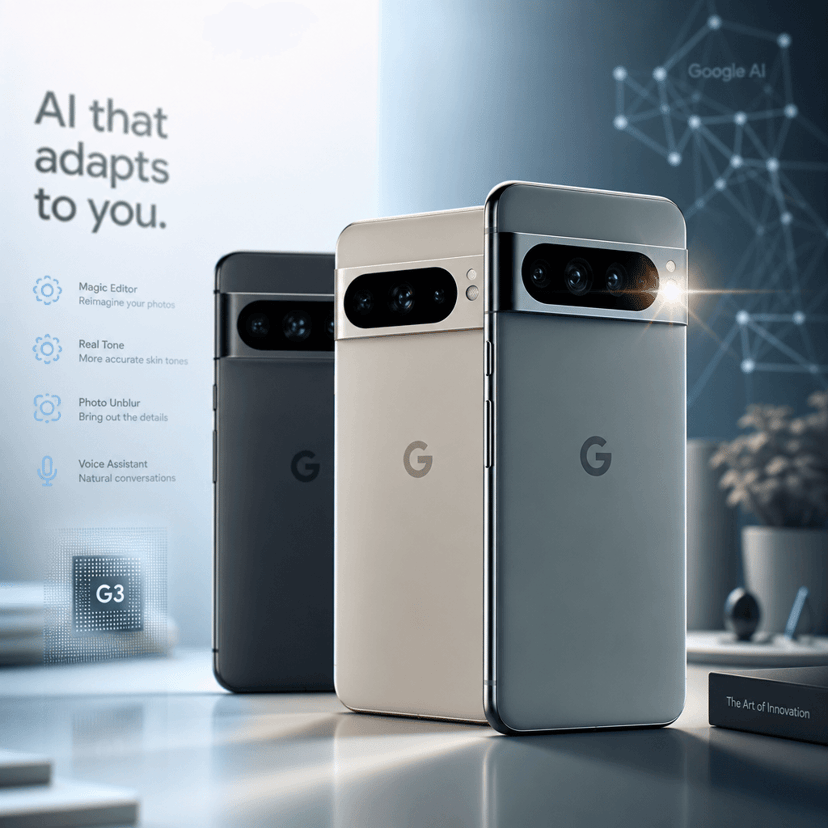
Google just dropped the Pixel 10a, the latest entry in its budget-friendly A-series lineup that's made premium smartphone features accessible since 2019. Product Manager Laura Kastilani revealed the device in a blog post today, promising "everything you need, at a price you'll love." The launch signals Google's continued push to democratize AI-powered mobile experiences while competing against Apple's iPhone SE and Samsung's Galaxy A-series in the mid-range smartphone market that's projected to reach $285 billion by 2027.
Google is making its move in the budget smartphone wars. The company's newly announced Pixel 10a arrives as the tech giant doubles down on its strategy of delivering premium AI experiences without the premium price tag, a formula that's helped the Pixel A-series carve out a loyal following among cost-conscious Android enthusiasts.
Product Manager Laura Kastilani teased the device in a blog post that's characteristically light on specifics but heavy on promise. The tagline "everything you need, at a price you'll love" echoes Google's longstanding pitch for the A-series, which launched with the Pixel 3a back in 2019 and has consistently undercut flagship pricing while delivering surprisingly capable camera systems and Google's latest AI features.
The timing is strategic. Google's jumping into a mid-range market that's become the smartphone industry's hottest battleground, with Samsung commanding roughly 23% of the $200-$500 segment globally and Apple reportedly preparing its own iPhone SE refresh. The Pixel A-series has historically landed around the $449-$499 sweet spot, positioning it as a direct alternative for buyers who want computational photography and AI smarts without breaking $600.
What makes this launch particularly interesting is Google's AI momentum. The company's Gemini models have been integrated across its hardware lineup, and the Pixel 10 series introduced advanced on-device AI processing through the Tensor G5 chip. If the Pixel 10a follows the established playbook, it'll inherit much of that silicon and software magic while making compromises on display refresh rates, build materials, and camera hardware.
The A-series formula has proven remarkably consistent. Take last generation's approach: Google typically uses the previous year's flagship processor, pairs it with a capable but not cutting-edge camera setup, and wraps everything in polycarbonate instead of glass and aluminum. The result? Phones that punch well above their weight class in real-world performance, especially for photography enthusiasts who've made the Pixel's computational prowess legendary.
For Samsung and other Android manufacturers, this is another shot across the bow. Google's vertical integration gives it advantages that competitors struggle to match. The company controls Android, designs its own silicon, and can optimize the entire stack in ways that fragmented rivals can't replicate. When you're getting the same AI features, security updates, and camera processing as phones costing $400 more, the value proposition becomes compelling.
The competitive landscape is shifting fast. Apple has let its iPhone SE languish since 2022, creating an opening in the budget iOS market. Meanwhile, Chinese manufacturers like Xiaomi and OnePlus have been flooding the mid-range segment with increasingly capable devices. Google's challenge is cutting through that noise while maintaining the Pixel brand's association with premium AI experiences and best-in-class cameras.
What's also notable is what Google isn't saying yet. No pricing details, no availability timeline, no hardware specifications. This soft launch approach suggests the full reveal is still coming, possibly at Google's typical spring hardware event or through a quieter online rollout. The company's been experimenting with launch cadences, moving away from the traditional fall flagship cycle to spread releases throughout the year.
For developers and the Android ecosystem, the Pixel A-series serves another purpose: expanding the installed base of devices that can showcase Google's latest AI capabilities. Every Pixel sold is another user experiencing features like Magic Eraser, Call Screen, and Live Translate, which helps drive adoption of Google's services and creates a halo effect for the broader Android platform.
The smartphone market's been consolidating around two tiers: premium devices above $800 and value plays under $500. The middle has hollowed out. Google's betting that AI features can justify premium positioning even at budget price points, a strategy that's worked reasonably well. The Pixel 6a sold an estimated 2-3 million units in its first year, respectable numbers for a product line that's more about strategic positioning than volume dominance.
Google's Pixel 10a represents more than just another budget phone launch. It's a statement about where the company sees the smartphone market heading: toward AI-first experiences that don't require flagship budgets. As the mid-range segment continues growing and flagship prices climb past $1,000, devices like the Pixel 10a become crucial for maintaining platform relevance and reaching buyers who've been priced out of premium tiers. The real test will come when Google reveals pricing and specs, but if history's any guide, the A-series will once again deliver surprising value. For competitors like Samsung and Apple, that's becoming an increasingly difficult proposition to counter.