Lego is bridging the physical and digital play divide with its upcoming Smart Brick, a sensor-laden component that promises to transform how kids interact with traditional building sets. In an exclusive behind-the-scenes tour, WIRED got first access to the Lego development labs in Billund, Denmark, where engineers have been quietly developing what could be the company's most significant hardware innovation since the programmable Mindstorms line. The move signals Lego's recognition that today's digitally native kids expect their toys to respond and adapt in real-time.
Lego is making its most significant bet yet on connected play. The Danish toy giant has opened its innovation labs to reveal the Smart Brick, a sensor-packed building block that transforms static creations into responsive, interactive experiences. The development marks a strategic pivot for a company that's spent decades perfecting the satisfying click of plastic bricks, now racing to prove those bricks can be just as engaging as touchscreens.
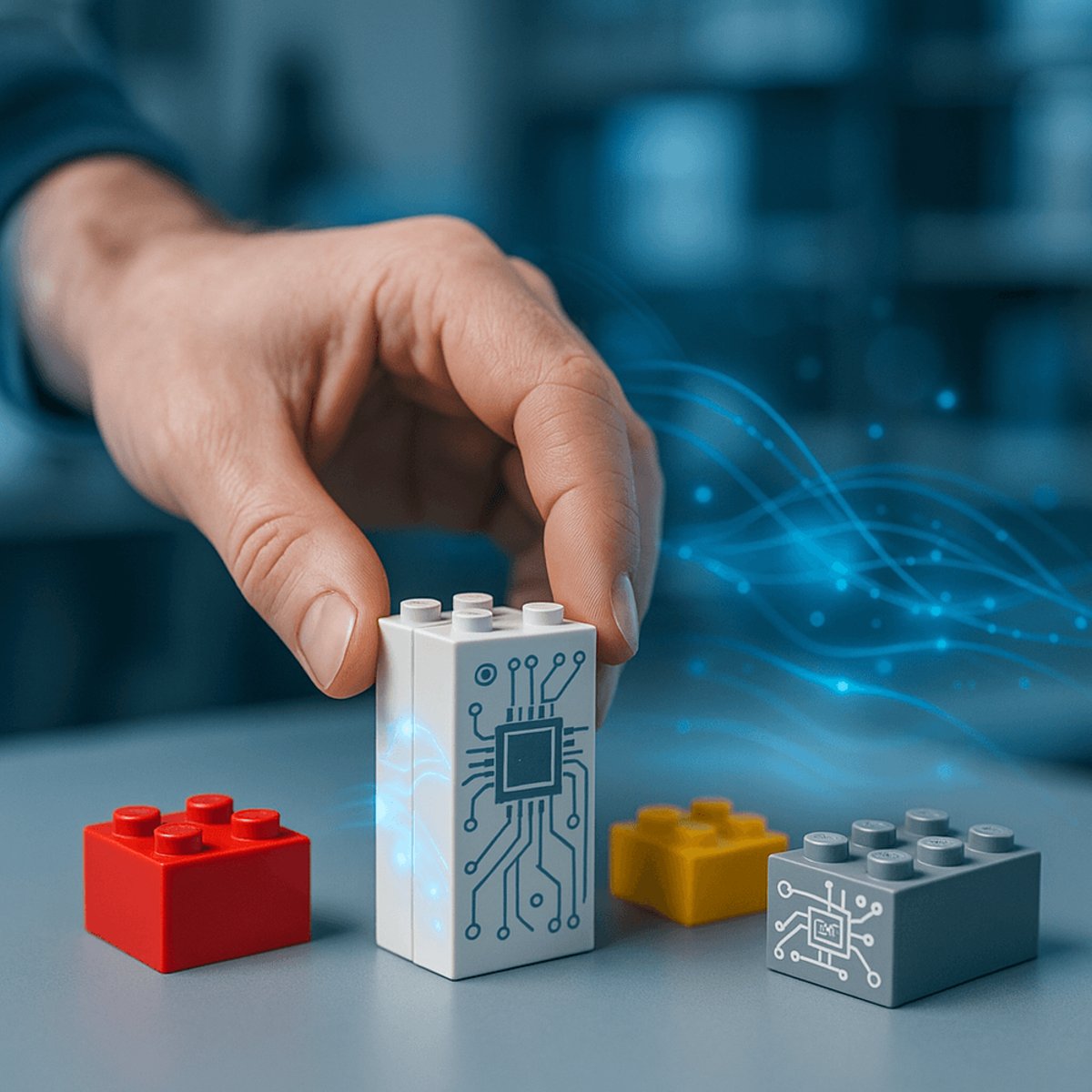
Inside Lego's Billund headquarters, engineers have been stress-testing prototypes that look deceptively similar to standard bricks. The difference is what's inside. Each Smart Brick houses an array of sensors - accelerometers, gyroscopes, and proximity detectors - all packed into the familiar 2x4 footprint that's remained largely unchanged since 1958. The technical challenge wasn't just miniaturization. It was ensuring these digital components could withstand the same punishment kids dish out to regular bricks, from being dropped on hardwood floors to spending months buried in toy boxes.
"We're not trying to make screens out of Lego," a senior product designer told WIRED during the exclusive tour. "We're making Lego that knows when it's being played with." That distinction matters in an industry where parents increasingly worry about screen time. The Smart Brick communicates with a companion app, but the primary interaction happens through physical building and manipulation. Tilt a spaceship and it makes engine sounds. Stack smart bricks in sequence and they trigger light patterns. The sensors detect orientation changes in real-time, creating feedback loops that feel more like piloting than gaming.
The technology builds on Lego's previous digital experiments, particularly the Boost and Mindstorms lines that introduced programming concepts through motorized builds. But those systems required dedicated hubs and complex setups. Smart Bricks are designed to be drop-in components, compatible with existing sets through standard connection points. It's modularity meeting modern expectations, a design philosophy that's kept Lego relevant through decades of shifting play patterns.
Timing isn't coincidental. Traditional toy manufacturers are fighting an uphill battle against mobile games and YouTube, where kids can access endless content for free. Lego has weathered that storm better than most - the company posted strong revenue growth even through the pandemic - but executives recognize they can't ignore the digital native generation. Smart Bricks represent a middle path, adding the responsiveness kids expect from apps while preserving the tactile, creative core that's made Lego a generational constant.
The development process took three years, with countless iterations focused on durability and battery life. Early prototypes required charging every few hours. The current version promises weeks of active play on a single charge, using low-power Bluetooth to communicate with the app. Engineers also solved the connectivity puzzle - how do you sync potentially dozens of smart components without creating a pairing nightmare? The solution involves automatic mesh networking, where bricks recognize and communicate with nearby components without manual intervention.
Competitors are watching closely. Hasbro has experimented with app-connected toys, while startups like Osmo have built entire product lines around physical-digital hybrid play. But Lego's advantage is its ecosystem - billions of existing bricks in homes worldwide, all potentially compatible with the new smart components. It's a network effect most toy companies would kill for, and Lego is betting it can leverage that installed base to make connected play feel inevitable rather than gimmicky.
Pricing and availability details remain closely guarded. The company confirmed Smart Bricks will launch later this year as standalone components and integrated into select new sets. Industry analysts expect premium positioning - these won't be impulse purchases. But if Lego can prove the technology enhances rather than distracts from core building experiences, the Smart Brick could redefine expectations for what a toy can be in 2026.
The Billund lab tour revealed one more telling detail. Alongside stress tests and sensor calibrations, engineers have been conducting play sessions with kids aged 6 to 12, observing how they naturally incorporate smart bricks into their creations. The feedback is shaping not just hardware iterations but the app experience itself. One insight that's already influenced design: kids don't want instructions on how to play with smart features. They want to discover capabilities through experimentation, the same way they've always approached a fresh bucket of bricks.
Lego's Smart Brick represents a calculated gamble on the future of physical play. By embedding sensor technology into its iconic bricks, the company is acknowledging that today's kids expect their toys to be as responsive as their devices, while betting that tactile creativity still matters in an increasingly digital childhood. If the technology delivers on its promise - adding interactivity without sacrificing the open-ended building that's defined Lego for generations - it could set a new standard for connected toys. The real test won't be in Billund labs but in living rooms worldwide, where kids will decide whether smart bricks feel like innovation or unnecessary complication.