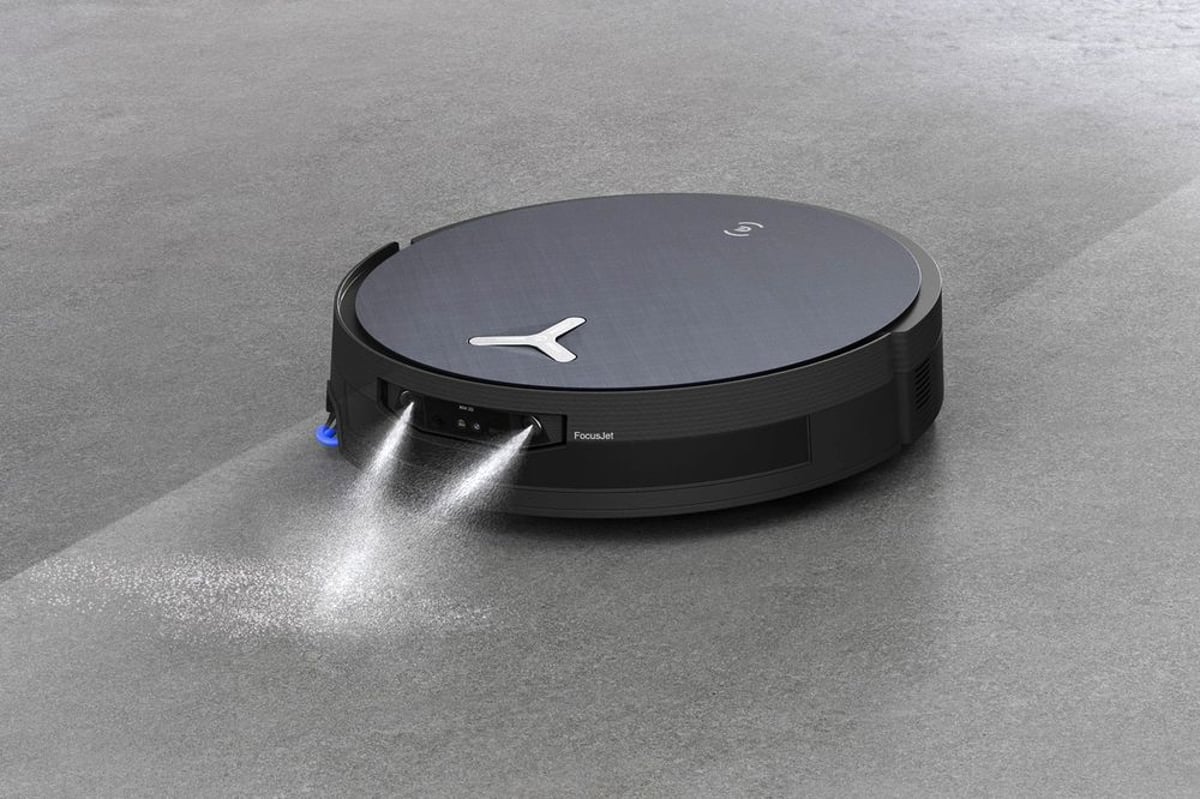
Ecovacs just launched the Deebot X12 OmniCyclone, a $1,499 robot vacuum that's taking a smarter approach to floor cleaning. The device uses AI-powered cameras to spot dried messes like muddy paw prints or spilled coffee, then blasts them with a water-and-cleaning-solution jet before its roller mop even touches the stain. It's available today through Ecovacs' store and Amazon, marking another step in the smart home race to make autonomous cleaners actually autonomous.
Ecovacs is betting that the future of floor cleaning isn't just about stronger suction or longer battery life - it's about teaching robots to see dirt the way humans do. The company's new Deebot X12 OmniCyclone, shipping today for $1,499, introduces what Ecovacs calls intelligent pretreatment, a feature that could finally solve one of the biggest pain points in robotic mopping.
Here's how it works: As the X12 navigates your floors, its onboard cameras continuously scan for dried stains and stubborn messes. When the AI identifies something like muddy pet tracks or yesterday's coffee spill, the robot pauses and sprays a targeted mixture of water and cleaning solution directly onto the stain. Only then does it deploy its roller mop to scrub the area, theoretically removing messes that would normally require multiple passes or manual intervention.
The technology represents a practical application of computer vision in consumer robotics. While most current robot vacuums rely on basic obstacle detection, the X12's system has to differentiate between normal floor surfaces and actual stains that need extra attention. According to The Verge's hands-on coverage, this stain-recognition capability runs locally on the device, processing camera feeds in real-time without sending images to the cloud.
Ecovacs bundles the X12 with its OMNI Station dock, which handles the kind of maintenance tasks that usually remind you these robots aren't quite as autonomous as advertised. The dock empties the vacuum's dustbin, refills its water tanks, and cleans the mop pads between runs. It's standard fare for premium robovacs these days, but necessary infrastructure for a device that's supposed to operate hands-free for weeks at a time.
The $1,499 price point puts the X12 squarely in premium territory, competing with high-end models from iRobot, Roborock, and Dreame. But Ecovacs is making a direct play for consumers who've been burned by robovacs that just smear dried messes around instead of actually cleaning them. If the pretreatment system works as advertised, it could address one of the most common complaints in online reviews and Reddit threads about robot mops.
The launch comes as the smart home robotics market gets increasingly crowded with AI-powered features. Competitors have added voice control, room recognition, and automated cleaning schedules. But identifying and treating specific types of dirt represents a more granular level of automation. It's the difference between a robot that follows a cleaning pattern and one that actually responds to the condition of your floors.
What remains unclear is how well the AI performs in real-world conditions with varying floor types, lighting situations, and stain varieties. Computer vision systems can struggle with edge cases, and there's always the risk of false positives or missed spots. The robovac market is littered with promising features that worked great in demos but fell short in daily use.
Still, the X12 signals where the industry is headed. As AI models get smaller and more efficient, consumer devices can run increasingly sophisticated on-device processing without relying on cloud connectivity. For privacy-conscious buyers, that means your robot vacuum isn't uploading photos of your dirty floors to some server farm. For everyone else, it just means better cleaning without thinking about it.
The Deebot X12 OmniCyclone shows how consumer robotics companies are moving beyond basic automation toward devices that can actually perceive and respond to their environment. Whether Ecovacs' stain-detection AI lives up to the hype will depend on real-world testing across different homes and floor types. But the underlying shift is clear: smart home devices are getting genuinely smarter, using on-device AI to make decisions that used to require human judgment. At $1,499, early adopters are essentially paying a premium to beta test where this technology goes next.