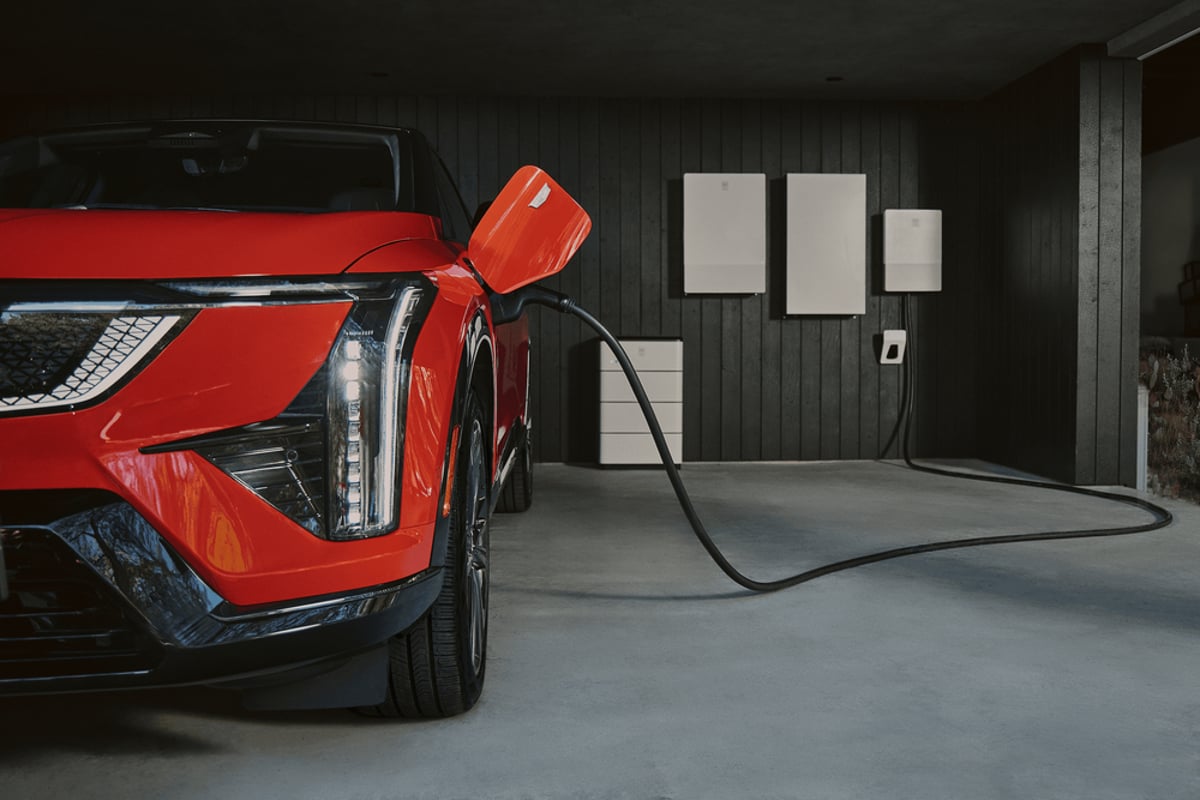
General Motors is flipping the script on electric vehicles. At a San Francisco event today, the automaker announced it's activating vehicle-to-grid capabilities across its EV lineup while unveiling sodium-ion battery systems designed to stabilize power grids buckling under AI data center demands. The move transforms millions of idle EVs in driveways into distributed energy assets, just as the industry grapples with electricity consumption from artificial intelligence infrastructure threatening to overwhelm existing grid capacity.
General Motors just made a bold bet that your parked EV can help solve artificial intelligence's energy crisis. The automaker's surprise announcement today positions electric vehicles as a critical buffer against the electricity tsunami washing over utility companies from AI data centers.
The timing isn't coincidental. Data centers now consume roughly 3% of U.S. electricity, with projections hitting 8% by 2030 as companies race to deploy large language models and AI training infrastructure. GM Energy, the automaker's energy subsidiary, is betting that vehicle-to-grid technology can turn that challenge into an opportunity.
Here's how it works: EVs equipped with V2G capabilities can feed power back into the grid during peak demand periods, then recharge when electricity is abundant and cheap. According to The Verge's reporting, millions of EVs currently sit idle in driveways with massive battery capacity going unused. GM's activation of V2G across its existing customer base essentially creates a distributed energy network without building a single new power plant.
But the automaker isn't stopping at consumer vehicles. GM announced a commercial energy storage strategy anchored by newly developed sodium-ion batteries specifically designed for industrial-scale grid applications. Unlike the lithium-ion cells powering EVs, sodium-ion technology offers cheaper raw materials and better performance in extreme temperatures, making them ideal for stationary storage installations near data centers.
The move puts GM in direct competition with established energy storage players while opening a new revenue stream beyond vehicle sales. EV owners participating in V2G programs typically earn credits or payments for providing grid services, creating a financial incentive that could accelerate EV adoption itself.
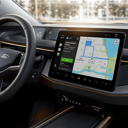
The infrastructure challenge remains massive. Grid operators must coordinate thousands of individual vehicles charging and discharging in real-time, requiring sophisticated software and utility partnerships. GM's announcement included a new feature aimed at simplifying public charging for EV owners, suggesting the company understands that usability barriers have slowed V2G deployment.
Data center operators are watching closely. Companies like Microsoft, Google, and Amazon have pledged billions toward clean energy, but securing consistent power remains their biggest infrastructure headache. Distributed EV batteries could provide the load balancing utilities desperately need as AI workloads spike unpredictably.
The sodium-ion announcement carries particular weight. While the technology has lagged behind lithium-ion in energy density, recent breakthroughs from Chinese manufacturers have made it viable for stationary storage. GM's entry validates the technology for Western markets and could accelerate manufacturing scale-up in North America.
Industry analysts note that automakers have struggled to monetize EVs beyond vehicle sales. Energy services represent a potential trillion-dollar market as electrification collides with AI's voracious power appetite. Tesla has pursued similar strategies through its Powerwall and Megapack products, but GM's deeper relationships with utilities and commercial fleet operators could provide distribution advantages.
The rollout faces regulatory hurdles. Many states lack clear frameworks for compensating vehicle owners who provide grid services, and interconnection standards vary wildly across utility territories. GM will need to navigate a patchwork of rules while proving the technology's reliability to skeptical grid operators who view distributed resources as unpredictable.
What makes this announcement significant isn't just the technology, it's the collision of three mega-trends: EV adoption reaching critical mass, AI infrastructure straining power grids, and automakers desperately seeking new business models. GM is essentially arguing that the solution to AI's energy problem is already parked in millions of driveways, just waiting to be activated.
GM's V2G activation and sodium-ion battery push signal that automakers see energy services as the next battleground beyond vehicle sales. Whether millions of EV owners will actually participate in grid programs remains uncertain, but the infrastructure pieces are falling into place just as AI's electricity demands threaten to outpace supply. The real test comes when summer heat waves or AI training runs push grids to their limits and GM's distributed battery network either delivers or reveals the gaps between ambitious announcements and operational reality. For now, the automaker has positioned itself at the intersection of transportation electrification and AI infrastructure, a spot that could define the next decade of both industries.