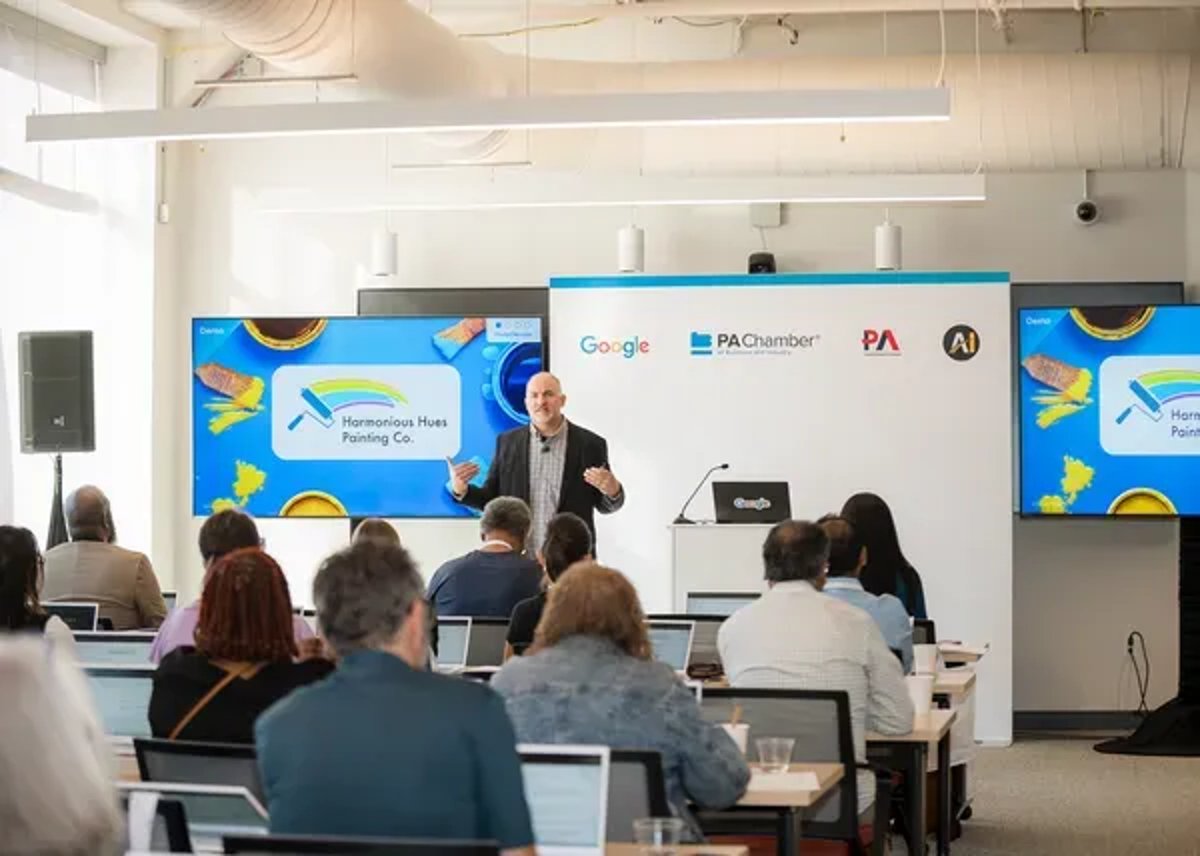
Google just made its boldest play yet for America's small business market, launching the Pennsylvania AI Accelerator at Pittsburgh's AI Horizons Summit. The free program promises to train thousands of SMBs across Pennsylvania in AI fundamentals, marking a significant shift in how tech giants approach middle America's digital transformation.
Google just fired a warning shot across the small business landscape. At yesterday's AI Horizons Summit in Pittsburgh, the tech giant launched its Pennsylvania AI Accelerator alongside Governor Josh Shapiro, signaling a major push to democratize AI for America's main street economy.
The move puts Google squarely in competition with Microsoft for the hearts and wallets of the nation's 33 million small businesses. While Microsoft has focused on enterprise AI through Copilot, Google's betting on grassroots adoption through free, hands-on training programs.
"This isn't just about Pennsylvania," Google Customer Solutions President Selin Song told the Pittsburgh audience of 50 local business owners. "This is our blueprint for bringing AI to every small business in America." The comment, according to attendees via LinkedIn posts, drew sustained applause from the crowd.
The Pennsylvania program launches with impressive scope. Every small business in the state - that's roughly 1.1 million companies employing 2.3 million people - gets access to live workshops led by dedicated Pennsylvania AI Coaches. The curriculum covers Google AI Essentials, prompt engineering, and practical applications for customer service, marketing, and operations.
But here's where Google's strategy gets interesting: the program extends beyond basic AI literacy. Participating businesses can tap Google Career Certificates in cybersecurity, data analytics, and project management - essentially offering workforce development as a gateway drug to Google's broader ecosystem.
The timing isn't coincidental. Small businesses represent the last major untapped market for AI tools, with recent surveys showing only 23% have experimented with AI solutions. Amazon Web Services has been courting this segment through simplified machine learning tools, while Microsoft pushes Teams and Office integrations.
Google's approach differs by emphasizing human coaching over pure technology. Each workshop pairs digital tools with local trainers who understand regional business challenges. "A steel fabricator in Pittsburgh has different AI needs than a tech startup in Philadelphia," explains the program's FAQ documentation.
The initiative builds on Google's July announcement of "AI Works for America," which committed $75 million to workforce development. Pennsylvania becomes the pilot state, with Google executives hinting at rapid expansion if adoption metrics hit targets.
Early indicators look promising. The first Pittsburgh workshop filled its 50-person capacity within hours of registration opening. Local business owners interviewed after the session reported immediate plans to implement AI chatbots and content creation tools.
"I walked in thinking AI was just for big tech companies," said Maria Rodriguez, owner of a local catering business, in a post-event survey published by the Pennsylvania Chamber of Commerce. "I'm walking out with three specific ways to use it next week."
The program's success could reshape how tech giants approach market expansion. Rather than top-down enterprise sales, Google's betting on bottom-up adoption through education and community partnerships. The strategy mirrors China's approach to rural digitization, where tech companies earned loyalty through training before selling products.
Competitors are watching closely. Microsoft recently expanded its SMB-focused AI offerings, while Amazon quietly tested similar coaching programs in Texas. The small business AI market could determine which platform dominates the next wave of digital transformation.
For Pennsylvania's small businesses, the timing creates opportunity. The state's 1.1 million SMBs generate $280 billion in annual revenue but lag national averages in technology adoption. Google's free training removes the traditional cost barrier that's kept AI tools in enterprise hands.
The program's real test comes in scaling beyond Pittsburgh's tech-friendly environment. Rural Pennsylvania businesses face different challenges - limited broadband, older workforces, traditional industries resistant to change. Google's coaches will need to adapt messaging for manufacturers in Erie versus retailers in Lancaster.
Google's Pennsylvania AI Accelerator represents more than workforce development - it's a strategic bet on winning America's small business market through education rather than pure technology. If the program succeeds in democratizing AI across Pennsylvania's diverse economy, expect rapid nationwide expansion and aggressive responses from Microsoft and Amazon. The real winners? Small businesses finally getting enterprise-grade AI tools without enterprise budgets.