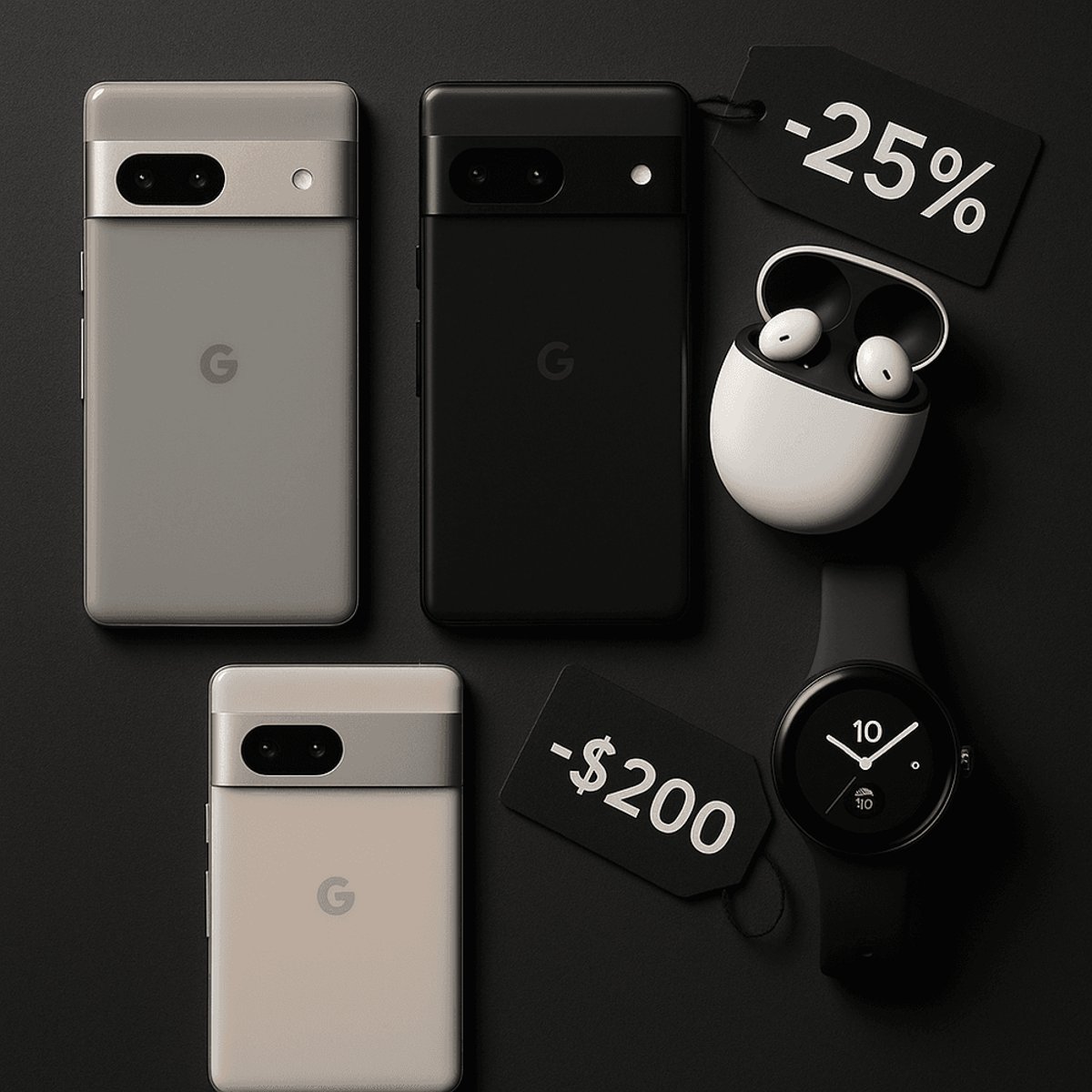
Google just unleashed its biggest Black Friday hardware blitz yet. The company has cut hundreds off the new Pixel 10 range, while also dropping the first major discounts on the recently launched Pixel Watch 4. These deals position Google's latest devices competitively against Apple's iPhone and Samsung's Galaxy lineup during the critical shopping weekend.
Google is rolling out its most aggressive hardware pricing offensive yet. The company has dropped significant discounts across its entire Pixel ecosystem for Black Friday, with the flagship Pixel 10 series leading the charge at $200 off retail prices. The timing couldn't be better for Google, as consumers weigh their options between Apple's iPhone 16 lineup and Samsung's Galaxy S24 series.
The standout deal centers on the Pixel 10, now priced at $599 down from its $799 launch price. This positions Google's latest flagship aggressively against Apple's $799 iPhone 16, offering consumers a compelling Android alternative with superior camera zoom capabilities and AI features. The Pixel 10 includes a triple-camera system with 5X optical zoom, a significant advantage over many competitors in this price range.
But Google's most interesting play might be the Pixel 9a at $349. The budget-friendly device delivers flagship-level photography and seven years of guaranteed software updates - a commitment that rivals Apple's long-term support model. This pricing strategy puts serious pressure on Samsung's Galaxy A-series and could capture price-conscious consumers who've been eyeing premium features without the premium cost.
The discounting extends to Google's newest wearable tech. The Pixel Watch 4 is seeing its first major price cut since launching in October, now available for $300-350 depending on size. The 45mm model offers superior battery life, while both versions include the new fast-charging dock and represent Google's first repairable smartwatch design.
Google's audio strategy gets more interesting with two distinct offerings. The brand-new Pixel Buds 2a launch directly into Black Friday pricing at $99, positioning them as a direct competitor to Apple's basic AirPods. Meanwhile, the premium Pixel Buds Pro 2 drop to $169, offering features like conversation detection and wireless charging that Apple charges significantly more for.
The hardware ecosystem play extends beyond phones and wearables. Google's Pixel Tablet hits $249 for tablet-only configurations, while Nest hardware sees significant cuts including the Learning Thermostat (4th Gen) for $229 and various Nest Cams starting at $75. This creates a comprehensive smart home entry point for consumers already invested in Google's services.
Retail partnerships amplify the impact. Amazon, Best Buy, and Google's own store are all participating, ensuring wide availability. Best Buy appears to be offering particularly aggressive pricing on several models, while Amazon's ecosystem integration provides additional value for Prime subscribers.
The pricing strategy reveals Google's broader hardware ambitions. With Android holding over 70% global market share but Apple dominating premium segments, these deals position Pixel devices as legitimate iPhone alternatives. The seven-year update commitment on devices like the Pixel 9a directly challenges Apple's key advantage in longevity.
Accessory partnerships sweeten the deals further. Cases from Mous, Spigen, and OtterBox see $4-37 discounts, while charging accessories from Anker complement the Qi2 wireless charging capabilities introduced with the Pixel 10 series.
Google's timing aligns with broader industry trends. Smartphone upgrade cycles have lengthened, meaning consumers are more price-sensitive and feature-focused when they do upgrade. The combination of AI-powered photography, extended software support, and aggressive pricing could capture market share from both premium Android competitors and iPhone users considering a switch.
Google's Black Friday strategy represents more than typical holiday discounts - it's a calculated move to establish Pixel as a legitimate iPhone alternative while building a comprehensive hardware ecosystem. With aggressive pricing on flagship phones, first-time discounts on new wearables, and a compelling budget option, Google is positioning itself to capture market share during the industry's most important shopping period. The seven-year software commitment and premium features at mid-range prices create a compelling value proposition that could reshape Android's premium positioning.