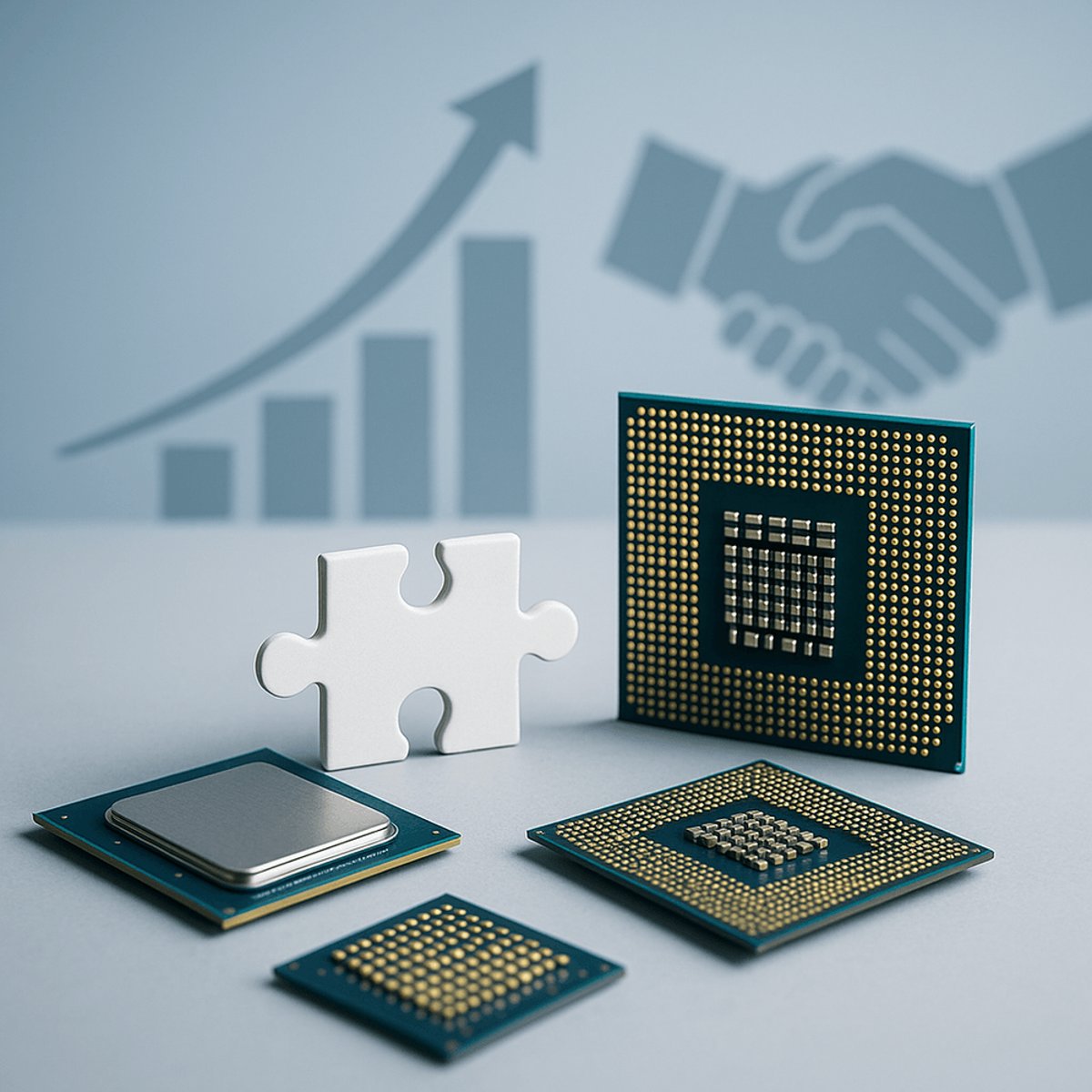
Intel stock shot up 10% Friday after analyst Ming-Chi Kuo predicted the chipmaker will land a deal to supply Apple processors by 2027. The surprise forecast sent shockwaves through the semiconductor industry, potentially reshuffling Apple's supply chain dominated by Taiwan's TSMC for over a decade.
Intel just got the analyst endorsement it desperately needed. The chip giant's stock rocketed 10% Friday after Ming-Chi Kuo, one of tech's most closely-watched analysts, posted on X that he expects Intel to start shipping Apple's lowest-end M processors as early as Q2 2027.
"Visibility on Intel becoming an advanced-node supplier to Apple has recently improved significantly," Kuo wrote, citing his latest industry surveys. The prediction caught Wall Street off guard - Intel shares had been trading near $17.66 as recently as April before this recent recovery.
The timeline hinges on Intel releasing its process design kit by early 2026, essentially the blueprint Apple engineers need to design chips for Intel's fabs. That's a tight schedule for what would mark Intel's biggest foundry win in years.
Apple currently relies almost exclusively on Taiwan Semiconductor Manufacturing Company (TSMC) for its iPhone, iPad, and Mac processors. But Kuo downplayed any threat to the Taiwanese giant, noting that Apple will remain "highly dependent" on TSMC's advanced nodes for the foreseeable future.
"In absolute terms, order volumes for the lowest-end M processor are relatively small and virtually no material impact on TSMC's fundamentals," he explained. Translation: Intel's getting table scraps, not the main course.
But those scraps matter more than the volume suggests. "Apple is a potential major reference customer whose presence validates Intel's high-performance foundry offering," Paul Markham from GAM Global Equities told CNBC. "If Intel pulls it off, there is potential to win higher volume and value business from Apple."
The partnership would also serve broader political goals. Kuo noted that an Intel deal signals "strong support from Apple for the Trump administration's push for its homegrown companies to manufacture in the U.S." That's not just corporate strategy - it's industrial policy in action.
Intel and Apple's relationship has been complicated. The companies first partnered in 2005 when Apple announced Intel processors would power some products, marking Apple's transition away from IBM's PowerPC chips. But by the early 2020s, Apple had moved to its own M-series processors, leaving Intel behind.
Now Intel's betting its foundry business can win back some of that lost ground. The company's been struggling to compete with TSMC's manufacturing prowess, but landing Apple - even for lower-end chips - would provide crucial validation for CEO Pat Gelsinger's turnaround strategy.
The risk? Intel's foundry ambitions have stumbled before. The company's been promising competitive manufacturing capabilities for years while watching TSMC dominate advanced chip production. A missed deadline or quality issues could torpedo any Apple partnership before it starts.
Intel stock dipped 0.59% in Monday premarket trading, suggesting some investors are taking profits after Friday's surge. But the bigger question isn't whether Intel can maintain these gains - it's whether the company can actually deliver on the timeline Kuo outlined.
Intel's 10% surge reflects investor hunger for any sign the company can reclaim relevance in advanced chip manufacturing. While Kuo's prediction of an Apple deal offers hope, the real test comes in 2026 when Intel must deliver the technical foundation for this partnership. Success could validate Intel's foundry strategy and open doors to more premium Apple business. Failure would likely send shares right back to those April lows, confirming that Intel's comeback story remains more aspiration than reality.