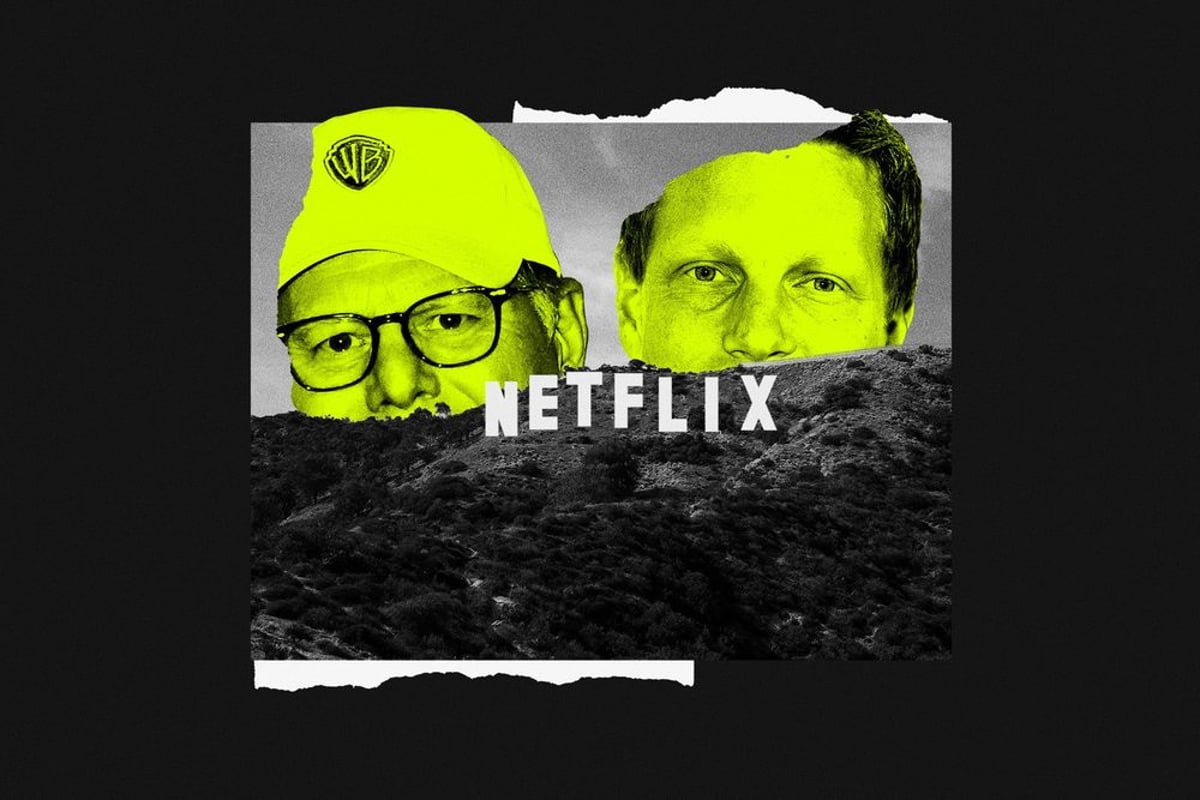
Netflix just dropped $83 billion to acquire Warner Bros. Discovery's studio assets, marking what could be the most consequential media deal in a generation. But Paramount Skydance, backed by Oracle cofounder Larry Ellison's tech fortune, isn't backing down—the company launched a $108 billion hostile takeover bid that includes the cable channels Netflix passed on. At stake: HBO, CNN, Warner Bros. Pictures, and Hollywood's survival strategy against an AI-generated content tsunami that most studios are woefully unprepared for.
Netflix isn't acquiring Warner Bros. Discovery because it wants to. It's doing it because the alternative is existential oblivion. The streaming giant's $83 billion bid, now accepted by Warner's board, represents the starkest admission yet that Hollywood's old playbook is burning—and most studios are still fumbling for the fire extinguisher.
The deal landed last week like a seismic shock through an industry already reeling from years of mismanagement. Netflix gets Warner Bros. Pictures, HBO, and the studio's vast content library. What it doesn't get: the cable channels, including CNN and TBS, which the company views as declining assets in a streaming-first world. "We're focused on premium content that serves our global subscriber base," Netflix co-CEO Ted Sarandos said in a statement, per The Verge.
But David Ellison has other plans. The Paramount Skydance CEO, son of Oracle billionaire Larry Ellison, fired back with a $108 billion hostile bid that would scoop up everything—cable channels included. His pitch? That traditional distribution still matters, and that his father's AI war chest gives them the firepower to outlast Netflix's subscriber-only model. According to internal documents reviewed by Variety, Ellison's team believes regulatory scrutiny will kill Netflix's bid anyway.
The younger Ellison's strategy feels ripped from Succession—billionaire heir desperate to prove himself by conquering Hollywood through sheer financial force. Vulture profiled his campaign as "The Son King of Hollywood," documenting how Oracle's AI profits are funding his media empire ambitions. He's betting that the Trump administration's more lenient antitrust stance gives him an opening that wouldn't have existed two years ago.
Caught in the crossfire: HBO, CNN, and Warner Bros. Pictures—brands with world-class recognition that have been catastrophically mismanaged for 25 years. Time Warner's disastrous AOL merger. AT&T's baffling acquisition and subsequent fire sale to Discovery. Current CEO David Zaslav's cost-cutting crusade that alienated talent and torched the company's creative reputation. "It's genuinely shocking how many ways these companies have found to fumble this," media analyst Julia Alexander told The Verge's Decoder podcast, per Puck News.
Netflix's motivation becomes clearer when you zoom out. The company isn't just competing with other streaming services anymore—it's fighting for attention against TikTok, YouTube, Fortnite, Roblox, and soon, an infinite flood of AI-generated content. "The attention economy is fragmenting faster than anyone predicted," Alexander explained. "Netflix recognizes that owning iconic IP and prestige brands like HBO is the only moat that matters when AI video can pump out endless generic content."
The numbers back up Netflix's urgency. The company serves 325 million subscribers globally but faces slowing growth in mature markets. Warner Bros. brings not just content but cultural cachet—HBO's prestige programming, DC Comics franchises, and a studio system that still produces theatrical hits. Netflix has been building its own studio infrastructure for years, but acquiring Warner Bros. accelerates that timeline by a decade.
Regulatory hurdles loom large. FCC Chairman expressed "legitimate competition concerns" about the Netflix-Warner combination, according to Variety. Sarandos will testify at a Senate antitrust hearing next month, facing questions about market concentration in streaming. The irony: Paramount Skydance's even bigger bid would create an arguably more dominant player—but with Oracle money behind it, Ellison seems confident he can navigate Washington better than Netflix.
The competitive landscape has shifted dramatically. Disney combined Disney+ with Hulu. Amazon keeps pouring Prime Video investment into live sports and MGM's library. Apple treats Apple TV+ as a loss leader for Services revenue. But none of them are making the kind of all-in bet Netflix is placing on Warner Bros.
What's driving the desperation? The AI wrecking ball that's about to hit entertainment. Cheap, endless AI-generated video will flood platforms within months—anyone remember when text-to-image AI seemed impossible? Tools for creating professional-looking video content are advancing exponentially. In that world, owning beloved franchises and prestige brands becomes the only sustainable competitive advantage. Generic content becomes worthless when AI can generate it for pennies.
"Netflix is basically saying: we need to own the stuff people actually care about before AI commoditizes everything else," Alexander said on Decoder. Current Warner Bros. Discovery CEO David Zaslav tried playing the same consolidation game but got beaten to the punch. His cost-cutting strategy—axing finished films for tax writeoffs, slashing HBO Max's budget—destroyed employee morale and creative partnerships. Now he's watching his company get carved up by better-capitalized predators.
Paramount Skydance's hostile bid complicates the timeline but probably doesn't derail Netflix's deal. Bloomberg reported that Warner's board favors Netflix's cleaner offer and faster regulatory path. But Ellison could drag this out for months, especially if he gets political cover from a Trump administration eager to block Big Tech consolidation.
The broader lesson: Hollywood's reckoning is here. Decades of financial engineering, corporate reshuffling, and short-term thinking left traditional studios vulnerable. Tech companies with subscriber relationships and distribution infrastructure are picking off the content creators. The only question is which tech giant ends up owning which studio—and whether any of them can build a sustainable model before AI rewrites all the rules again.
Netflix's Warner Bros. acquisition isn't a flex—it's a survival move. As AI-generated content prepares to commoditize generic video, owning irreplaceable franchises and prestige brands becomes the only defensible moat. Paramount's Oracle-backed counterbid adds drama, but the real story is bigger: Hollywood's decades of mismanagement finally caught up with it, and tech companies are writing the final chapter. Whether Netflix's bet pays off depends on one question—can they turn Warner's legendary IP into must-watch content fast enough to justify the price tag before the AI tsunami hits? The clock is ticking, and most of Hollywood still doesn't realize how little time they have left.