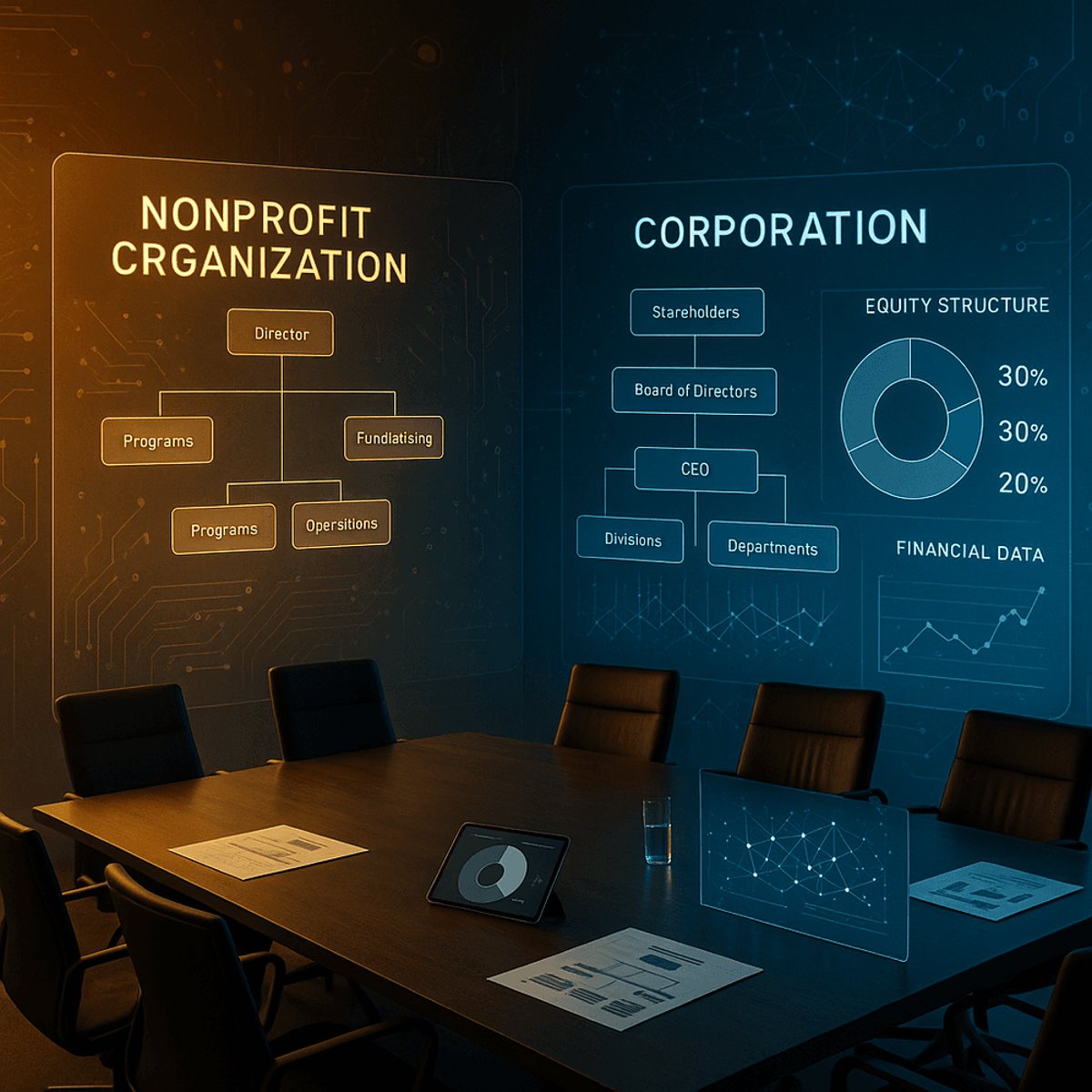
OpenAI just pulled off one of the most unusual corporate restructures in tech history. The AI giant announced Thursday that its nonprofit parent will retain oversight and own an equity stake worth over $100 billion - making it potentially one of the world's wealthiest philanthropic organizations while the company continues its commercial growth trajectory.
OpenAI just redefined what a tech company can look like. The ChatGPT creator announced Thursday that its nonprofit parent will maintain control and own an equity stake exceeding $100 billion - a move that could create the world's most well-funded philanthropic organization while keeping the commercial engine running at full speed.
The announcement comes as OpenAI navigates a complex restructuring from its original nonprofit roots into a public benefit corporation, all while maintaining a $500 billion valuation that makes it one of the most valuable private companies on Earth. "OpenAI started as a nonprofit, remains one today, and will continue to be one - with the nonprofit holding the authority that guides our future," Chairman Bret Taylor said in Thursday's statement.
Microsoft isn't getting left behind in this restructure. The companies signed a non-binding memorandum outlining their next partnership phase, building on Microsoft's $13 billion investment dating back to 2019. "We are actively working to finalize contractual terms in a definitive agreement," the companies said jointly, emphasizing their "shared commitment to safety" as AI development accelerates.
This governance gambit comes five months after OpenAI bowed to intense pressure from civic leaders and former employees who demanded the nonprofit retain meaningful control. The company's May announcement promised exactly this outcome, but Thursday's details reveal the financial magnitude - a nonprofit equity stake that dwarfs most sovereign wealth funds.
The timing isn't coincidental. Elon Musk, OpenAI's co-founder turned courtroom adversary, has been fighting to prevent the company's for-profit conversion as his own xAI startup competes for market share. Musk's legal challenges now face a structure that technically keeps OpenAI under nonprofit oversight while allowing continued capital raising for its commercial operations.
California and Delaware Attorneys General are working directly with OpenAI to establish the legal framework, according to the company. This regulatory collaboration suggests the structure has official backing, potentially strengthening OpenAI's position against Musk's legal challenges.
The financial implications ripple beyond corporate governance. OpenAI's nonprofit announced a $50 million grant initiative targeting AI literacy, economic opportunity, and community innovation - pocket change compared to its massive equity position but a signal of philanthropic ambitions that could reshape how tech wealth gets deployed for social good.
Investors watching this space should note how OpenAI is threading an incredibly narrow needle. The company needs to satisfy venture capitalists expecting traditional returns while maintaining nonprofit oversight that could theoretically override commercial decisions. It's a governance experiment that could either become the template for responsible AI development or create conflicts that hamper the company's growth.
Competitors like Google, Meta, and Amazon are likely studying this structure closely. If OpenAI proves that nonprofit oversight can coexist with aggressive commercial expansion, expect other AI leaders to explore similar hybrid models to address mounting regulatory and public pressure around AI safety and development.
The real test comes in execution. Can a nonprofit board with fiduciary duties to humanity make decisions that align with investors expecting massive returns? OpenAI's $100 billion bet is that this tension will drive better outcomes than pure profit maximization - a theory that's about to get the ultimate market test.
OpenAI's hybrid structure represents either brilliant innovation or governance chaos waiting to happen. By giving its nonprofit parent a $100 billion stake while pursuing commercial growth, the company is betting that mission-driven oversight can coexist with venture capital expectations. The success or failure of this experiment will likely determine whether other AI giants adopt similar models or whether OpenAI becomes a cautionary tale about trying to serve two masters. With Musk's legal challenges intensifying and regulators watching closely, the next few months will test whether this unprecedented corporate structure can actually work at scale.