OpenAI just shook up the AI chip wars with a massive deal that sent AMD stock rocketing 25% in premarket trading. The ChatGPT maker will deploy 6 gigawatts of AMD Instinct GPUs over multiple years, starting with 1 gigawatt in late 2026, while potentially acquiring up to 10% ownership in the chipmaker through stock warrants tied to deployment milestones.
OpenAI just dealt Nvidia a strategic blow while handing AMD its biggest AI win yet. The deal sending AMD shares soaring 25% Monday isn't just about chips - it's about OpenAI fundamentally reshaping the AI hardware landscape.
The numbers are staggering. OpenAI will deploy 6 gigawatts of AMD's Instinct graphics processing units across multiple hardware generations, kicking off with 1 gigawatt in the second half of 2026. According to CNBC's reporting, the companies declined to specify the exact dollar value, calling it worth "billions."
But here's where it gets interesting: AMD has issued OpenAI warrants for up to 160 million shares of common stock, with vesting tied directly to deployment volume and AMD's share price performance. If OpenAI exercises the full warrant, it could own roughly 10% of AMD - a stunning reversal from the typical customer-supplier dynamic.
"AMD's leadership in high-performance chips will enable us to accelerate progress and bring the benefits of advanced AI to everyone faster," Sam Altman said in the announcement. The timing couldn't be more pointed, coming just two weeks after OpenAI's landmark $100 billion deal with Nvidia.
That Nvidia arrangement flipped the script - instead of OpenAI taking equity in a supplier, Nvidia took a stake in OpenAI while securing long-term chip orders. Nvidia shares fell 1% Monday morning as investors processed the competitive implications.
The AMD partnership slots into OpenAI's massive 23-gigawatt infrastructure roadmap, where the company has now committed roughly $1 trillion in buildout spending in just two weeks. At an estimated $50 billion construction cost per gigawatt, OpenAI is essentially building the equivalent of a small country's power grid dedicated to AI.
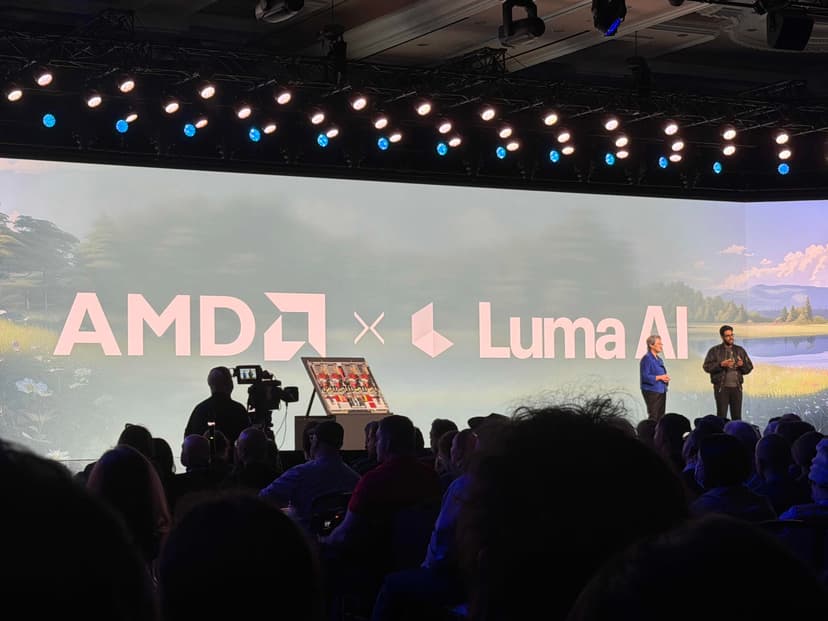
"This creates a true win-win enabling the world's most ambitious AI buildout and advancing the entire AI ecosystem," AMD CEO Lisa Su told CNBC ahead of a joint appearance with OpenAI President Greg Brockman.
For AMD, this represents validation after years of trailing Nvidia in AI accelerators. The company finally has a flagship customer at the forge front of the generative AI boom, providing crucial revenue visibility for its next-generation Instinct roadmap.
The deal also reveals OpenAI's broader supply chain strategy. Beyond AMD, the company is in talks with Broadcom for custom chips, while Oracle helps build data center sites. It's creating what analysts describe as a "tightly wound circular economy" where the same handful of companies trade capital, equity, and compute among themselves.
This circular structure has industry watchers nervous. As one analyst noted in the CNBC coverage, the interconnected nature means real strain if any link weakens. Nvidia supplies capital to buy its chips, Oracle builds the sites, AMD and Broadcom step in as suppliers, and OpenAI anchors the demand.
OpenAI's Stargate project exemplifies this infrastructure ambition. The first Abilene, Texas site already runs Nvidia chips, while upcoming builds in New Mexico, Ohio, and the Midwest will feature the supplier mix including AMD hardware.
The partnership timing also coincides with broader industry supply chain pressures. By diversifying beyond Nvidia, OpenAI reduces single-vendor risk while potentially securing better pricing through competition. For AMD, it provides the scale needed to challenge Nvidia's AI dominance meaningfully.
Wall Street is taking notice. The 25% premarket surge puts AMD on track for its biggest single-day gain in over two years, while highlighting how critical these AI infrastructure deals have become for semiconductor valuations. The warrant structure means AMD's upside is directly tied to OpenAI's success in deploying the massive GPU clusters.
This AMD-OpenAI partnership represents more than just another chip deal - it's OpenAI's declaration of independence from single-vendor reliance while validating AMD's years-long push into AI accelerators. With $1 trillion in infrastructure commitments across multiple suppliers, OpenAI is essentially building its own silicon ecosystem. For investors, the 25% AMD surge signals how these AI infrastructure plays are becoming the new gold rush, with equity stakes and deployment milestones creating unprecedented partnerships that blur the lines between customer and investor.