Cerebras Systems just closed a massive $1.1 billion Series G round at an $8.1 billion valuation, exactly one year after filing for an IPO that regulatory delays have kept off the table. The AI hardware company's pivot back to private funding highlights how foreign investment scrutiny is reshaping Silicon Valley's path to public markets, even as demand for AI inference services explodes.
Cerebras Systems was supposed to be trading publicly by now. Instead, the AI chip company just closed one of the year's largest private funding rounds - a $1.1 billion Series G that values the Nvidia rival at $8.1 billion. The timing isn't coincidental. It's been exactly one year since Cerebras filed its IPO paperwork, and regulatory delays have turned what should have been a public debut into an extended private funding marathon.
The round was co-led by Fidelity and Atreides Management, with participation from Tiger Global, Valor Equity Partners, and 1789 Capital. For a company that's raised almost $2 billion since its 2015 founding, this latest infusion represents a significant bet on AI infrastructure at a time when inference demand is reshaping the entire sector.
"By the second quarter of 2024, we came to believe that we had crossed a tipping point in which the AI that had been made was becoming useful, and that means you would see an explosion of demand for inference," CEO Andrew Feldman told TechCrunch. That tipping point translated into real business momentum when Cerebras launched its inference cloud services in August 2024.
The numbers back up Feldman's optimism. Cerebras has opened five new data centers this year alone, spanning Dallas, Oklahoma City, and Santa Clara, with expansions planned for Montreal and Europe. It's the kind of rapid infrastructure buildout that requires serious capital - exactly what this $1.1 billion round provides. The funding will primarily fuel data center expansion and U.S. manufacturing capabilities, though Feldman remained tight-lipped about specific technical advances in development.
But this funding round tells a bigger story about how foreign investment scrutiny is reshaping Silicon Valley's IPO landscape. Cerebras filed for its IPO on September 30, 2024, only to hit immediate regulatory roadblocks. The Committee on Foreign Investment in the United States (CFIUS) flagged the company's $335 million investment from G42, an Abu Dhabi-based cloud and AI company, triggering a national security review that's still ongoing.
The delays got worse in early 2025 when unfilled CFIUS positions during the transition to President Trump's administration further stalled the process. What was meant to be a straightforward public offering became a cautionary tale about how geopolitical tensions are complicating even routine corporate transactions.
Feldman insists the IPO remains on track, just delayed. "We chose a small number of leaders who would help us, not just in this round, but in the future," he said, referring to the institutional investors leading this Series G. "Companies that are leaders in late-stage private fundraising, but predominantly do public. It's our aspiration to be a public company."
The strategy mirrors what other late-stage startups are doing - raising massive private rounds from public market investors as a bridge to eventual listing. It's a playbook that makes sense when regulatory uncertainty meets explosive growth. Cerebras's valuation jumped from "more than $4 billion" in its 2021 Series F to $8.1 billion now, reflecting both the AI boom and the company's execution on inference services.
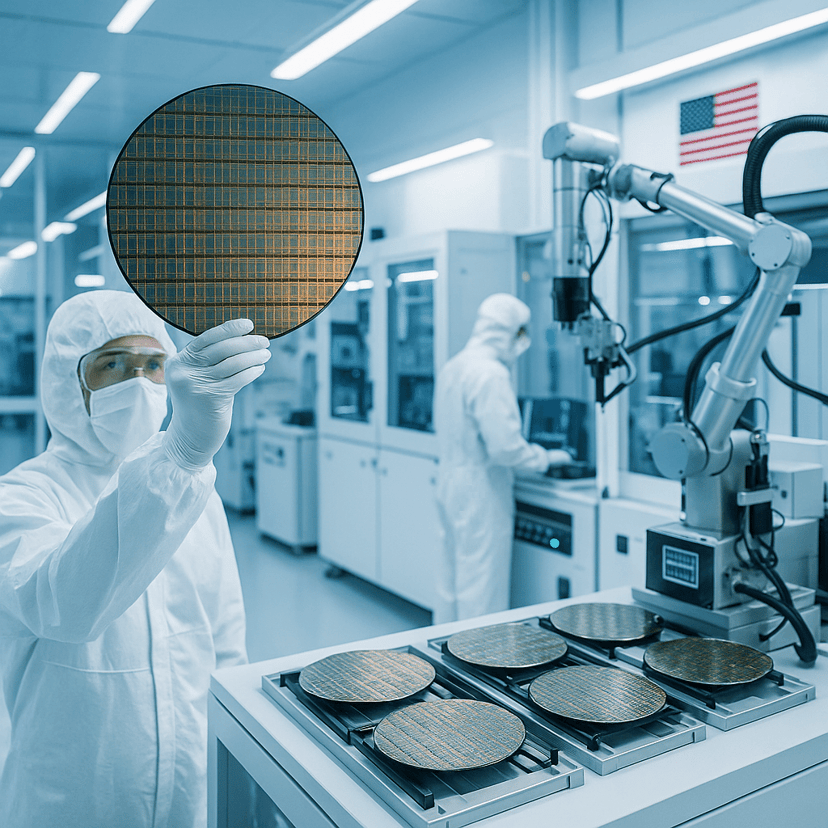
The competitive landscape makes this funding even more significant. While Nvidia dominates AI training chips, the inference market - where trained models actually generate outputs - remains more fragmented. Cerebras's specialized wafer-scale processors and cloud infrastructure position it to capture share in what Feldman sees as the next phase of AI adoption.
For investors, the bet reflects confidence that AI workloads will continue demanding specialized hardware beyond traditional GPUs. The participation of names like Fidelity and Tiger Global signals that public market investors view Cerebras as a viable long-term play, IPO delays notwithstanding.
Cerebras's $1.1 billion raise underscores how regulatory complexity is reshaping Silicon Valley's traditional IPO timeline, even as AI infrastructure demand accelerates. The company's pivot from public offering to massive private round reflects a broader trend where geopolitical scrutiny meets growth capital needs. For the AI hardware sector, it signals that specialized inference providers can command premium valuations while navigating an increasingly complex path to public markets. The question now is whether regulatory delays will ultimately strengthen or weaken these companies' eventual public debuts.