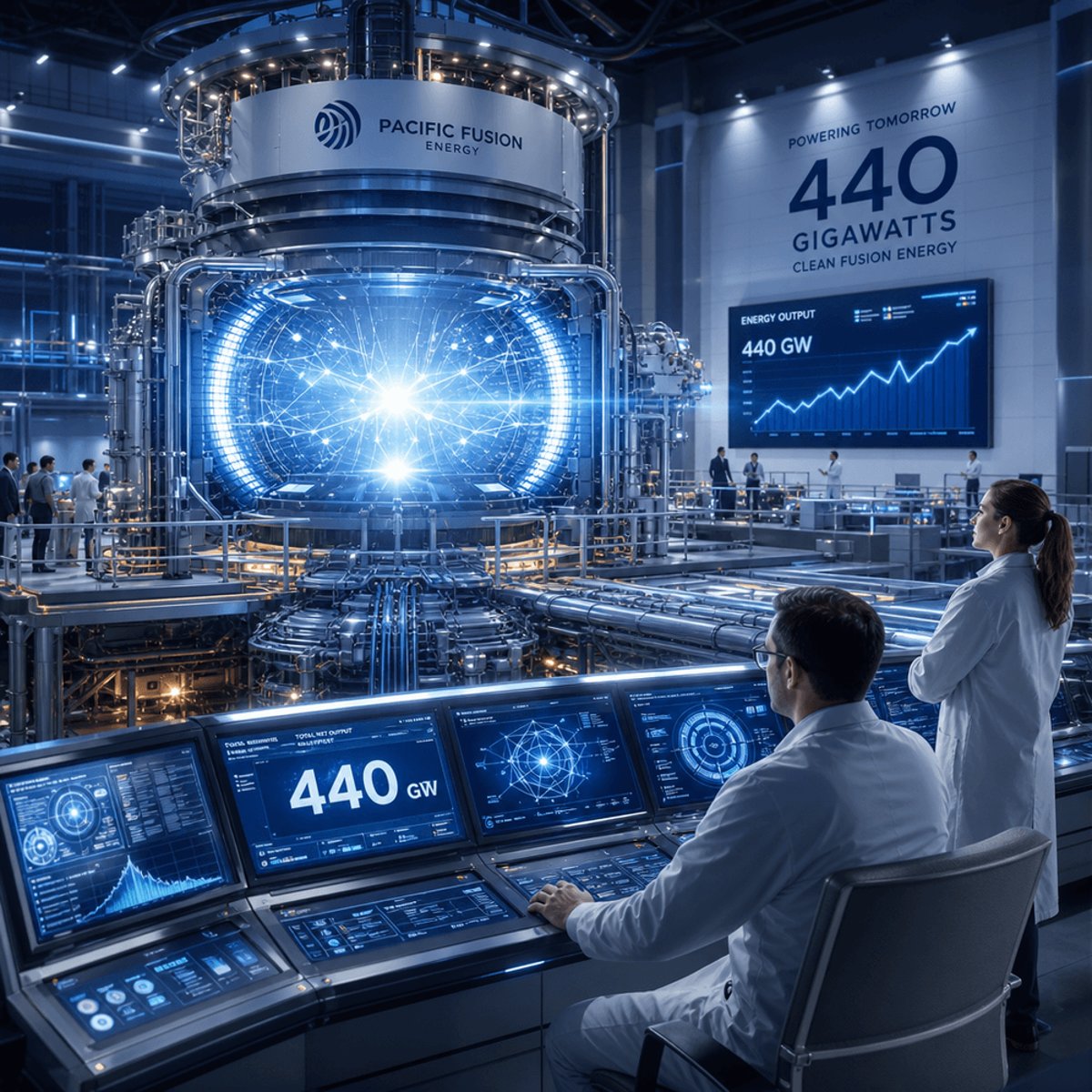
Pacific Fusion just pushed fusion energy closer to commercial reality. The startup's latest sub-scale prototype fired off 440 gigawatts of power in an 80-nanosecond burst, a technical milestone that sets the stage for its planned demonstration power plant. The achievement signals that fusion's decades-long journey from lab curiosity to grid-scale energy source might finally be accelerating, as private companies race to beat government-funded projects to the finish line.
Pacific Fusion just proved its fusion reactor design can handle the extreme power demands needed for commercial energy production. The company's sub-scale prototype channeled 440 gigawatts through its system in a flash lasting just 80 nanoseconds, demonstrating that its technology can manage the intense conditions required to fuse atoms and release energy.
To put that in perspective, 440 gigawatts is roughly 175 times the output of the largest nuclear power plant in the United States. But fusion reactors don't work like conventional power plants. They need these massive, ultra-brief power pulses to heat plasma hot enough for atoms to overcome their natural repulsion and merge together, releasing energy in the process. The trick is doing this repeatedly and efficiently enough to generate more power than you put in.
Pacific Fusion's test marks a critical validation point for the startup's approach to fusion. While the company hasn't disclosed which fusion methodology it's pursuing, the ability to handle such extreme power densities in a compact timeframe suggests its engineering is ready for the next phase: building a demonstration plant that can prove sustained fusion reactions.
The fusion industry has shifted dramatically over the past five years. What was once the exclusive domain of massive government projects like ITER in France has spawned dozens of private companies, each betting on different technical approaches. Commonwealth Fusion Systems raised over $2 billion to build its SPARC reactor. Helion Energy signed a power purchase agreement with Microsoft. TAE Technologies keeps pushing its beam-driven fusion concept forward.
Pacific Fusion's milestone comes at a moment when the fusion sector is transitioning from pure research to engineering validation. The question is no longer whether fusion can work - scientists achieved net energy gain at the National Ignition Facility in 2022. Now it's about whether private companies can build reactors that produce electricity reliably and cheaply enough to compete with other clean energy sources.
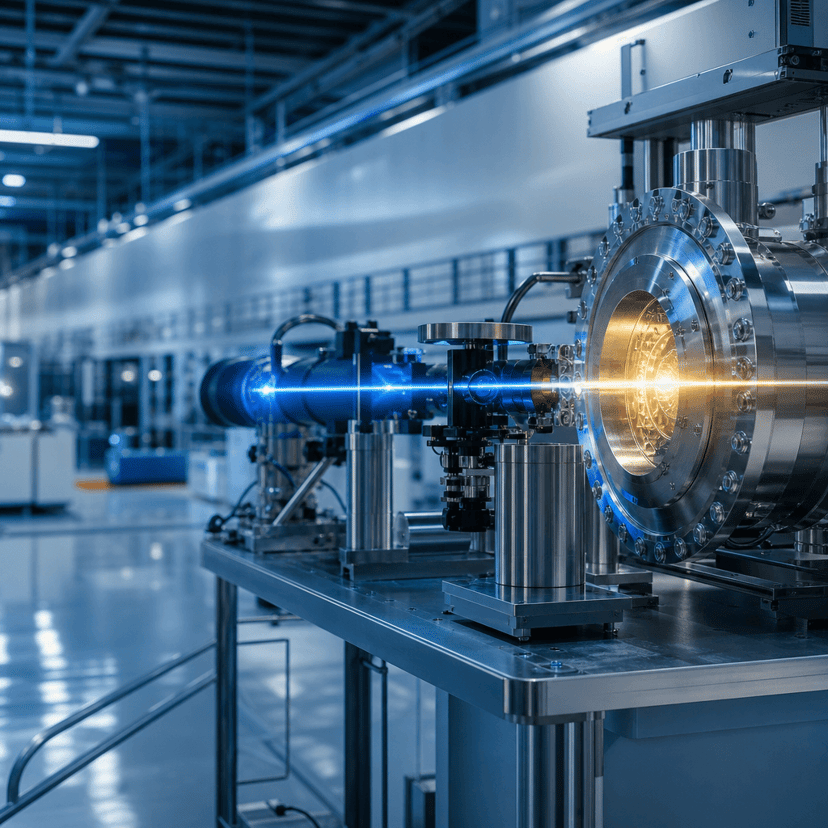
The company's sub-scale prototype functions as a crucial proving ground. Engineers can test materials, validate simulations, and identify potential failure points without the billion-dollar price tag of a full-scale plant. Getting 440 gigawatts through the system, even for 80 nanoseconds, means the core components can withstand the electromagnetic forces and thermal stresses that would destroy lesser designs.
But the path from prototype to power plant remains steep. Fusion startups face a common challenge: demonstrating Q greater than 1, meaning the reactor produces more energy than it consumes. Then comes Q greater than 10 or higher, the threshold where fusion becomes commercially viable after accounting for inefficiencies in converting heat to electricity. Pacific Fusion's power handling test is essential groundwork, but the real proof comes when the demonstration plant fires up.
The fusion race is heating up because the stakes are enormous. A working fusion reactor would provide clean, abundant energy without the long-lived radioactive waste of conventional nuclear fission. It would run on deuterium and tritium, isotopes that can be extracted from seawater and lithium. And unlike solar or wind, fusion could provide constant baseload power, solving one of renewable energy's biggest challenges.
Pacific Fusion hasn't announced a timeline for its demonstration plant, but the prototype's performance suggests the company is moving from physics experiments to engineering execution. That's the pattern across the industry: less time publishing papers, more time building hardware that can survive contact with commercial reality.
The broader fusion ecosystem is watching these private efforts closely. If Pacific Fusion or one of its competitors can demonstrate sustained net energy gain in a compact, cost-effective design, it could trigger a wave of investment and infrastructure development. Utilities would need to plan for fusion integration. Supply chains would gear up for specialized components. Regulators would finalize safety frameworks that don't yet exist.
For now, Pacific Fusion's 440-gigawatt burst stands as proof that its engineering team has solved at least one piece of the fusion puzzle. The demonstration plant will reveal whether they can solve the rest.
Pacific Fusion's prototype test won't power homes tomorrow, but it's the kind of engineering milestone that separates serious fusion companies from hopeful science projects. The 440-gigawatt burst proves the hardware can handle fusion's brutal physics. Now comes the harder part: turning those brief flashes of power into sustained electricity generation that can compete with natural gas and renewables on price. If Pacific Fusion's demonstration plant delivers on that promise, the decades-long wait for fusion energy might finally be nearing its end. Until then, this test remains what it is - encouraging evidence that commercial fusion is becoming an engineering problem rather than a physics fantasy.