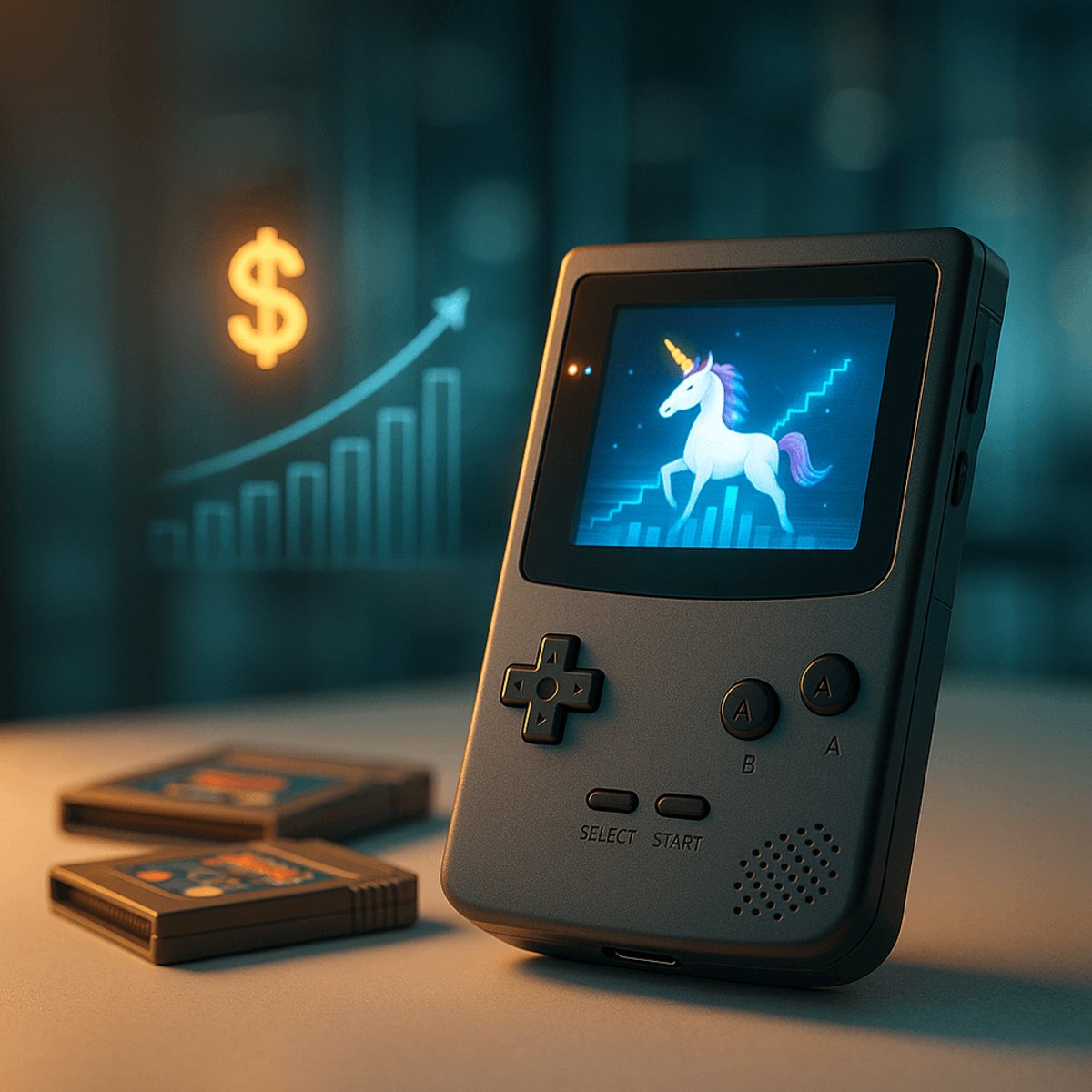
Palmer Luckey is making another audacious bet, and this time it's not on virtual reality headsets or autonomous weapons systems. ModRetro, the gaming hardware startup backed by the Oculus founder and Anduril CEO, is reportedly seeking fresh funding at a $1 billion valuation, according to sources familiar with the matter reported by TechCrunch. The move comes roughly 18 months after the company launched the Chromatic, a Game Boy-style handheld that's betting nostalgia can command premium prices in a market dominated by Nintendo and mobile gaming.
Palmer Luckey has never been one to chase safe bets. The entrepreneur who sold Oculus to Facebook for $2 billion before he could legally drink is now trying to convince investors that retro gaming hardware deserves unicorn economics.
ModRetro is shopping for capital at a $1 billion pre-money valuation, multiple sources tell TechCrunch. It's an ambitious number for a company that's shipped exactly one product - the Chromatic, a Game Boy Color-inspired handheld that launched in late 2024 with a $199 price tag and the promise of playing original cartridges on a modern FPGA-based system.
The timing is interesting. While Luckey has been laser-focused on building Anduril Industries into a defense tech powerhouse valued north of $14 billion, ModRetro represents a different kind of hardware challenge. Instead of autonomous drones and AI-powered surveillance systems, the company is betting that millennials and Gen X gamers will pay premium prices to relive their childhood - but with better screens and USB-C charging.
The Chromatic hit the market at a moment when retro gaming has evolved from hobbyist passion project to legitimate business category. Analogue, the boutique hardware maker that's become the gold standard for FPGA-based retro consoles, has demonstrated there's real money in high-end nostalgia. Their Pocket handheld, which plays Game Boy, Game Gear, and Neo Geo Pocket cartridges, regularly sells out despite a $220 price point.
But going from niche hardware maker to billion-dollar company requires scale that the retro gaming market hasn't really proven it can support. Nintendo shipped over 140 million Switch consoles. The entire addressable market for premium retro handhelds is probably measured in the hundreds of thousands, maybe low millions if you're optimistic.
That's where Luckey's track record becomes the product investors are really buying. The 33-year-old has already proven he can identify emerging hardware categories before they go mainstream. He launched Oculus's Kickstarter campaign in 2012 when virtual reality was still considered a failed '90s experiment. Facebook acquired the company for $2 billion just two years later, before the first consumer Rift even shipped.
After his controversial departure from Meta in 2017, Luckey pivoted hard into defense technology with Anduril. The company has since become a legitimate challenger to traditional defense contractors, landing deals with the Department of Defense and building everything from autonomous surveillance towers to AI-powered fighter jet components. Earlier this year, Anduril announced a merger with several defense tech companies in a deal that could value the combined entity at over $20 billion.
ModRetro's pitch likely centers on expanding beyond pure nostalgia hardware. The company could be positioning the Chromatic as the first step in a broader gaming hardware platform, or perhaps exploring software and content deals that turn the device into a recurring revenue business rather than a one-time hardware sale.
The gaming hardware landscape has certainly shifted since ModRetro's founding. Valve's Steam Deck proved there's demand for premium PC gaming handhelds, spawning a wave of competitors from Asus, Lenovo, and MSI. Meanwhile, companies like Playdate have shown that indie-focused handhelds with unique form factors can find audiences, even if they're not building billion-dollar businesses.
What ModRetro has that most retro gaming startups don't is Luckey's Rolodex and reputation. The same venture capitalists who backed Anduril's rise know that betting against Luckey has historically been a bad idea. His companies have a habit of making contrarian bets look prescient in hindsight.
Still, a $1 billion valuation demands more than just founder pedigree. ModRetro will need to demonstrate either massive sales traction with the Chromatic, a roadmap of additional products that expand the addressable market, or some technological differentiation that makes this more than just another FPGA handheld competing for the same pool of retro gaming enthusiasts.
The fundraise also comes as the broader venture capital market has cooled considerably from the frothy 2021-2022 period. Hardware startups in particular have faced tougher scrutiny, with investors demanding clearer paths to profitability and less tolerance for cash-burning growth strategies. ModRetro will need to convince backers that this isn't just an expensive hobby project for a wealthy founder, but a genuine venture-scale opportunity.
For now, details on the funding round remain scarce. It's unclear how much capital ModRetro is raising, who's leading the round, or what the money will fund beyond general expansion. The company has kept a relatively low profile since the Chromatic launch, with most marketing focused on the retro gaming community rather than mainstream tech media.
What's certain is that Luckey is once again testing whether his instincts for emerging hardware categories are sharper than conventional wisdom suggests. He's already proven skeptics wrong twice. The question is whether retro gaming can be his third act, or if this is the bet that finally proves even Palmer Luckey can't turn every hardware dream into a unicorn.
ModRetro's billion-dollar ambitions will test whether Palmer Luckey's hardware instincts extend beyond cutting-edge VR and defense technology into the nostalgic realm of retro gaming. The Chromatic's success or failure won't just determine one startup's fate - it'll signal whether premium retro gaming hardware can graduate from niche enthusiast category to venture-scale business. For investors, the bet isn't really on Game Boy nostalgia. It's on whether Luckey can spot the next hardware platform before everyone else does, just like he did with VR and autonomous defense systems. If history is any guide, betting against him has rarely paid off.