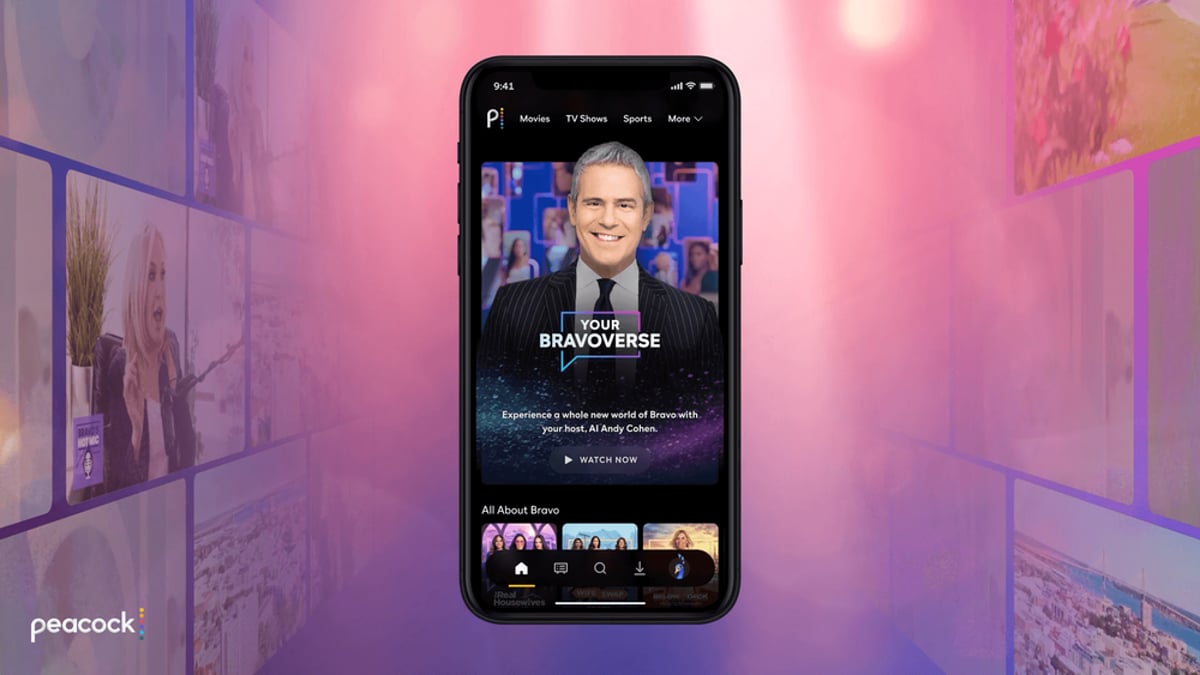
Peacock is betting AI can make reality TV even more addictive. This summer, NBCUniversal will roll out an AI-generated Andy Cohen avatar that narrates an endless, personalized feed of Bravo clips inside its mobile app. The feature, called "Your Bravoverse," uses AI to scan shows like The Real Housewives and Below Deck, surfacing moments tailored to your viewing habits while Cohen's digital twin offers commentary. It's streaming's latest experiment in AI-powered content discovery, and a test of whether audiences will embrace synthetic hosts.
Peacock just turned Andy Cohen into an algorithm. NBCUniversal announced Friday that its streaming platform will debut "Your Bravoverse" this summer, a mobile-first feature that drops an AI-generated version of the Bravo impresario directly onto users' homepages. His job? Guiding viewers through an endless scroll of reality TV moments plucked from shows like The Real Housewives franchise, Love Island, and Below Deck.
The mechanics reveal how streaming platforms are racing to weaponize AI for engagement. When you first open the experience, you'll select which Bravo shows you follow. From there, NBCUniversal's AI goes to work scanning full episodes to identify dramatic moments, confessionals, and confrontations that match your stated preferences. The AI-generated Cohen then appears on screen, offering running commentary as clips auto-play in a vertical feed designed to mimic TikTok's infinite scroll.
It's a sharp departure from traditional streaming interfaces built around catalogs and carousels. Instead of browsing episode lists, Peacock wants you stuck in an algorithmic loop where AI decides what you watch next. The bet is that Cohen's synthetic presence, combined with machine-curated highlights, will keep viewers glued to the app longer than they'd spend hunting for full episodes.
Behind the scenes, this represents significant technical infrastructure. The AI needs to process thousands of hours of reality TV footage, identify narrative peaks, understand character dynamics, and match content to individual taste profiles. Then there's the avatar itself - NBCUniversal had to capture Cohen's likeness, voice patterns, and on-screen mannerisms well enough that his digital twin feels authentic rather than uncanny.
The timing isn't accidental. Streaming platforms are hemorrhaging money on content acquisition while struggling to boost engagement metrics that justify their valuations. AI-powered curation promises to extract more value from existing libraries without paying for new productions. If Peacock can keep users scrolling through Bravo's back catalog, it delays the moment they cancel their subscription or switch to a rival app.
But the move also surfaces uncomfortable questions about talent rights and creative control. Did Cohen negotiate separately for his AI likeness? Will other Bravo personalities see their images and catchphrases remixed by algorithms? The entertainment industry has been battling over AI rights since last year's strikes, and this rollout could set precedents for how streaming giants deploy synthetic versions of real people.
There's also the user experience wildcard. Reality TV superfans might love having Cohen as their personal guide through Housewives drama. But if the AI commentary feels repetitive, generic, or mistimed, it could backfire. Audiences have proven remarkably sensitive to AI that tries too hard to mimic human spontaneity. One awkward AI quip during a pivotal Real Housewives confrontation, and the whole experiment could become a meme for the wrong reasons.
Peacock isn't alone in chasing AI-curated content. Netflix has been testing algorithmic highlight reels, while YouTube already serves billions of AI-recommended clips daily. But deploying a celebrity avatar as the interface represents a bolder gamble - it's not just about what the AI shows you, but whether a synthetic host can replicate the parasocial relationship viewers have with the real Andy Cohen.
The mobile-only launch suggests NBCUniversal is targeting younger viewers who grew up with short-form video. Bravo's audience skews millennial and Gen Z, demographics already conditioned to consume content in scrollable feeds rather than 45-minute episodes. If Your Bravoverse hooks that cohort, expect rapid expansion to other NBCUniversal properties.
What remains unclear is whether this enhances or cannibalizes Peacock's core business. If users spend hours in the AI-curated clip feed, are they still watching full episodes? Does NBC still sell the same ad inventory? Or does this create a parallel viewing experience that studios will need to monetize differently?
For now, the feature represents streaming's latest evolution - from on-demand libraries to algorithmic feeds, with AI avatars serving as the new prime-time hosts. Whether audiences embrace synthetic Andy Cohen or reject the premise will signal how far platforms can push AI before viewers push back.
Peacock's AI Andy Cohen experiment is a litmus test for streaming's AI future. If audiences accept synthetic hosts curating their content, expect every platform to deploy celebrity avatars within months. If they reject it as creepy or inauthentic, the industry will need to rethink how aggressively it integrates AI into viewing experiences. Either way, the line between human-hosted and algorithm-driven entertainment just got a lot blurrier. Come summer, millions of Bravo fans will decide whether they want their reality TV served by the real Andy Cohen or his digital twin.