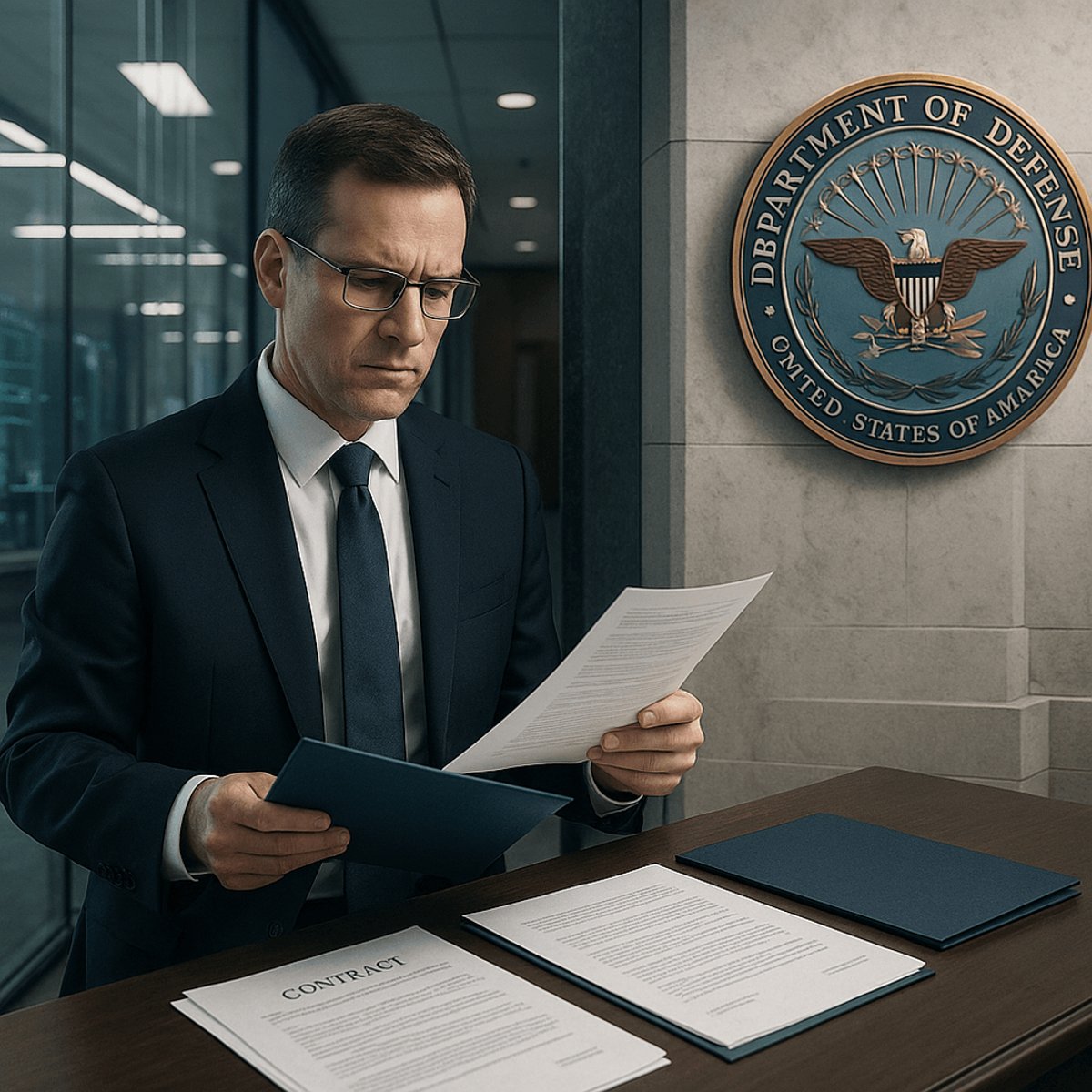
In a stunning legal confrontation, Anthropic filed a federal lawsuit against the Department of Defense on Monday after the agency designated the AI safety company as a supply chain risk. The complaint, calling the DOD's actions "unprecedented and unlawful," marks an extraordinary escalation between a leading AI developer and the Pentagon - potentially reshaping how the U.S. government evaluates domestic tech companies in an era of heightened national security concerns.
Anthropic, the AI safety company behind the Claude large language model, is taking the unprecedented step of suing the U.S. Department of Defense after being labeled a supply chain risk. The lawsuit, filed Monday in federal court, represents a dramatic escalation in tensions between a prominent American AI developer and the Pentagon.
The designation carries serious implications for Anthropic's business operations. Companies labeled as supply chain risks by the DOD typically face restrictions on federal contracts and potential exclusion from government partnerships - a significant blow for any tech company seeking to work with defense agencies. The move is particularly striking given that Anthropic has positioned itself as a leader in AI safety and responsible development, emphasizing constitutional AI principles designed to make systems more helpful, harmless, and honest.
According to the complaint obtained by TechCrunch, Anthropic is characterizing the DOD's actions as both "unprecedented and unlawful." The company argues that the designation lacks proper legal foundation and follows inadequate due process. This appears to be the first time a major U.S.-based AI company has received such a designation from defense officials, raising questions about what triggered the Pentagon's concerns.
The timing is particularly noteworthy. Just last week, reports emerged about controversy surrounding Anthropic's defense partnerships, suggesting growing scrutiny of how AI companies balance commercial interests with national security considerations. Under Defense Secretary Pete Hegseth's leadership, the Pentagon has taken an increasingly assertive stance on technology supply chain security, particularly regarding AI systems that could be deployed in sensitive government applications.
Anthropic CEO Dario Amodei has consistently advocated for thoughtful AI governance and safety measures, making the company's confrontation with federal authorities all the more surprising. The startup, which has raised billions in funding from investors including Google, Salesforce, and others, has built its reputation on developing AI systems with robust safety guardrails.
The supply chain risk designation framework typically applies to foreign companies or those with concerning foreign entanglements - think of how the U.S. has restricted Huawei and other Chinese tech firms. Applying this label to a San Francisco-based company founded by former OpenAI executives represents a significant departure from established practice.
Industry observers are watching closely to see if this signals a broader shift in how the DOD evaluates domestic AI providers. The Pentagon has been racing to integrate advanced AI capabilities across military operations, but questions about model safety, potential misuse, and corporate governance have complicated these efforts. Some defense officials have privately expressed concerns about AI companies' willingness to work on military applications, while simultaneously worrying about insufficient oversight of those that do.
The lawsuit could force the DOD to publicly justify its reasoning for the designation - details that remain unclear from the initial complaint. Federal supply chain risk determinations typically involve classified intelligence assessments, but companies have the right to challenge these designations in court. Anthropic's legal team will need to navigate the complex intersection of national security law, administrative procedure, and the rapidly evolving regulatory landscape around AI systems.
For the broader AI industry, this case carries significant implications. If the DOD can designate domestic AI companies as supply chain risks without clear public justification, it creates uncertainty for every company seeking government contracts or partnerships. Competitors like OpenAI, Microsoft, and Google are undoubtedly monitoring the situation, knowing they could face similar scrutiny.
The case also highlights the growing pains of establishing AI governance frameworks in the United States. While China and the European Union have implemented comprehensive AI regulations, the U.S. has taken a more piecemeal approach, with different agencies applying existing authorities in novel ways. This legal battle could help clarify - or further complicate - the boundaries of federal power over AI companies.
Anthropic's lawsuit against the DOD represents uncharted territory in the relationship between Silicon Valley and Washington. The outcome will likely establish important precedents for how the federal government can regulate and restrict domestic AI companies in the name of national security. As AI systems become increasingly central to both commercial and military operations, expect more friction at this intersection. The case also underscores a broader tension: how do you build a competitive AI industry while maintaining rigorous security standards? For now, Anthropic is betting that the courts will side with transparency and due process over unchecked agency discretion.