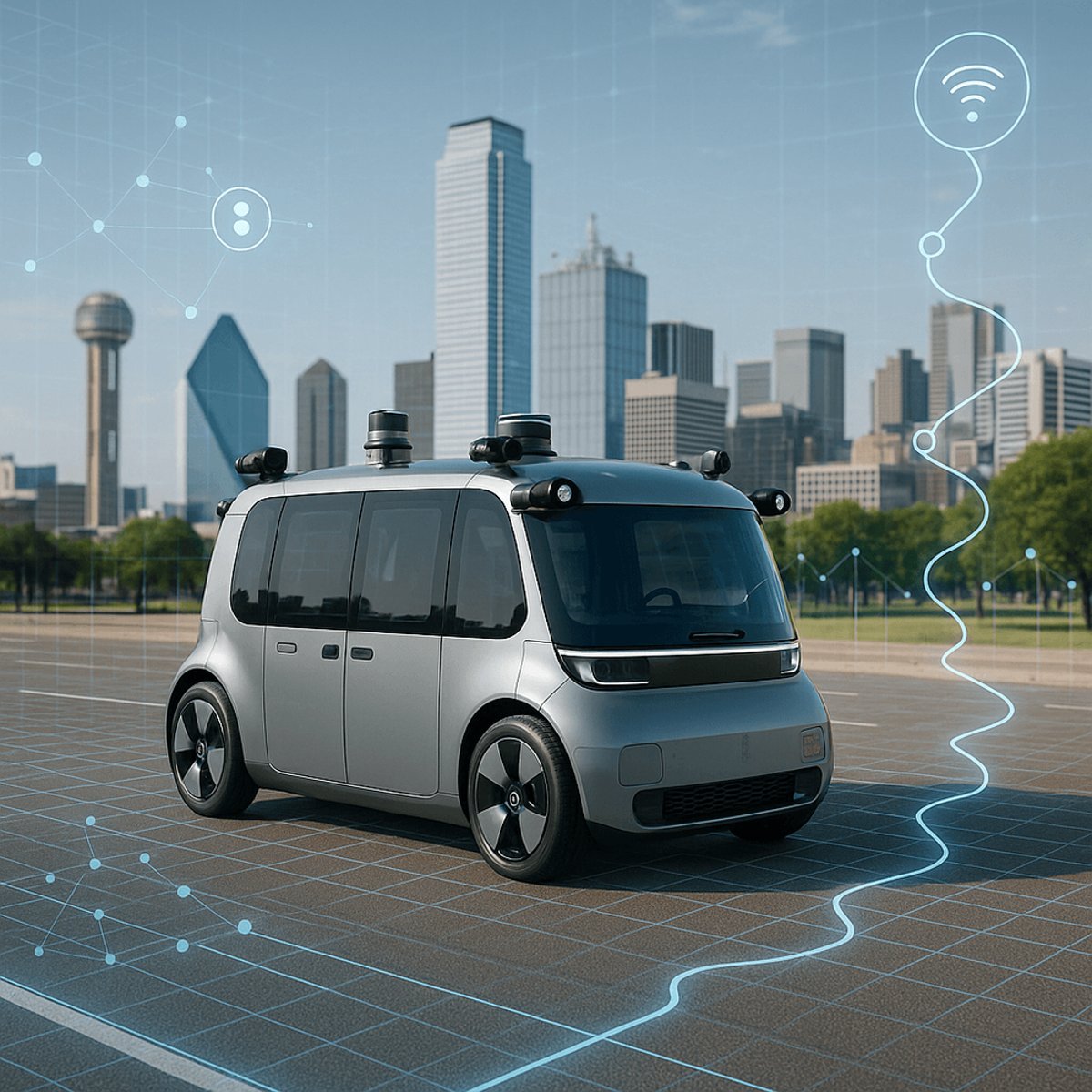
Amazon-owned Zoox is laying the groundwork for a major expansion of its autonomous vehicle ambitions. The robotaxi startup just started mapping Dallas and Phoenix, signaling plans to launch commercial service in both Sun Belt metros. But there's a catch - Zoox is still waiting for federal regulators to greenlight its purpose-built, steering wheel-free vehicles for paying passengers. The mapping push shows the company's betting on approval soon, even as the regulatory clock keeps ticking.
Zoox is making its move. The Amazon-owned autonomous vehicle company confirmed it's begun the painstaking process of mapping Dallas and Phoenix, two sprawling Sun Belt cities that represent the next frontier for robotaxi services. The mapping phase is essential groundwork - Zoox's vehicles need hyper-detailed 3D maps of every street, intersection, and potential obstacle before they can navigate passengers through real traffic.
But here's the tension: Zoox still doesn't have permission to charge for rides. The company's purpose-built robotaxis - those boxy, bidirectional vehicles without steering wheels or pedals - need federal approval from the National Highway Traffic Safety Administration before they can carry paying customers. That regulatory limbo hasn't stopped Zoox from investing heavily in expansion, a sign the company expects approval to come through sooner rather than later.
The timing is strategic. Dallas and Phoenix have emerged as key battlegrounds in the autonomous vehicle wars. Waymo, owned by Alphabet, already operates commercial robotaxi service in Phoenix and recently expanded to Austin. Cruise, despite its well-publicized setbacks in San Francisco, has been eyeing similar Sun Belt markets where weather conditions are favorable and regulatory environments have historically been friendlier to AV testing.
Zoox's approach differs from competitors in a crucial way. While Waymo retrofits modified Jaguar I-PACE SUVs and Cruise uses customized Chevy Bolts, Zoox designed its vehicle from scratch specifically for autonomous operation. The company spent years developing what it calls a "carriage-style" interior with passengers facing each other, no driver's seat in sight. That radical design requires special federal exemptions from crash safety standards written for human-driven cars.
The regulatory pathway has proven slower than Zoox anticipated. The company unveiled its production-intent vehicle back in 2020 with ambitious commercialization plans. More than five years later, Zoox operates only limited employee shuttle services in parts of Las Vegas, Seattle, and Foster City, California. None of those deployments involve paying customers - a critical distinction in an industry racing to prove robotaxis can generate actual revenue.
Amazon's backing gives Zoox staying power that pure-play startups lack. Since acquiring Zoox for over $1 billion in 2020, Amazon has poured resources into the effort, viewing autonomous vehicles as both a potential logistics solution for package delivery and a bet on the future of mobility services. That financial cushion matters as development costs mount and the path to profitability remains unclear.
Dallas presents particular challenges for autonomous navigation. The metro area's sprawling layout, aggressive driving culture, and complex highway interchanges will test Zoox's technology in ways its current limited deployments haven't. Phoenix, with its grid layout and experience hosting Waymo's operations since 2018, offers a somewhat more forgiving environment but brings intense competition.
The mapping process itself can take months. Zoox's vehicles will drive thousands of miles through both cities, using lidar, radar, and cameras to create centimeter-accurate representations of the environment. Engineers then annotate these maps with crucial details - traffic light locations, lane markings, crosswalk positions - that the autonomous system needs to make safe decisions. Any significant road construction or infrastructure changes require remapping.
Industry observers see the expansion as a signal that Zoox believes NHTSA approval is within reach. Companies don't invest in expensive multi-city mapping operations without confidence in their regulatory timeline. But federal approval processes remain notoriously unpredictable, especially for vehicles as unconventional as Zoox's design.
What happens next depends largely on regulators. NHTSA has been deliberating on Zoox's exemption requests for safety standards that don't apply to vehicles without human controls. The agency's decision will either unlock Zoox's commercial ambitions or send the company back to the drawing board. For now, all Zoox can do is map, test, and wait.
Zoox's Dallas and Phoenix mapping push represents a calculated bet on regulatory approval coming soon. With Amazon's deep pockets backing the effort and competition from Waymo intensifying across Sun Belt markets, the pressure is on for Zoox to convert years of development into actual commercial service. But until NHTSA signs off on those unconventional vehicles, all the mapping in the world won't put paying passengers in seats. The robotaxi race is heating up, and Zoox is positioning itself for the starting gun - whenever regulators decide to fire it.