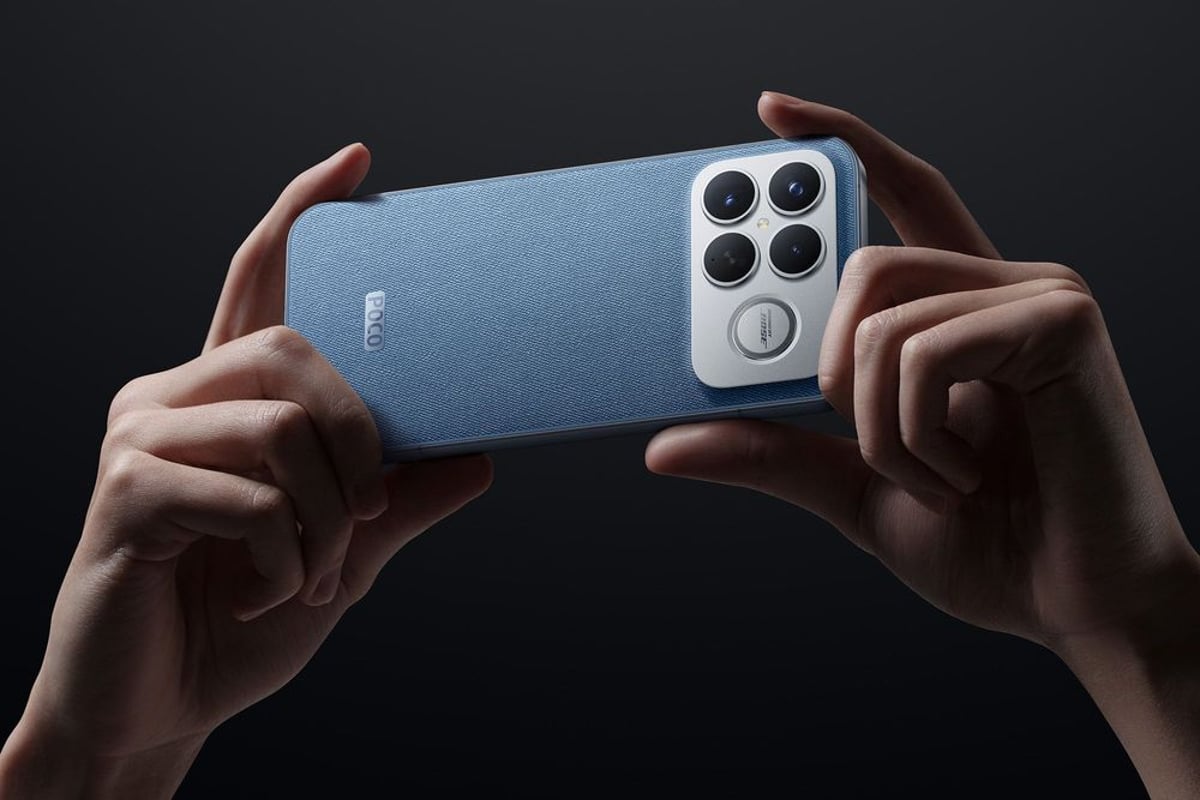
Poco just dropped something unexpected in the crowded smartphone market - phones that actually sound good. The Xiaomi spin-off partnered with audio giant Bose to build stereo speakers directly into its new F8 Pro and Ultra devices, with the Ultra going one step further by cramming in an actual subwoofer. It's a bold move in a category where most manufacturers treat audio as an afterthought.
Poco's latest move feels like a direct response to years of complaints about tinny smartphone speakers. Working directly with Bose engineers, the company designed dual stereo speakers for both the F8 Pro and Ultra, but it's the Ultra that breaks new ground with its integrated subwoofer setup. "By combining Bose's expertise in acoustic engineering with Poco's innovation in design and technology, Poco F8 Series achieves a level of clarity and depth that redefines what's possible in mobile sound," Nick Smith, president of audio technology and chief strategy officer at Bose, told The Verge. The partnership goes beyond just slapping a brand name on existing hardware. Bose engineers created two distinct sound profiles: Dynamic mode pumps up the bass for media consumption, while Balanced mode emphasizes vocal clarity and creates what the companies call "a more even soundstage." It's the kind of granular audio tuning usually reserved for premium headphones, now built directly into phones that start at $579. The timing makes sense when you consider how much time people spend consuming video content on their devices. TikTok, YouTube, and streaming services have turned smartphones into primary entertainment screens for millions of users. But most manufacturers still treat audio as a checkbox feature rather than a core differentiator. Beyond the audio partnership, both phones pack fairly standard flagship specs for their price points. The F8 Ultra runs on the newer Snapdragon 8 Elite Gen 5 chipset with a massive 6.9-inch OLED display, while the F8 Pro uses last year's Snapdragon 8 Elite with a 6.59-inch screen. Both devices include IP68 water resistance and batteries exceeding 6,000mAh capacity, which should easily provide all-day usage. The camera systems follow Poco's typical approach of loading up on megapixels - triple 50MP rear setups on both devices, though the Ultra gets upgraded lenses across the board. It's a numbers game that works well for marketing materials, even if real-world performance often depends more on software processing than raw sensor specs. What's interesting is how this partnership fits into Xiaomi's broader strategy. The parent company has been pushing its sub-brands like Poco and Redmi to find distinct market positions rather than simply competing on price alone. Audio quality represents a tangible differentiator that's immediately noticeable to consumers, unlike processor benchmarks or camera specs that require side-by-side testing. The launch timing also coincides with Poco's expansion into tablets with the Pad X1 and Pad M1, both priced under $400 and featuring Dolby Atmos audio systems. It suggests the company is betting that superior audio will become a key selling point across its entire product lineup, not just premium smartphones. Early bird pricing puts the F8 Pro at $529 and the Ultra at $679, though those discounts won't last long. At those prices, both devices undercut flagships from Samsung and Google while offering audio experiences that those bigger brands often overlook.
The Poco-Bose partnership represents something rare in the smartphone world: a meaningful hardware collaboration that addresses real user pain points. While most brands focus on camera megapixels and processor speeds, Poco is betting that audio quality will become the next major battleground in affordable flagships. If the execution lives up to the promises, it could force bigger players to finally take mobile audio seriously. The success of this partnership will likely determine whether other manufacturers follow suit or continue treating speakers as an afterthought.