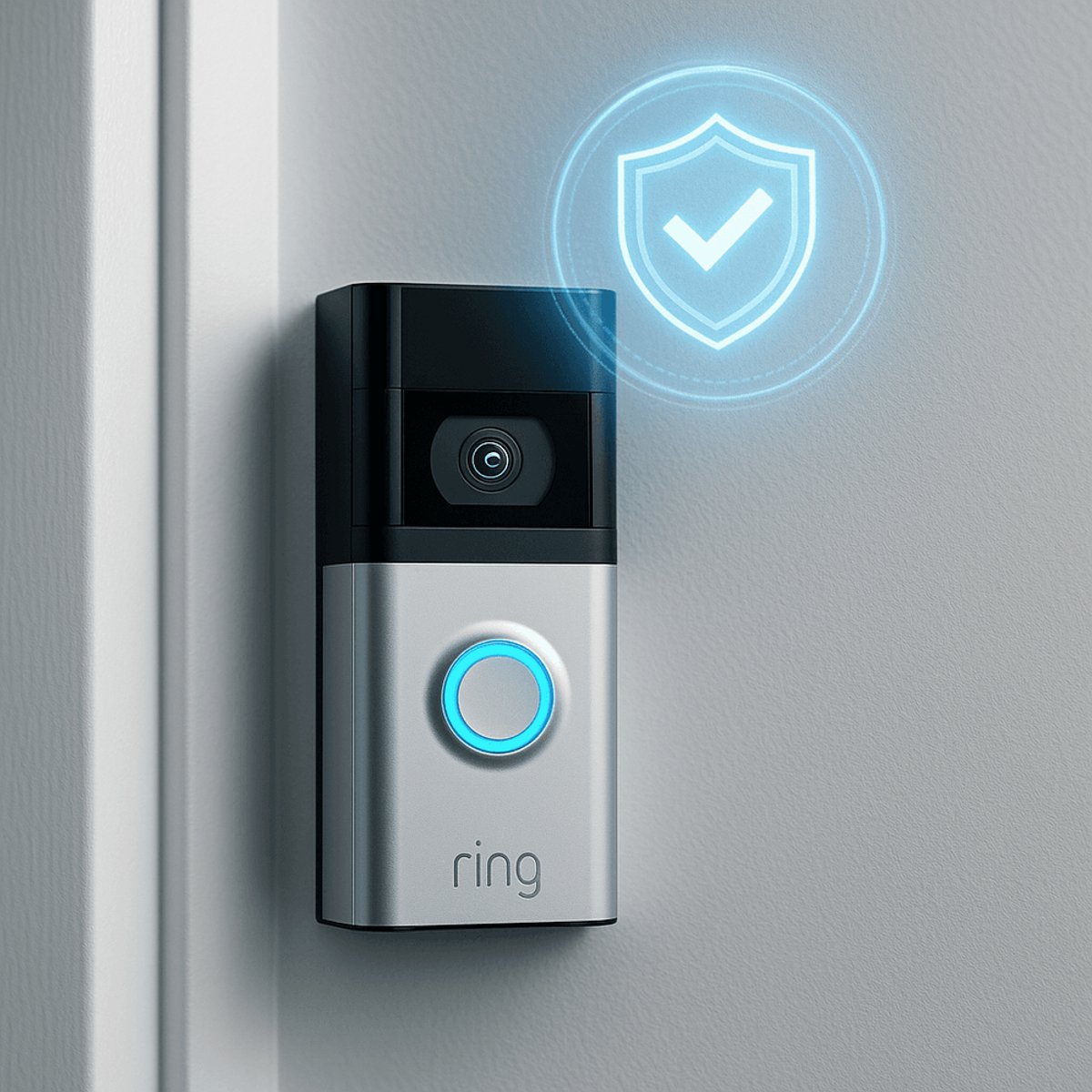
Amazon-owned Ring is launching a content verification system that could reshape how we trust security camera footage. The company announced Ring Verify on Thursday, a new feature that automatically flags any alterations to video recordings - from subtle brightness tweaks to outright manipulations. The move comes as deepfakes and AI-generated content blur the lines between authentic and fabricated media, putting Ring at the forefront of the fight for video authenticity in the smart home space.
Amazon's Ring division just threw down the gauntlet in the authenticity wars. The smart doorbell maker rolled out Ring Verify on Thursday, a verification system designed to catch even the smallest edits to security camera footage - and it could fundamentally change how we handle video evidence from home security systems.
The technology operates on a simple but powerful premise. Every video recorded by a Ring device from December 2025 forward gets what the company calls a digital "tamper-evident seal." Touch that video in any way - trim a few seconds, adjust brightness, crop the frame, even run it through a compression algorithm on a sharing site - and that seal breaks. "Think of it like the tamper-evident seal on a medicine bottle," Ring explained in its blog announcement.
The timing isn't accidental. We're living in an era where AI-generated bunnies on trampolines fool thousands on TikTok and deepfakes have become a legitimate security concern. Ring's parent company Amazon is betting that verified footage becomes a competitive advantage as consumers grow increasingly skeptical of what they see online.
Here's how it works in practice. Say your neighbor shares a Ring video claiming to show a package thief. You can drop that video link into Ring.com/verify and instantly see whether it's been modified. If the seal's intact, you're looking at the original footage exactly as the camera captured it. If not, you know something changed - though that doesn't automatically mean fraud. Maybe someone just brightened the video to make a face more visible, or the footage predates the December 2025 rollout.
Ring suggests the feature could prove useful for insurance claims, where video authenticity can make or break a payout. Instead of he-said-she-said disputes over edited footage, adjusters can verify they're seeing the real thing. Recipients of flagged videos can request unedited versions directly from the original owner.
But there's a catch. The verification system won't work with Ring's end-to-end encrypted videos - those will always show as "not verified." It's a technical limitation that creates an uncomfortable tradeoff: choose maximum privacy or choose verifiability, but you can't have both. For a company that's faced ongoing scrutiny over police partnerships and privacy concerns, that's not a great look.
The feature works across Ring's entire device lineup, from doorbells to floodlight cameras. Any video downloaded or shared from Ring's cloud storage gets the verification treatment automatically - no user action required. The company hasn't specified exactly what cryptographic method it's using, but the system needs to detect everything from major edits down to minor compression artifacts.
There's just one problem with Thursday's announcement: the verification site wasn't actually working. TechCrunch couldn't access Ring.com/verify at publication time, and the blog post wasn't visible on Ring's homepage despite being reachable via direct URL. The premature announcement suggests either a miscommunication or a technical hiccup in the rollout.
The broader smart home industry will be watching closely. If Ring's verification catches on, expect competitors like Google Nest and Arlo to roll out similar features. The race is on to become the trusted source for authentic home security footage - a designation that could prove valuable as AI-generated fakes become harder to spot.
For Ring, this represents a strategic shift beyond just hardware. The company's building an authenticity infrastructure that could extend well beyond doorbells. The technology underpinning Ring Verify could eventually verify any digital content, positioning Amazon as a key player in the coming battles over what's real and what's fabricated online.
Ring Verify marks a critical moment in the smart home security space - verification is becoming just as important as the cameras themselves. But the feature's incompatibility with end-to-end encryption reveals the difficult tradeoffs between privacy and provability. As deepfakes proliferate and trust in digital media erodes, Ring's betting that verified footage becomes table stakes. The real test comes when insurance companies, law enforcement, and courts decide whether that little verification checkmark carries enough weight to matter.