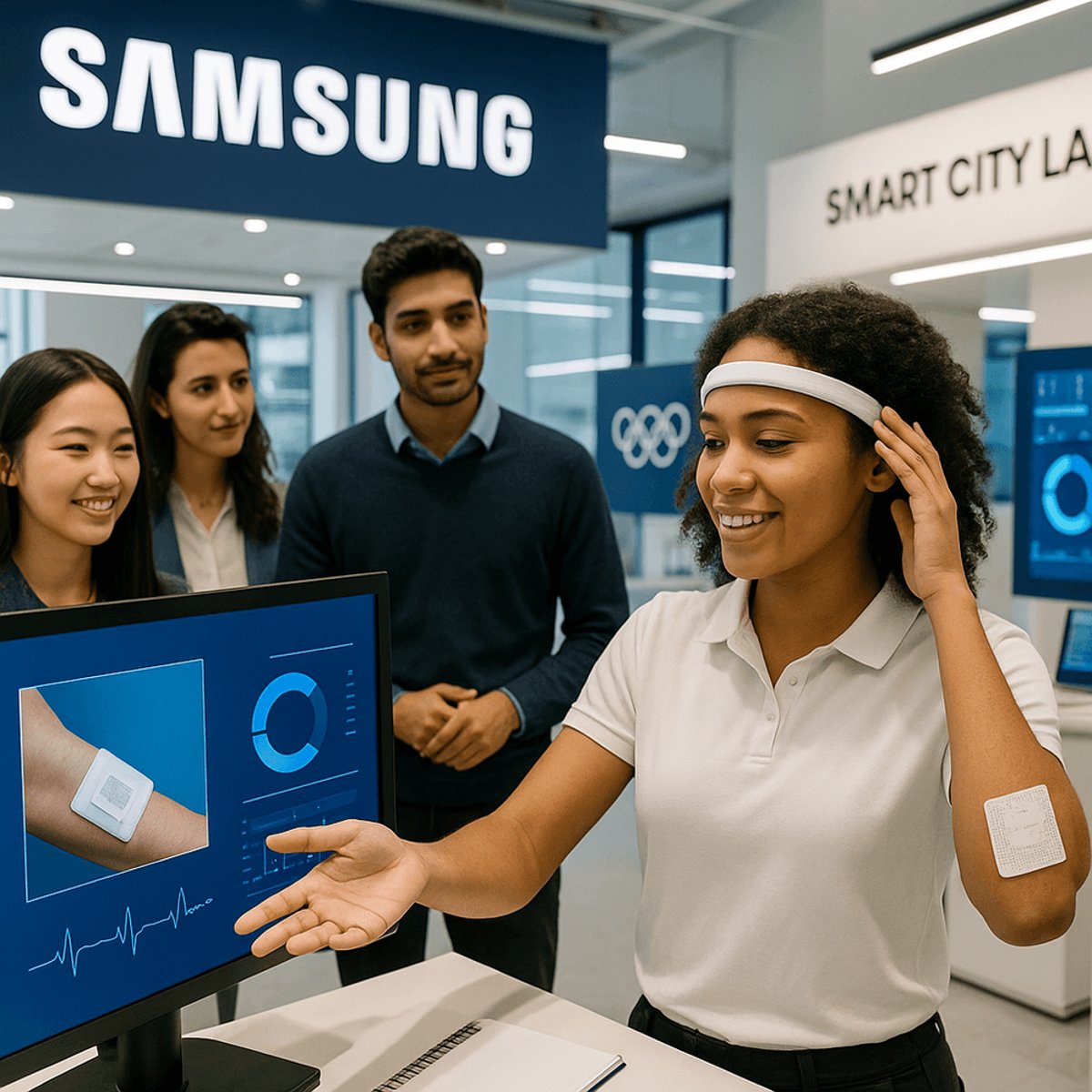
Samsung just crowned 10 young innovators as Global Solve for Tomorrow Ambassadors at a Milan exhibition during the Olympic Winter Games Milano Cortina 2026. The February 9 showcase at Smart City Lab highlighted student-built solutions tackling real-world problems, from AI-powered wound monitoring bandages to apps connecting communities through sports. Working with the International Olympic Committee and Milano Cortina 2026 Foundation, Samsung's betting big on youth innovation as the pipeline for tomorrow's breakthrough technologies.
Samsung is making its boldest play yet in youth innovation, and the company's bringing these ideas to one of the world's biggest stages. On February 9, the tech giant hosted the Solve for Tomorrow Ambassador Exhibition at Milan's Smart City Lab, naming 10 student teams from around the globe as official ambassadors during the Olympic Winter Games Milano Cortina 2026.
The timing isn't coincidental. Samsung's been quietly expanding its Solve for Tomorrow program, which empowers students to tackle real-world problems using AI and STEM skills, into a global platform with Olympic-level visibility. Working alongside the International Olympic Committee and Milano Cortina 2026 Foundation, the company showcased prototypes that blur the line between student projects and market-ready solutions.
"At Samsung, we believe that young people already have what it takes to build a better future," Samsung Chief Design Officer Mauro Porcini told attendees at the exhibition. "Our role is to support that journey - to provide the space, the tools and the trust that allow their ideas to grow into something meaningful."
The exhibition featured hands-on demonstrations of ten solutions, split between Sport & Tech innovations and Accessibility & Environment projects. Guests didn't just see slides or mockups - they tried on headbands that vibrated to warn of approaching obstacles, tested smart canes that detected floor hazards, and examined AI-powered bandages that monitor wound healing in real time.
Take AKQUA-Gel, developed by a U.S. team including Arya Anilkumar, Anna Huang, and three other students. The AI-based smart bandage uses sensor data to track healing progress and flag potential infections before they become serious. Or Storm Shield, created by U.S. student Danielle Yang - a protective headband designed so people with hearing aids can play sports without worrying about moisture damage or impact.
From Indonesia came Run Sight, Anthony Feriyanto's wearable AI solution that helps visually impaired people run safely by detecting lanes and obstacles. Turkey's Umut Devrim Deveci built Poseidon, a swimming safety system using wristband vibrations to alert visually impaired swimmers about pool boundaries. Great Britain's Raye Woon created Curastep, smart sneakers with sensors that detect early signs of blister formation in diabetic patients.
The accessibility theme continued with solutions from China, India, and beyond. Chenyue Wang's Furen Makers team developed a brainwave-controlled wheelchair for people with ALS. India's Pranet Khetan built Paraspeak, a cloud-based AI tool converting unclear speech into clear pronunciation in real time for people with speech impairments.
Environmental solutions made the cut too. France's Simon Cénet created Liova, a kit that transforms discarded smartphone batteries into portable power banks. Turkey's irem Erden developed Oilsorb, using reusable wool-based absorption pads and drones to tackle marine oil spills.
But Samsung's not just handing out trophies and sending students home. The ambassadors participated in a specialized innovation workshop run by the Olympism365 Innovation Hub, organized jointly by Samsung and the IOC. The goal? Teaching design thinking - how to transform prototypes into commercially viable products.
"It is energizing to witness the Solve for Tomorrow Ambassadors showcase their innovative solutions firsthand," Ollie Dudfield, Olympism365 Associate Director at the IOC, said in a statement. "The work of the Ambassadors reflects our shared belief - across the IOC, Samsung and Milano Cortina 2026 - in youth engagement and in the impact sport and technology can have as catalysts for positive social change."
The program's evolution shows Samsung's longer game. After collaborating with the IOC leading up to Paris 2024, the company launched "Social Change Through Sport & Technology" as one of Solve for Tomorrow's global themes for the 2025 competition. It's a strategic bet that the next generation of breakthrough technologies won't just come from established labs, but from students identifying problems in their own communities.
Italian Senator Giusy Versace, who attended the exhibition, didn't mince words about what she saw. "The solutions exhibited today were truly impressive and are a hallmark of improving communities through passion and ingenuity," Versace told the crowd. "With future leaders as innovative as the Solve for Tomorrow Ambassadors, it's clear that the world is in good hands."
The exhibition format itself signals how Samsung's thinking about youth innovation. Instead of poster presentations or pitch competitions, students manned interactive booths where guests tried the technology firsthand. At the Storm Shield experience, demonstrators approached visitors from two meters away while they wore the headband, feeling the vibrations change based on distance. The MyVision cane recognized floor obstacles and vibrated warnings as users walked.
Domenico De Maio, Education & Culture Director at the Milano Cortina 2026 Foundation, emphasized the work behind the demos. "These young Solve for Tomorrow Ambassadors have put in long, difficult hours - all in the name of benefiting their communities," De Maio said. "Seeing the incredible results of all that work is awe-inspiring."
The Milan exhibition represents a different approach to corporate innovation programs. Rather than one-off competitions or scholarship funds, Samsung's building a pipeline that connects student innovators across borders, provides hands-on mentorship, and amplifies their work at global events. The Olympic partnership adds credibility and scale that most youth programs can't match.
Samsung's Milan showcase proves the company's playing the long game with youth innovation. By connecting student inventors with Olympic-level platforms, hands-on mentorship from the Olympism365 Innovation Hub, and real pathways from prototype to product, the tech giant's building a talent pipeline that could reshape how breakthrough technologies emerge. The ten ambassadors aren't just winners of a competition - they're test cases for whether corporate-backed youth programs can produce commercially viable innovations that tackle accessibility, health, and environmental challenges. With the 2025 competition now emphasizing social change through sport and technology, Samsung's betting that the next generation of problem-solvers won't wait for permission to build the future.