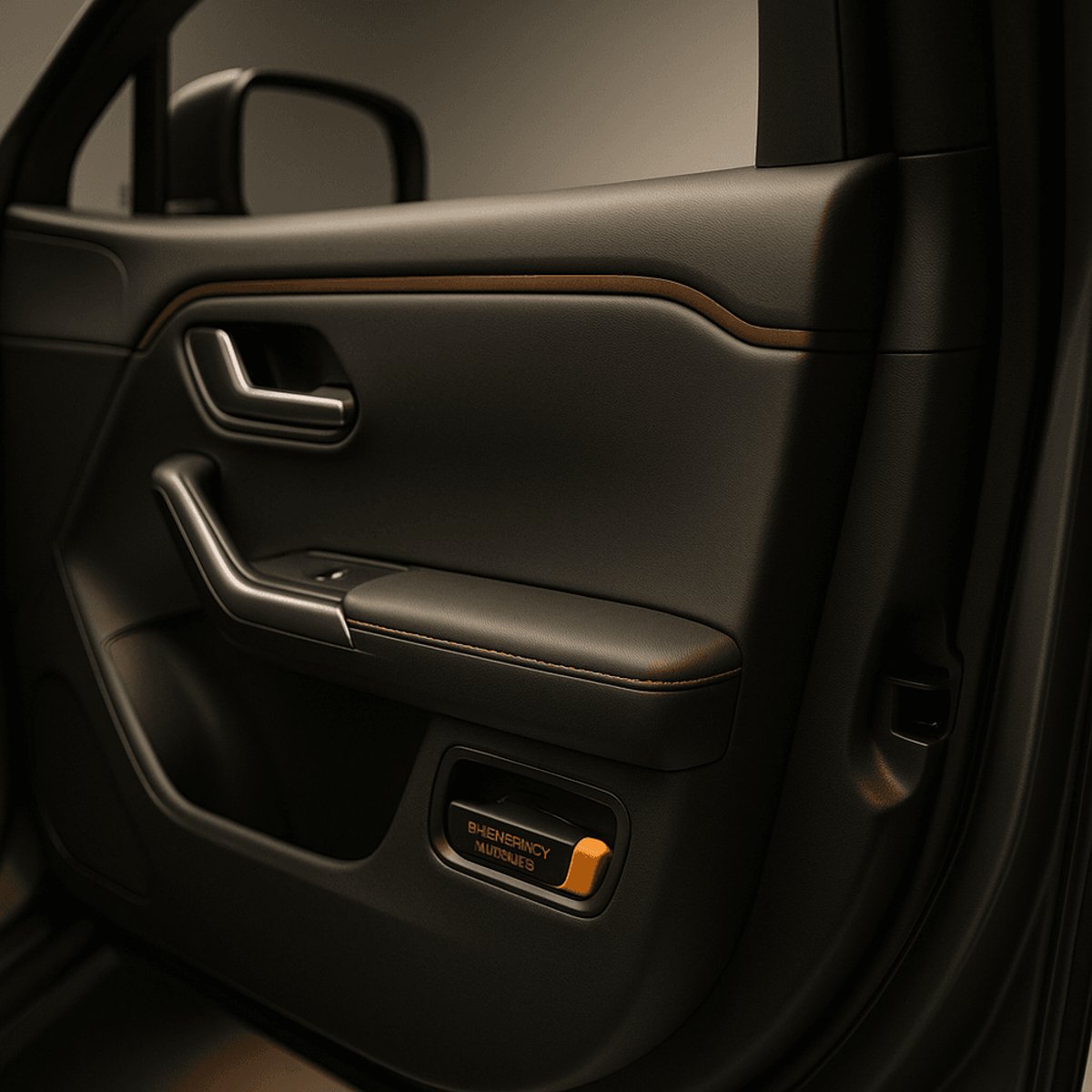
Rivian is changing how passengers escape the R2 SUV in emergencies. The electric vehicle maker redesigned the rear door manual release mechanism in response to mounting pressure across the auto industry to make emergency exits more intuitive and accessible—a concern that's dogged EV makers as they shift to electronic door systems that can fail during power loss or crashes.
Rivian just made it easier to get out of its upcoming R2 SUV when things go wrong. The company redesigned the rear door manual release mechanism in direct response to mounting industry pressure over emergency exit accessibility in modern electric vehicles, according to TechCrunch.
The move comes as automakers face growing scrutiny over electronic door systems that can trap occupants during crashes or power failures. Unlike traditional mechanical handles, electronic door releases in EVs can fail when the 12-volt battery dies or sustains damage, leaving passengers scrambling to locate hidden manual backup releases that are often tucked under seat cushions or inside speaker grilles.
Rivian's redesign for the R2 addresses this exact problem. While specific details of the new mechanism weren't fully disclosed in the limited available reporting, the change represents the company's effort to balance sleek interior design with practical safety concerns that have plagued the EV industry.
Tesla has taken particular heat for its manual release implementations. Some Model Y variants require removing a speaker grille to access the rear manual release, while Model S doors have separate mechanical releases that aren't immediately obvious to first-time passengers. These design choices have drawn criticism from safety advocates and prompted viral social media posts showing confused passengers hunting for emergency exits.
The regulatory environment is shifting too. Safety organizations have started testing manual release accessibility as part of vehicle evaluations, and some lawmakers have proposed requiring more intuitive emergency exit mechanisms in vehicles with electronic door systems.
For Rivian, the R2 represents a crucial mass-market push. The smaller, more affordable SUV is meant to compete directly with vehicles like Tesla's Model Y and bring the company's adventure-focused brand to broader audiences. Getting safety fundamentals right matters more than ever as the company works to scale production while managing significant financial pressure.
The door release redesign also signals how consumer feedback and safety concerns are forcing EV makers to reconsider design choices that prioritize aesthetics over accessibility. As electric vehicles move from early adopter curiosity to mainstream transportation, the assumption that all occupants will know where to find hidden manual releases no longer holds.
What remains unclear is whether other automakers will follow suit with similar design changes, or if regulatory bodies will eventually mandate standardized manual release locations and mechanisms across all vehicles with electronic door systems. The industry appears to be in a transition period where each manufacturer is finding its own balance between innovation and practical safety.
Rivian's R2 door release redesign might seem like a minor detail, but it reflects a broader reckoning in the EV industry about balancing innovation with fundamental safety. As electronic systems become ubiquitous in vehicles, the question of how people escape during emergencies is forcing designers to rethink assumptions about what's intuitive and what's just clever engineering. For an industry racing toward autonomy and digital everything, sometimes the most important innovation is making sure people can still open a door the old-fashioned way when they need to most.