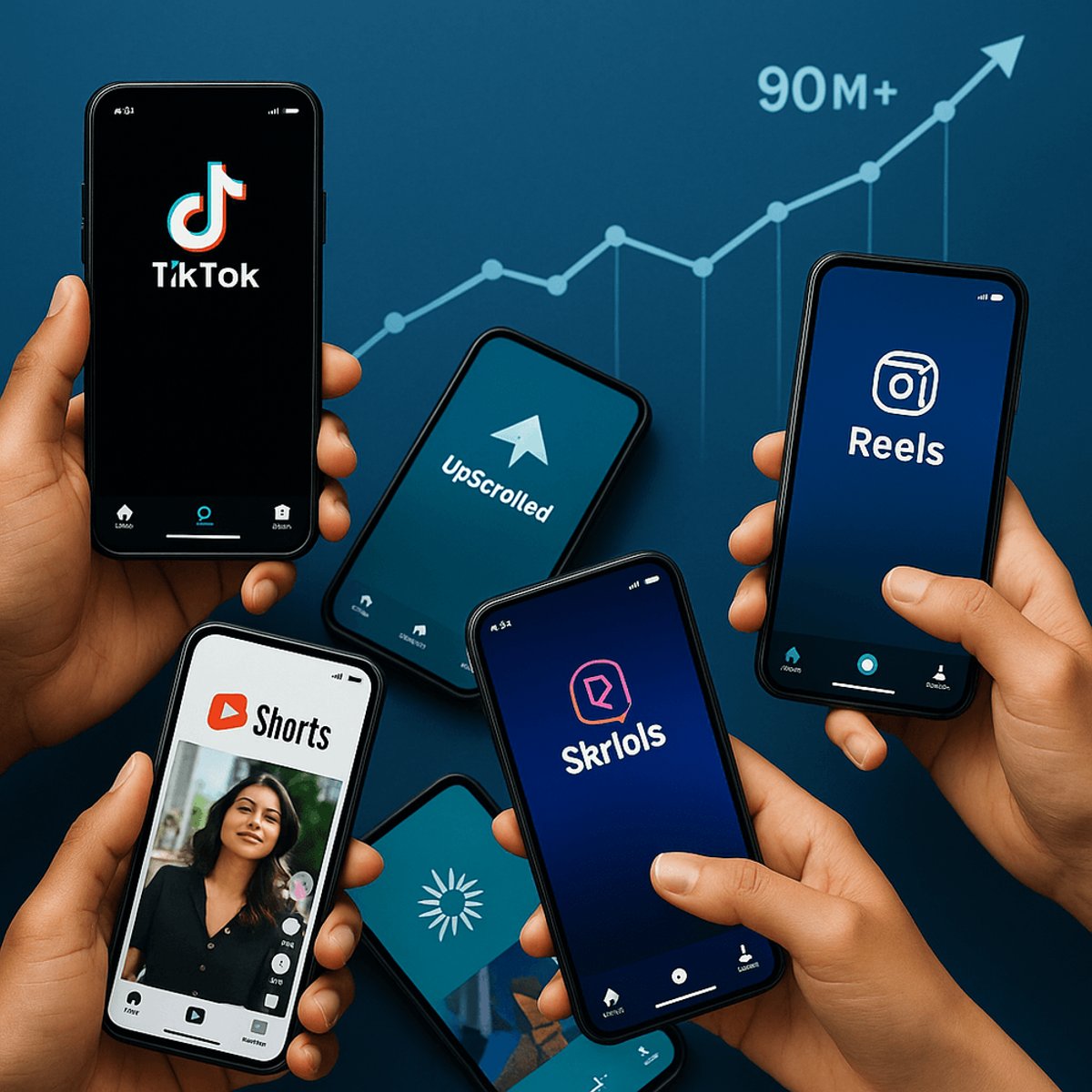
TikTok is clawing back users after a brief but telling stumble. The short-form video giant has bounced back to over 90 million daily active users in the U.S., recovering from a dip to 86-88 million that followed its transition to American ownership in late January. The temporary exodus sent users flocking to upstart rivals like UpScrolled and Skylight Social, but the rush appears short-lived as creators and viewers return to the platform they know best.
TikTok just survived its first real test under new ownership, and the data tells a story of user anxiety, competitor opportunism, and the stickiness of social media habits. The platform's daily active user count in the U.S. dipped to between 86 and 88 million immediately after American investors took control of its operations in late January, down from its typical 92 million average. But within days, TikTok clawed back to more than 90 million users, proving that even a rattled user base isn't ready to abandon their For You Page just yet.
The numbers from digital intelligence firm Similarweb paint a picture of a platform momentarily vulnerable. As TikTok wobbled, alternative video apps seized the moment. UpScrolled, a newcomer in the short-form video space, hit 138,500 daily active users at its January 28 peak before cooling to 68,000. Skylight Social reached 81,200 daily actives and told TechCrunch it had signed up 380,000 total users by late January. Today, Skylight's daily active count has dropped to 56,300.
The user flight wasn't really about the ownership change itself. Instead, it was triggered by a perfect storm of privacy concerns and technical disasters that landed right as the transition finalized. TikTok updated its privacy policy to include permission for precise GPS location tracking, which Wired reported sent users into a panic. The timing looked suspicious, even though the location data likely connects to TikTok's testing of a "Nearby" feed feature to surface local creator content.
Then users started reading the fine print more carefully. Language about collecting "immigration status" surfaced and went viral, sparking fears that the new American-owned TikTok would be surveilling users for the government. The reality was more mundane - the disclosure exists because California's Consumer Privacy Act requires platforms to flag when they might collect sensitive data through user-generated content. If someone mentions their immigration status in a video, TikTok technically collects that information, so it needs to disclose the possibility.
But the technical problems were very real. TikTok suffered a multi-day data center outage that broke search, disabled likes and comments, caused video glitches, scrambled the algorithm, and disrupted in-app messaging. The company announced Sunday the issues stemmed from a winter storm-driven power outage at a U.S. data center. Users didn't know that at the time. Many assumed the new ownership meant censorship or deliberate feature removal, which accelerated the search for alternatives.
The competitive window for rivals like UpScrolled and Skylight Social appears to be closing as quickly as it opened. TikTok's recovery to 90+ million daily actives shows the platform's gravitational pull remains strong, even when users are spooked. Creators have built audiences and revenue streams they can't easily replicate elsewhere. Users have trained algorithms that know exactly what keeps them scrolling. That's a moat competitors struggle to breach, even with identical features.
But zoom out and TikTok's position looks less secure. Similarweb's data shows the platform peaked between July and October 2025 at 100 million U.S. daily active users. The current 90+ million represents a slow erosion that predates the ownership drama. Whether that reflects market saturation, increased competition from Instagram Reels and YouTube Shorts, or early signs of platform fatigue remains unclear.
For the upstart competitors, the brief surge offers both validation and a warning. Validation that demand exists for TikTok alternatives when users feel uncertain about the platform's direction. But also a warning that capturing frustrated users in a moment of crisis doesn't guarantee retention. Both UpScrolled and Skylight Social need to convert their January spikes into sticky habits before the next TikTok controversy sends users shopping for alternatives again.
The ownership transition drama reveals how fragile trust has become in social media. Users are primed to bolt at the first sign of changes they don't understand or technical problems they can't explain. TikTok weathered this storm, but the episode exposed vulnerabilities competitors will certainly try to exploit next time the platform stumbles.
TikTok's quick rebound from its post-ownership dip demonstrates the platform's staying power, but the episode exposed real vulnerabilities. The combination of privacy policy confusion, technical outages, and ownership uncertainty created an opening for competitors that didn't exist before. While UpScrolled and Skylight Social couldn't convert their brief surges into lasting momentum, they've proven that a meaningful segment of TikTok's user base is actively looking for alternatives when the platform falters. For TikTok, the message is clear - the moat is strong but not impenetrable, and the next stumble might send users to apps that are better prepared to keep them.