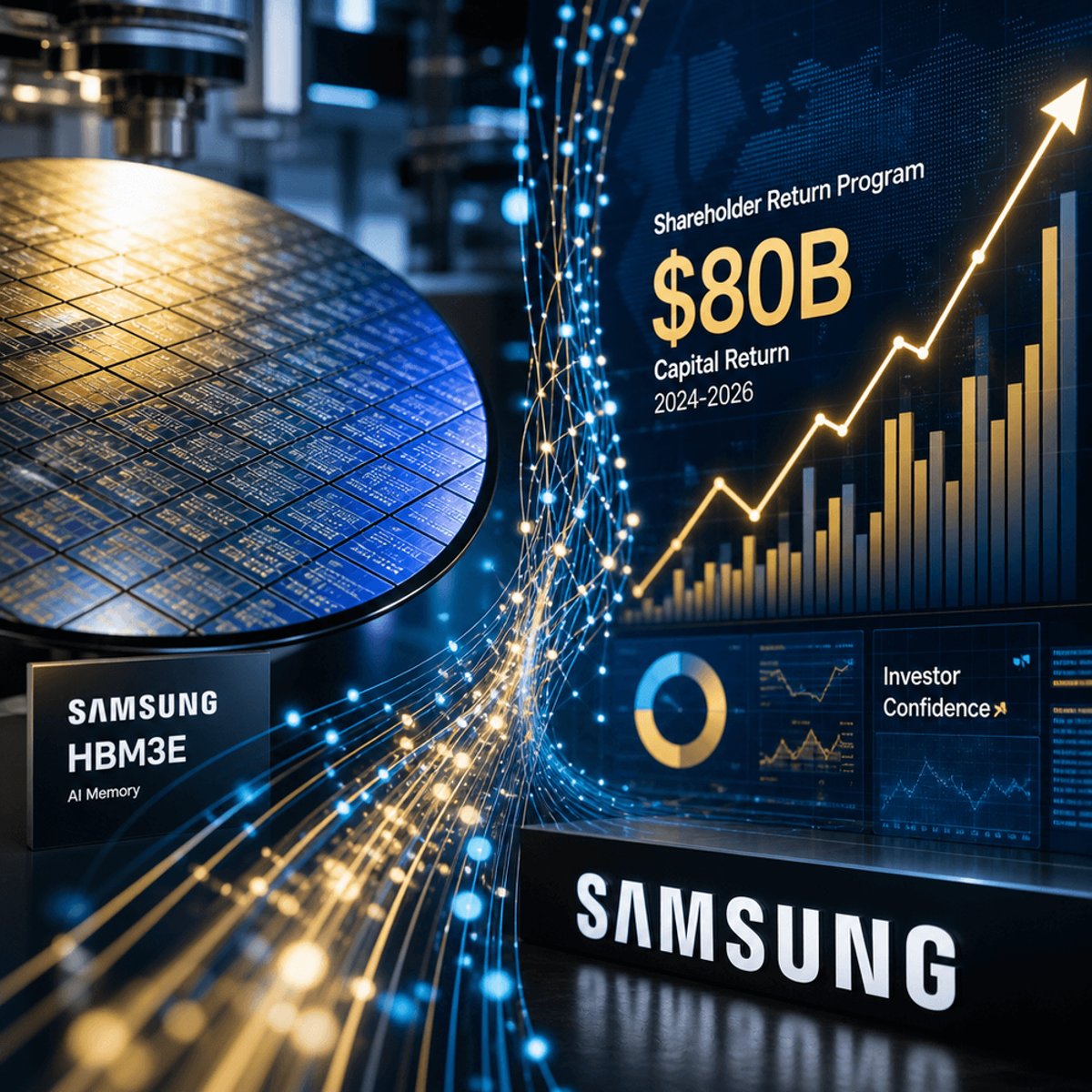
Samsung Electronics just dropped one of the biggest shareholder return packages in tech history. The South Korean semiconductor giant plans to distribute between 90 trillion won and 110 trillion won ($67-82 billion) to investors, including 30 trillion won in third-quarter cash dividends alone. The move comes as rival SK Hynix continues its winning streak in high-bandwidth memory chips powering AI systems, putting pressure on Samsung to reassure investors while it plays catch-up in the AI semiconductor race.
Samsung Electronics is making a bold bet that shareholders will stick around while it figures out the AI chip puzzle. The company's freshly announced capital return program - potentially reaching 110 trillion won or about $82 billion - represents a stunning financial commitment from a company that's been watching competitor SK Hynix eat its lunch in the most lucrative corner of the memory chip market.
The package breaks down to include approximately 30 trillion won ($22 billion) in third-quarter cash dividends, with the remainder likely allocated to share buybacks over an unspecified timeframe. For context, that quarterly dividend alone exceeds the entire market capitalization of many publicly traded chipmakers.
This isn't just generous - it's strategic damage control. SK Hynix has become the go-to supplier for high-bandwidth memory (HBM) chips that power Nvidia's AI accelerators, the same chips flying off shelves faster than they can be manufactured. Samsung, despite being the world's largest memory chipmaker by revenue, stumbled badly in HBM development and is now scrambling to qualify its latest HBM3E chips with major customers.
The competitive dynamics are brutal. While SK Hynix reported record profits and sold out its HBM production capacity through 2025, Samsung's memory division has seen margins compress. The company needed a way to keep investors happy while it invests heavily in catching up technologically - and apparently decided that the answer is simply to hand them a mountain of cash.
Samsung's timing reveals the pressure it's under. Major institutional investors have been increasingly vocal about the company's governance structure and capital allocation decisions. The founding Lee family's control through a complex web of cross-holdings has long drawn criticism, and shareholders have pushed for better returns rather than seeing cash pile up on the balance sheet.
But there's tension in this strategy. Samsung desperately needs to invest in R&D and production capacity for advanced packaging, HBM technology, and next-generation logic chips. The company is simultaneously trying to challenge TSMC in contract chipmaking while defending its memory chip crown. That requires capital - lots of it.
Returning up to $82 billion suggests Samsung believes it can walk this tightrope. The company generated operating income of roughly 35 trillion won last year, and its balance sheet shows substantial cash reserves built up over years of memory chip dominance. Samsung is essentially telling the market it can afford both massive shareholder returns and the investments needed to compete in AI chips.
The announcement also reflects shifting dynamics in South Korean corporate culture. Activist investors have made gains pushing the country's family-controlled conglomerates toward more shareholder-friendly policies. Samsung's move follows similar pressure campaigns at other major Korean firms, though few have the financial muscle to deploy returns on this scale.
For the broader semiconductor industry, Samsung's capital allocation sends an interesting signal. While rivals like Micron plow profits back into capacity expansion and Intel burns cash trying to manufacture its turnaround, Samsung is choosing a middle path - invest enough to stay competitive, but keep investors happy with unprecedented distributions.
The real test comes in execution. Samsung needs to deliver on HBM3E qualification, ramp production of advanced memory chips, and prove it can compete for AI accelerator business currently dominated by SK Hynix. If the company succeeds, this massive buyback will look shrewd. If it falls further behind in AI chips while depleting cash reserves, shareholders might wish Samsung had kept that $80 billion for the technology fight ahead.
What makes this particularly fascinating is the broader context. The AI chip boom has created clear winners and losers, and Samsung currently sits in an uncomfortable middle ground - not quite winning like SK Hynix or Nvidia, but too big and capable to be counted out. This shareholder return package is Samsung's way of saying it can compete on two fronts at once: in the market for investor capital and in the race for AI chip supremacy.
Samsung's $80 billion shareholder return gambit exposes the uncomfortable reality facing legacy tech giants in the AI era - sometimes the best defense is a good dividend. The company is effectively buying time with shareholders while it races to close the technology gap with SK Hynix in AI memory chips. Whether this proves visionary capital allocation or a costly distraction from necessary R&D investments won't be clear for quarters to come. But one thing's certain: Samsung just told the market it believes it can afford to fight the AI chip wars on multiple fronts simultaneously, even if that means handing investors a historic pile of cash while the battle rages on.