Sortera just cracked one of recycling's toughest problems - sorting mixed aluminum scrap by grade with 95% accuracy using AI. The breakthrough has made the startup cash flow positive and attracted $45 million in funding to expand beyond its single Indiana facility. With only a third of US aluminum getting recycled due to sorting challenges, Sortera's technology could unlock billions of pounds of untapped materials.
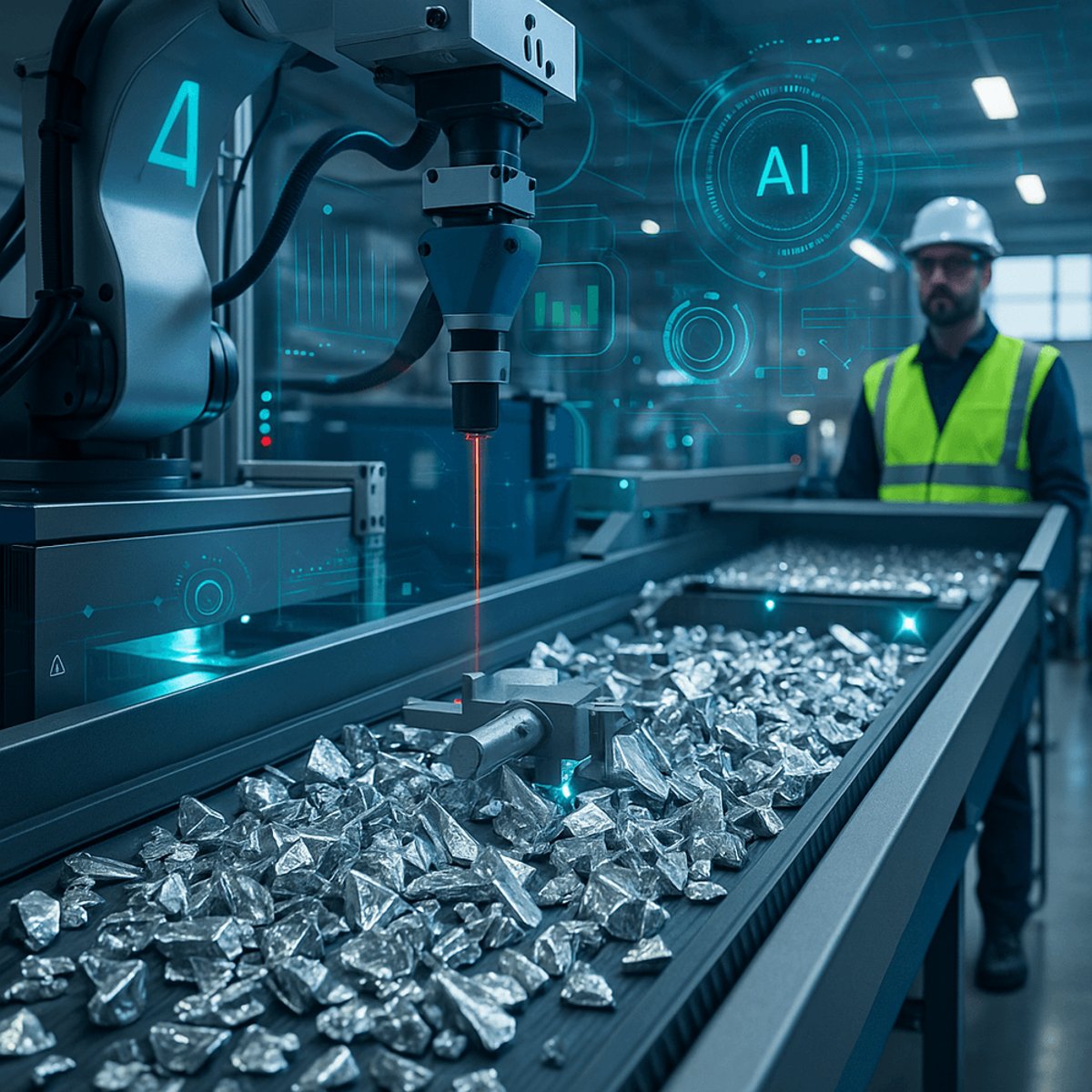
Sortera just solved recycling's $18 billion aluminum problem. The startup's AI-powered sorting system can identify aluminum grades with over 95% accuracy in just 10 milliseconds - a breakthrough that's transforming an industry stuck with outdated melting methods for decades. The technology uses lasers, X-ray fluorescence, and high-speed cameras to classify chips the size of potato chips before precision air nozzles sort them into correct bins. "Ten milliseconds is a long time," CEO Michael Siemer told TechCrunch in an exclusive interview, describing the split-second decisions that make or break profitability. Traditional recycling operations must melt aluminum first to determine alloy types, making mixed scrap nearly worthless since customers can't trust material properties. Sortera's precision sorting changes everything - accuracy above 90% creates exponential margins, with 95% accuracy generating "big margins" and 98% delivering "really big margins," according to Siemer. That precision has made the company cash flow positive since August, running a single Indiana plant "full-tilt, 24-7" processing millions of pounds monthly. The facility primarily handles automotive scrap, where different aluminum grades create distinctive fracture patterns when shredded. "The chemical differences manifest themselves in the shredding," Siemer explained, noting how various alloys produce unique tears and folds that train the AI system. "You gain these little insights so that in about a 10-millisecond time window, you go, 'I'm pretty darn sure that's 356 grade aluminum.'" The business model attracted serious investor attention. Sortera recently closed a $45 million funding round - $20 million in equity and $25 million in debt - led by VXI Capital with participation from accounts advised by T. Rowe Price, Overlay Capital, and Yamaha Motor Ventures. Trinity Capital provides additional equipment funding for the Tennessee expansion. The new Nashville-area facility, coming online in April or May, will replicate the Indiana operation exactly. "Every auto OEM on the planet has been to Indiana at least twice," Siemer revealed, highlighting how automotive manufacturers are scrambling for recycled aluminum to reduce vehicle weight and improve fuel efficiency. The timing couldn't be better - only about a third of US aluminum gets recycled despite aluminum's infinite recyclability and lower energy requirements compared to new production. Most recycled aluminum ends up back on automotive assembly lines as manufacturers increasingly turn to the lightweight metal for efficiency gains. Sortera's technology addresses a massive market opportunity that's been hiding in plain sight. "People have been wanting to go after this unsorted aluminum, and nobody's been able to unlock it," Siemer said, describing decades of industry frustration with mixed scrap sorting. The company estimates it could "instantly sort the 18 billion tons of aluminum made annually in the U.S. Every piece of that, every pound would be sold at a profit." While Sortera is exploring copper and titanium processing, aluminum remains the primary focus given the immediate market demand and proven profitability. The company's success demonstrates how AI applications in industrial processes can create both environmental impact and strong unit economics - a combination that's attracted both climate-focused and traditional industrial investors.
Sortera's breakthrough represents more than just better recycling technology - it's proof that AI can unlock massive industrial opportunities hiding in plain sight. With automotive demand for lightweight materials accelerating and only a fraction of aluminum currently recycled, the company sits at the intersection of environmental necessity and economic opportunity. The $45 million funding and rapid expansion to Tennessee signals investor confidence that Sortera's 95% sorting accuracy isn't just a technical achievement, but the foundation for a scalable business that could reshape how America handles its metal waste.