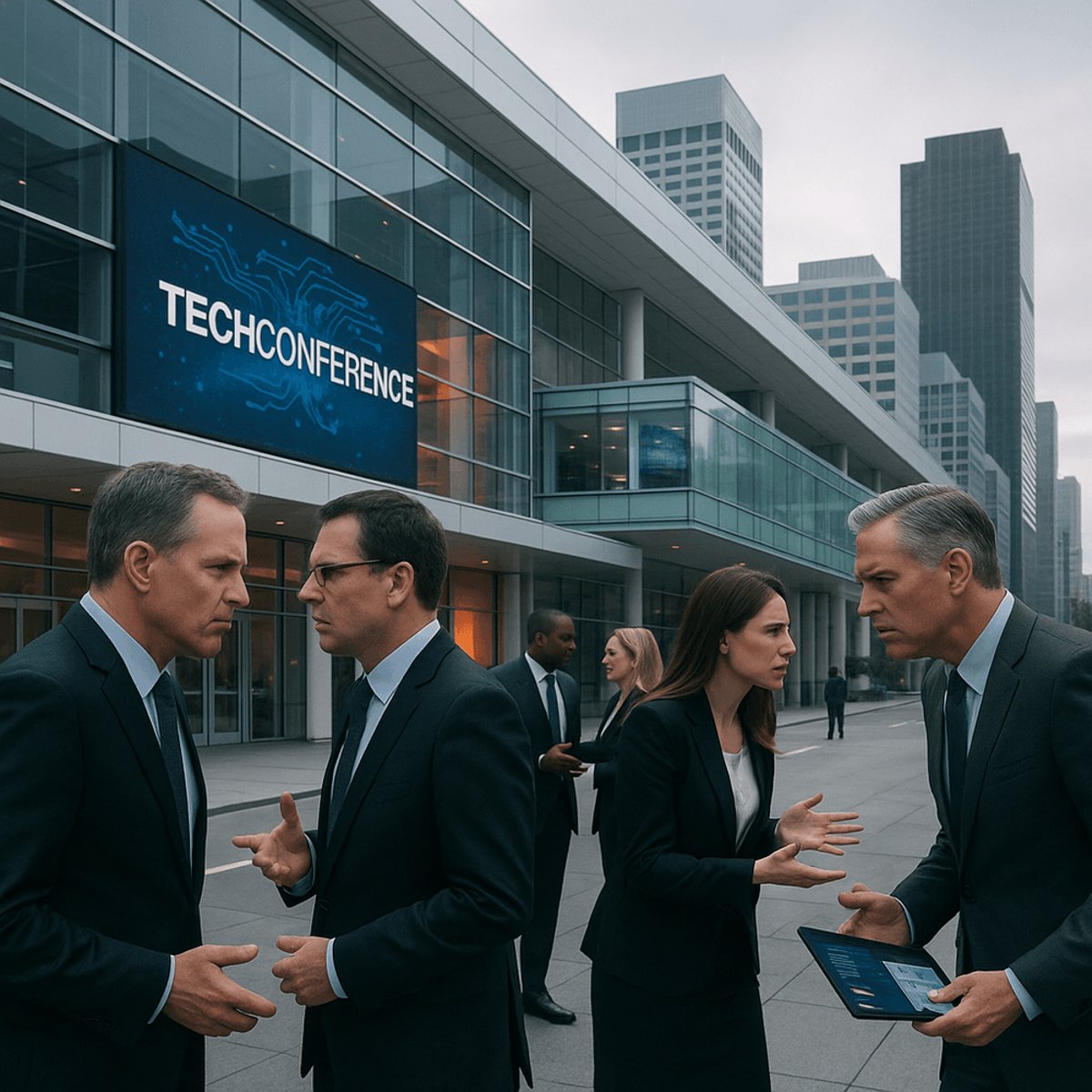
As Salesforce gears up for its massive Dreamforce conference this week, CEO Marc Benioff just dropped a political bombshell that's got Silicon Valley buzzing. His call for federal troops in San Francisco - quickly followed by Tesla CEO Elon Musk's characterization of downtown as a 'drug zombie apocalypse' - has tech leaders picking sides in a heated debate about urban crime that's spilling over into the industry's biggest annual gathering.
The timing couldn't be more awkward for Salesforce. Just as tens of thousands of tech professionals prepare to descend on downtown San Francisco for Dreamforce - the company's flagship conference running Tuesday through Thursday - CEO Marc Benioff found himself at the center of a political firestorm that's dividing Silicon Valley.
It started with what seemed like an off-hand comment to The New York Times. 'We don't have enough cops, so if they can be cops, I'm all for it,' Benioff said Friday, referring to potential federal troops. The statement inserted Salesforce directly into President Trump's controversial deployment of National Guard units to Democrat-led cities.
But if Benioff thought he could quietly walk back those comments, Tesla CEO Elon Musk had other plans. Over the weekend, Musk unleashed a series of posts on his X platform that escalated the debate dramatically. He called federal intervention 'the only solution at this point' and described downtown San Francisco as a 'drug zombie apocalypse.'
Musk's timing is particularly pointed. While Tesla relocated its headquarters to Texas, the company maintains its engineering hub in nearby Palo Alto. More importantly, his AI startup xAI operates a major office in San Francisco, and Neuralink recently signed a lease in South San Francisco. Musk isn't just throwing stones from afar - he's got significant business interests at stake.
The controversy exploded across social media when Musk amplified a post from Tom Wolf, a local addiction recovery advocate, to his 227 million X followers. Wolf's message was blunt: 'If you want to keep federal troops out of San Francisco, remove the organized drug dealers and 80% of the problem goes away.'
Local officials weren't having it. San Francisco District Attorney Brooke Jenkins fired back on X, saying she 'can't be silent any longer.' She accused the Trump administration of turning public safety into 'government sponsored violence' and warned she wouldn't hesitate to prosecute anyone using excessive force.
Mayor Daniel Lurie, who won election partly by promising to clean up the streets, countered with data: 'Crime is down 30% and tent encampments are at an all-time low.' His message was clear - San Francisco doesn't need federal intervention because it's already working.
The political theater comes at a crucial moment for San Francisco's tech scene. Dreamforce alone typically brings over 40,000 attendees and generates hundreds of millions in economic activity. The conference serves as an annual showcase for the city's tech credentials, with the Moscone Center and surrounding downtown area transformed into a corporate wonderland.
Y Combinator CEO Garry Tan tried to thread the needle, writing on X that 'We don't need the National Guard' while still taking shots at progressive policies. His target: former DA Chesa Boudin and what Tan called 'hardcore activist judges' who he claims keep drug dealers out of jail.
Benioff seemed to recognize he'd stepped in it, posting a softer follow-up Sunday that safety is 'first and foremost, the responsibility of our city and state leaders.' But the damage was done - the CEO of one of San Francisco's most prominent companies had publicly supported federal intervention in his own backyard.
The split reveals deeper tensions in Silicon Valley about urban policy and corporate responsibility. Tech leaders increasingly find themselves caught between their business interests in cities like San Francisco and growing frustration with local governance. Some, like Musk, have voted with their feet by relocating. Others, like Benioff, remain deeply invested but increasingly vocal about problems.
For Salesforce, the controversy couldn't come at a worse time. Dreamforce represents the company's biggest marketing moment of the year, designed to showcase innovation and corporate culture. Instead, headlines will likely focus on whether attendees feel safe walking downtown streets.
This isn't just about crime statistics or political theater - it's about Silicon Valley's relationship with the cities that built it. As Dreamforce kicks off this week, all eyes will be on whether tech leaders can separate business from politics, or if the industry's growing frustration with urban governance will continue spilling into public view. For now, San Francisco gets to play host to one of tech's biggest gatherings while its own mayor and a major CEO duke it out over whether the city needs federal troops to keep attendees safe.