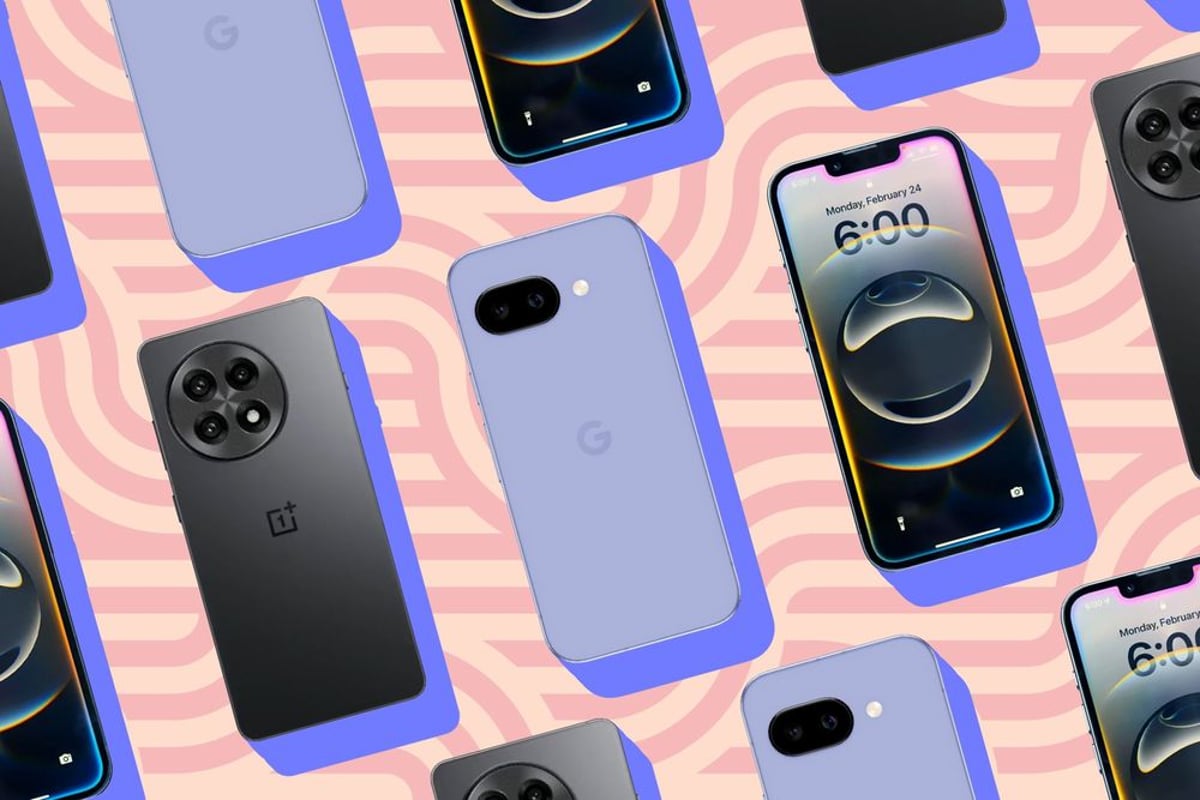
The Verge just released their updated buying guide for budget smartphones, spotlighting the best devices under $500 for 2025. The guide reveals significant shifts in the affordable phone market, with Apple's iPhone 16E leading iOS options at $599 while Google's Pixel 9A dominates Android at $499, showcasing how premium features are trickling down to budget devices.
The budget smartphone landscape just got a major refresh, and The Verge's latest buying guide reveals some surprising winners in the under-$500 category. After extensive hands-on testing, their recommendations show how much more capable affordable phones have become in 2025.
Apple's entry into the budget space comes with the iPhone 16E at $599, positioning it as the spiritual successor to the iPhone SE. While it brings flagship-level A18 performance and Apple Intelligence support, the device makes notable sacrifices. The single 48-megapixel camera lacks an ultrawide lens, and more puzzlingly, Apple left out MagSafe - the magnetic attachment system that's been standard on virtually every iPhone since 2020. "This is a silly omission, and Apple should feel bad about it," the review notes, pointing out users will need magnetic cases to access the broader ecosystem.
On the Android side, Google's Pixel 9A continues the company's dominance in the budget category, earning the top recommendation at $499. The device represents meaningful upgrades over its predecessor with a brighter 6.3-inch OLED display, improved IP68 water resistance, and the Tensor G4 chipset that runs cooler than previous generations. Most importantly, Google promises seven years of software updates, matching the support timeline of their flagship devices.
For users prioritizing screen real estate, the OnePlus 13R offers one of the best displays in the budget category. Its 6.78-inch 120Hz OLED screen and exceptional battery life make it compelling for multimedia consumption, though it trades off wireless charging and full water resistance to hit its $599 price point.
The budget phone market's evolution becomes clear when examining the feature sets now available under $500. Devices like the 2025 Motorola Moto G Power pack 6.8-inch displays, 5,000mAh batteries, and even rare features like headphone jacks at just $299. Samsung's Galaxy A36 5G promises six years of updates at $399, while the Galaxy A56 brings flagship-level 6.7-inch OLED screens to the $499 tier.
The guide's testing methodology emphasizes real-world usage over spec sheets. Each phone underwent at least one full week of daily use, from GPS navigation and streaming to rapid-fire photography sessions. This approach reveals practical compromises that don't always show up in technical specifications.
Notably absent from top recommendations is Samsung's Galaxy S24 FE, which at $649 falls outside the guide's budget focus despite offering telephoto cameras and premium build quality. The analysis suggests consumers are better served by the Pixel 9A's value proposition or stepping up to trade-in deals on the newer Galaxy S25 series.
AI features are becoming increasingly standard across budget tiers. Apple's Intelligence support in the 16E provides some future-proofing, though current capabilities remain "underwhelming" with the most interesting features delayed. Google's AI implementations in the Pixel 9A prove more immediately useful, particularly for photography and call screening.
The testing reveals interesting regional variations in availability and pricing. While devices like the TCL 60 XE Nxtpaper 5G offer unique e-ink-style displays for extended battery life, mainstream options continue to dominate recommendations.
Looking at the broader market dynamics, the guide suggests budget phones have reached a maturity point where meaningful compromises are primarily in camera systems and premium materials rather than basic functionality. Even entry-level devices now support essential features like wireless charging, water resistance, and multi-year software support.
The 2025 budget smartphone market shows remarkable maturation, with devices under $500 now offering features that were flagship-exclusive just years ago. Google's Pixel 9A emerges as the clear winner for most users, balancing performance, longevity, and value. While Apple's iPhone 16E brings iOS to the budget conversation, its compromises feel more arbitrary than necessary. For consumers willing to shop smart, today's budget phones deliver genuinely compelling experiences that challenge the need for premium devices.