NBA champion Tristan Thompson is taking on Big Telecom. The Cleveland Cavaliers star just announced at TechCrunch Disrupt that he's partnering with World Mobile to launch Uplift, a community-owned mobile network offering unlimited data for $9.99 monthly. Built on blockchain and DePIN technology, the service lets local "AirNode operators" earn revenue by providing neighborhood coverage - directly challenging the industry's centralized model.
The telecom industry just got a celebrity disruptor. Tristan Thompson, fresh off his NBA championship with the Cleveland Cavaliers, stepped onto the TechCrunch Disrupt stage to announce something completely different: a $9.99 unlimited data plan that could upend how Americans get mobile service.
Thompson's partnering with global telecom company World Mobile to launch Uplift, a community-owned mobile network built on blockchain technology and a Decentralized Physical Infrastructure Network (DePIN). But this isn't just another celebrity endorsement deal - it's a direct challenge to the $2 trillion telecom industry's stranglehold on connectivity.
"For me, it's about, how can I help people that have walked the same life that I walked," Thompson told the Disrupt audience. "We're providing connectivity and connection for unlimited data at a way lower cost. It's like, how can I help my community have a better tomorrow? We want to help people in America, help the inner city, and just give people hope."
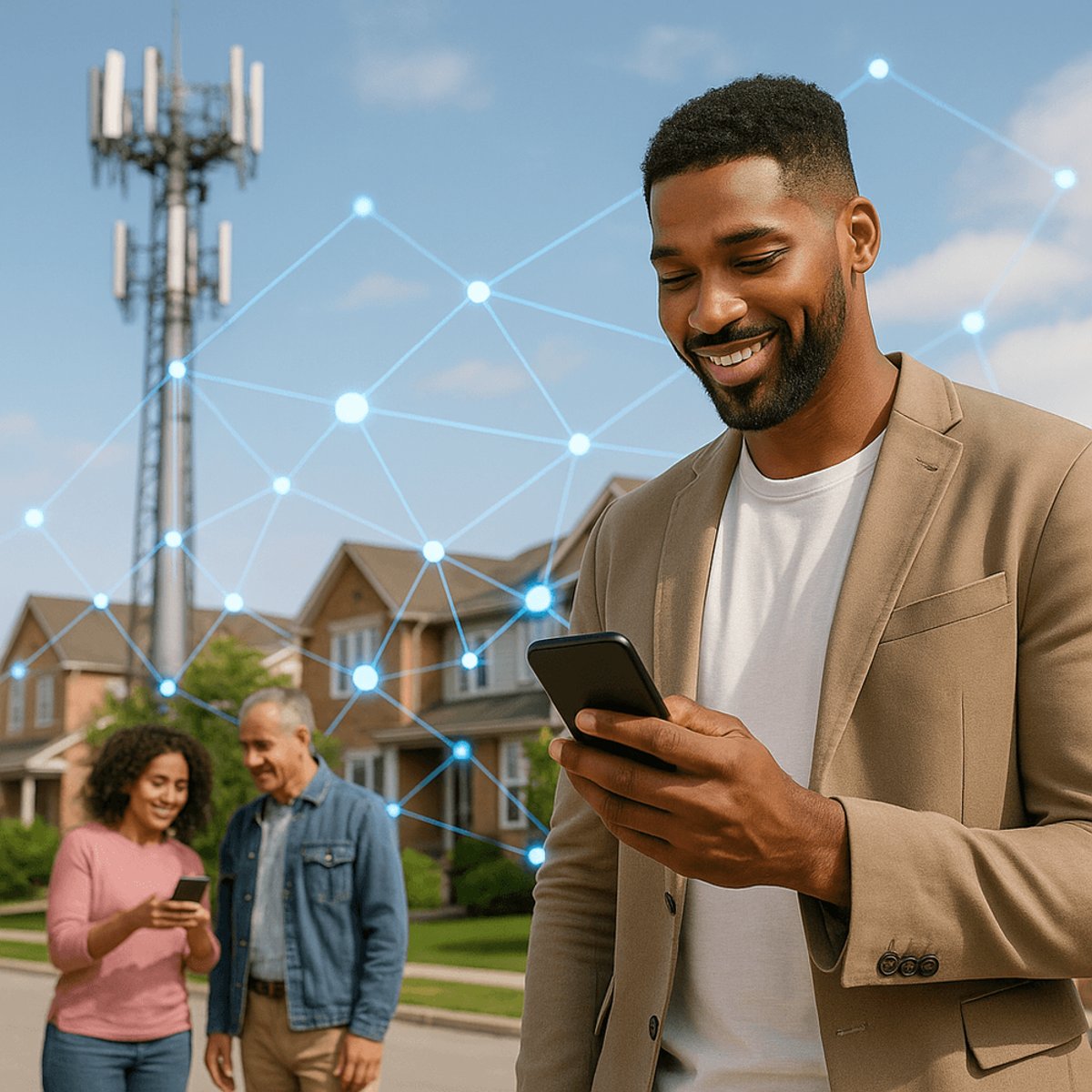
The model turns traditional telecom economics upside down. With Uplift, every subscription contributes to neighborhood-level network expansion, while local hosts called "AirNode operators" earn a portion of network revenue by providing community coverage. Instead of profits flowing to distant corporate headquarters, the wealth generated by mobile usage stays in the neighborhoods that create it.
This isn't theoretical - World Mobile has already proven the concept works. In Reno, Nevada, community hosts have earned more than $10,000 annually by providing coverage to underserved areas. Thompson claims they've brought connectivity to about 20% of Reno through this distributed model.
The real-world test came during recent natural disasters. When Hurricane Helene devastated Asheville, North Carolina, even Starlink couldn't restore connectivity. "They reached out to the World Mobile team, and we were able to get out there and send a couple of our guys on helicopters to fly in," Thompson revealed. "We were actually the ones that brought connectivity back to Asheville, North Carolina during that hurricane."
Thompson brings serious tech credentials beyond his basketball fame. He currently holds four C-suite roles across Web3 and fintech, serving as chief digital equity officer at World Mobile and chief advisory officer at AxonDAO, an AI-powered medical research platform inspired by his brother's epilepsy journey. He's also co-founder of Basketball Fun, a Web3 platform that tokenizes NBA players, and chief content officer at Tracy AI for real-time sports analytics.
The timing couldn't be better for disruption. World Mobile notes that more than 50 million Americans live at or near the poverty line, with many lacking access to affordable high-speed data. Traditional carriers have little incentive to serve these markets profitably at low price points.
Uplift operates on infrastructure already proven through World Mobile's existing U.S. deployments, giving it a head start over other would-be telecom disruptors. The service will begin rolling out in Cleveland, Ohio - Thompson's championship city - before expanding to additional markets throughout 2026.
The announcement comes as the telecom industry faces growing pressure from multiple directions. T-Mobile, Verizon, and AT&T have faced criticism for high prices and poor rural coverage, while newer players like Mint Mobile have shown demand exists for budget alternatives.
Whether Thompson and World Mobile can scale this community-owned model remains to be seen. But with proven pilot results, celebrity backing, and a clear value proposition for underserved markets, Uplift represents the most serious challenge yet to traditional telecom's centralized dominance.
Thompson's Uplift represents more than just another celebrity business venture - it's a fundamentally different approach to telecommunications that could reshape how Americans access mobile connectivity. By combining blockchain technology with community ownership and profit-sharing, the model addresses both affordability and infrastructure gaps that traditional carriers have largely ignored. If the Reno pilot scales successfully, we could be looking at the beginning of a truly decentralized alternative to Big Telecom's centralized control.