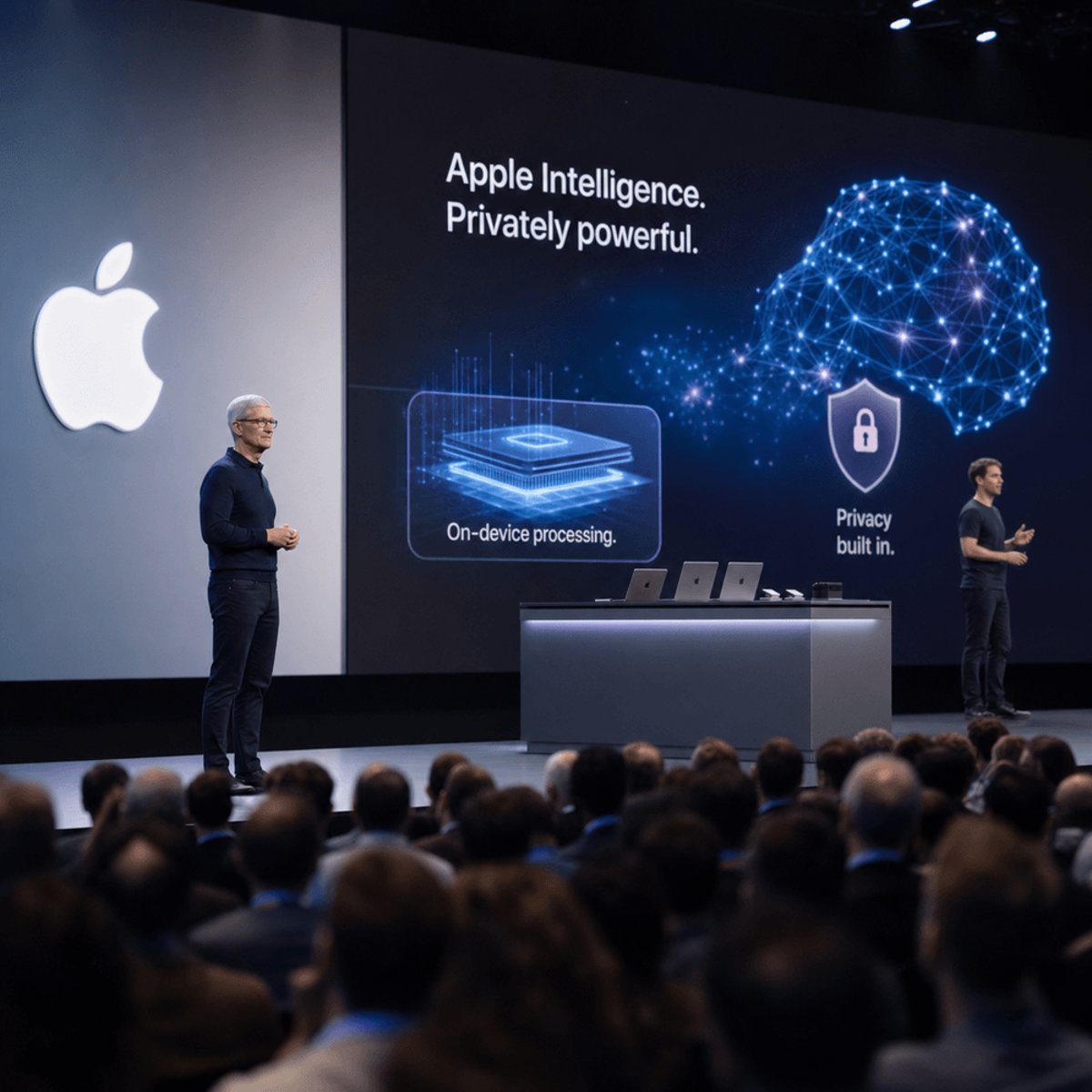
Apple is making history today at WWDC 2026, but not just for the AI features everyone's been waiting for. Tim Cook is delivering his final keynote as CEO after 15 years at the helm, setting the stage for longtime hardware chief John Ternus to take over the world's most valuable tech company. The dual narrative of leadership transition and AI advancement makes this one of the most significant WWDC events in Apple's history.
Apple just kicked off WWDC 2026 with the tech world watching two stories unfold at once. Tim Cook took the stage in Cupertino knowing it's his last time leading the annual developer conference as CEO, while his handpicked successor John Ternus prepared for his closeup in what insiders are calling the most carefully orchestrated leadership transition in tech history.
The timing couldn't be more symbolic. Cook spent years building Apple into a services and wearables powerhouse, but it's the AI era that's defining his final chapter. Today's keynote focuses heavily on artificial intelligence upgrades to Siri, developer tools, and the operating systems that power over 2 billion active devices worldwide. According to CNBC's live coverage, the company is positioning these advances as the natural evolution of Apple Intelligence, the AI framework it unveiled at WWDC 2025.
But make no mistake - this is Ternus's coming-out party. The 48-year-old engineer joined Apple in 2001 and rose through the ranks to lead hardware engineering in 2021, overseeing everything from the M-series chip revolution to the Vision Pro headset launch. People familiar with the transition say Cook's been grooming Ternus for years, gradually increasing his stage time at product launches and giving him control over Apple's most ambitious hardware bets.
The developer community is parsing every announcement for clues about Apple's AI strategy under new leadership. While Microsoft and Google have gone all-in on generative AI partnerships and cloud-based models, Apple's taken a more cautious approach, emphasizing on-device processing and privacy. Today's Siri updates reportedly include improved natural language understanding and deeper integration with third-party apps - features developers have been requesting since ChatGPT changed the game in late 2022.
Industry watchers see parallels to another famous tech transition. When Cook took over from Steve Jobs in 2011, skeptics questioned whether an operations expert could lead a creativity-driven company. He answered by nearly tripling Apple's market value and launching category-defining products like AirPods and Apple Watch. Now Ternus faces his own version of that test - can a hardware guy navigate the AI revolution while maintaining Apple's integration magic?
The numbers Ternus inherits are staggering. Apple's market cap hovers around $3.2 trillion, with Services revenue alone bigger than most Fortune 500 companies. But challenges loom large. iPhone sales growth has plateaued in key markets, Meta and Samsung are pushing hard in mixed reality, and the AI arms race is burning billions in R&D spending across the industry.
Developers attending WWDC are watching for signals about platform changes under Ternus. Will Apple open up more APIs for AI features? How aggressively will it court developers away from Android? The answers could reshape the app ecosystem worth hundreds of billions in annual transactions. One longtime Apple developer told reporters the community is "cautiously optimistic" about new leadership bringing fresh thinking to developer relations.
Cook's legacy will be debated for years, but his impact is undeniable. He transformed Apple from a product company into a services juggernaut, navigated trade wars with China, and championed privacy as a competitive advantage when others were monetizing user data. His final WWDC keynote offers a moment to reflect on an era that saw Apple become the first company to hit $3 trillion in market value.
Ternus steps into the spotlight at a pivotal moment. The AI revolution is rewriting the rules for every tech company, and Apple's historically been a fast follower rather than a first mover in major platform shifts. His hardware expertise could be an asset - he understands the silicon-software integration that makes on-device AI possible - but he'll need to prove he can inspire developers and consumers the way his predecessors did.
The keynote also showcases updates to iOS 20, iPadOS 20, and macOS 14, with AI woven throughout the operating system updates. Expect smarter photo editing, improved voice recognition, and developer tools that make it easier to build AI features into apps without sending data to the cloud. It's classic Apple - arriving late but aiming for a more polished, privacy-conscious implementation.
Today's WWDC marks the end of one era and the beginning of another for Apple. Tim Cook exits on a high note, leaving behind a company that's worth more than most countries' GDP and commands fierce loyalty from over a billion users. John Ternus inherits not just that success, but the pressure to prove Apple can lead in AI without compromising the privacy-first philosophy that's become its calling card. For the 6,000 developers in attendance and millions watching online, the subtext is clear: Apple's betting its next decade on intelligent features that work better because they know less about you. Whether that gamble pays off will define Ternus's tenure just as profoundly as the iPhone defined Cook's.